
Flatlands Sidewalk Work
Sidewalk Repair in Flatlands, Brooklyn
Cracked flags, sunken driveway aprons and DOT violations fixed along the blocks off Flatlands Avenue, Kings Highway and Avenue J.
- Aprons and curb cut areas poured for cars
- We file the DOT sidewalk permit
- Written price after a free visit
What Sidewalk Damage Is Common in Flatlands?
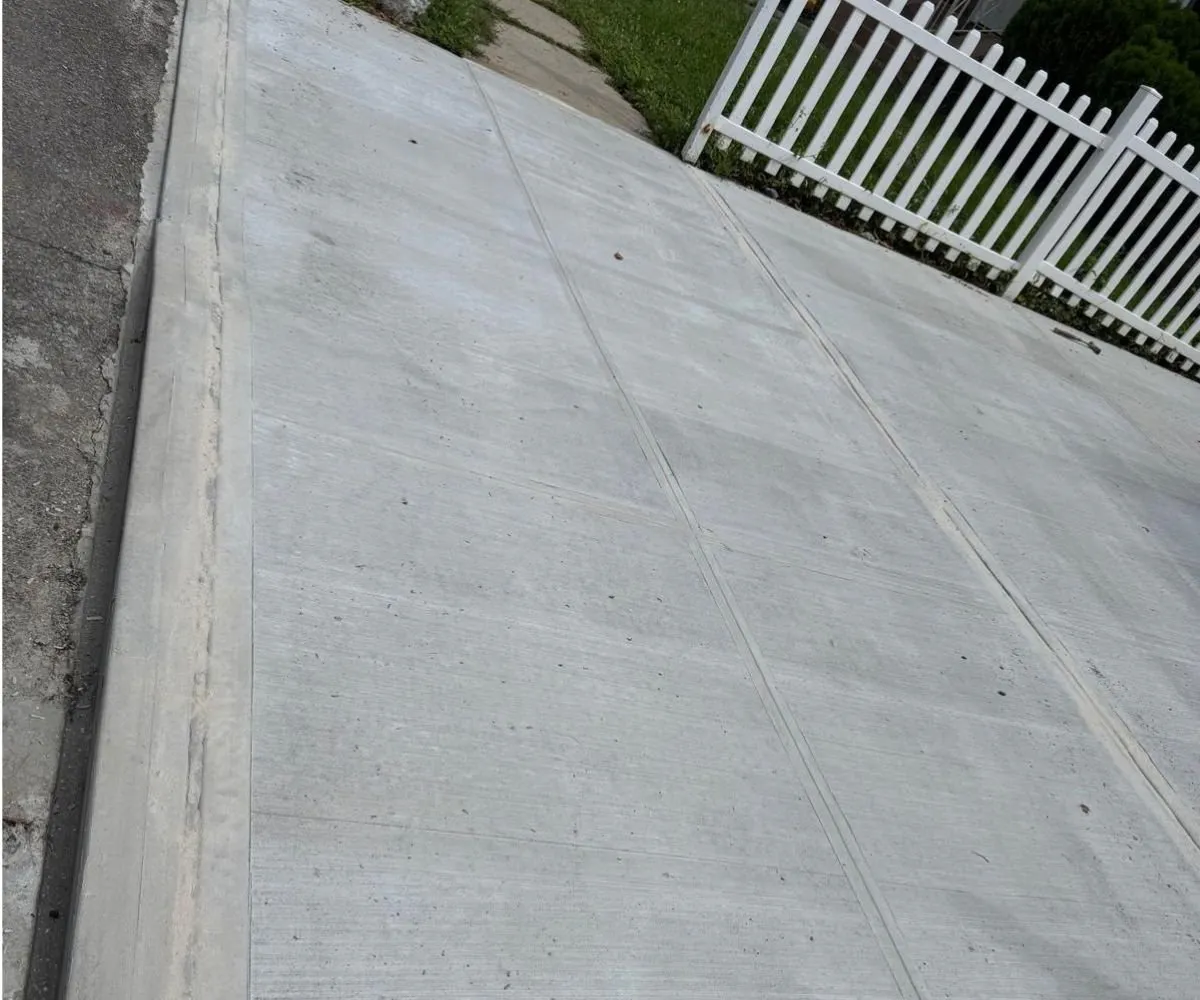
Flatlands sidewalks mostly fail where cars cross them. Driveway aprons crack and sink, the flags beside them tilt, and joints open along the curb. Some blocks also have flags lifted by tree roots. Most of it comes from age, heavy loads and water settling under the concrete.
The neighborhood is largely attached and semi detached brick homes for one or two families, and a large share of them have a front driveway. That means many properties have a curb cut and an apron in front, so a typical frontage has plain flags on both sides and a heavier section in the middle.
Tree cover is moderate. On blocks with older street trees, roots push flags upward near the tree pits. On blocks without them, the damage is more likely to trace back to the base under the concrete.
| Problem | What We Do |
|---|---|
| Cracked driveway apron | Break out the section and pour a new apron built for car weight |
| Flags tilted beside the apron | Replace the tilted flags so the whole run sits level |
| Root lifted flag near a tree | Replace the flag and shape the edge around the tree pit |
| Open joints along the curb | Replace the flag and set it against a solid, compacted base |
The Owner's Duty
Who Repairs the Sidewalk in Front of a Flatlands House?
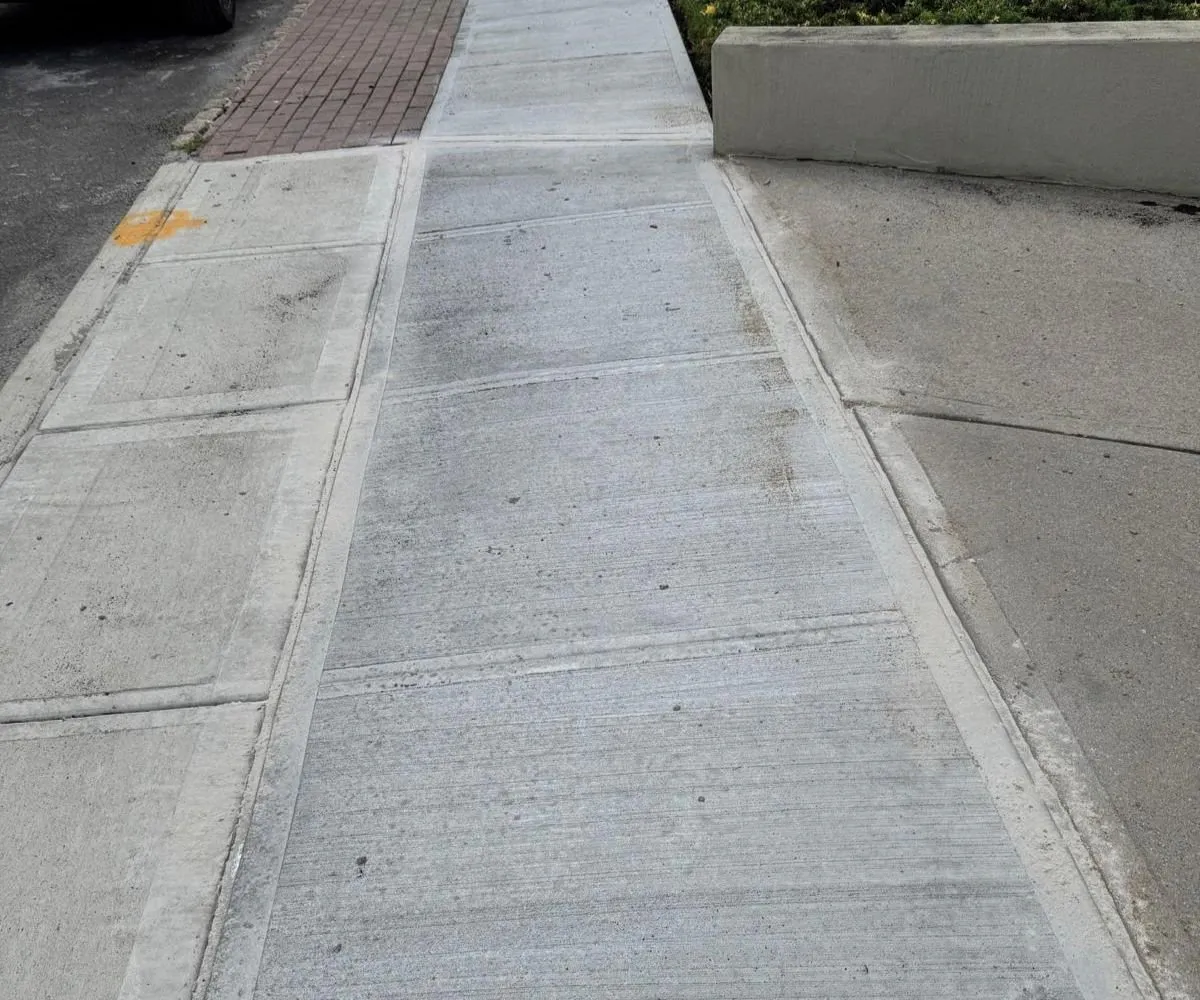
You do, as the owner. Under NYC Administrative Code section 19-152 the owner must install, repair and maintain the sidewalk in front of the property, and beside it on a corner lot. That applies to a one family house on a Flatlands block as much as to a large building.
Liability is a separate question. Under section 7-210, most owners can be held liable for injuries from a poorly kept sidewalk. Owner occupied one, two and three family homes used only as residences are an exception. The repair duty still applies to them, so a violation notice still lands on the owner.
Rules can change, so confirm the current details with the city or 311 before you decide anything.
What Happens if a Flatlands Sidewalk Gets a DOT Violation?
DOT sends a Notice of Violation listing the defects it found, such as a trip hazard or a broken flag. Hiring a licensed contractor to fix the listed items is the owner's route. If the owner does nothing, the city may do the repair and bill the owner, and unpaid bills can become a lien.
An open violation can also show up in a title search. That can slow a sale or a refinance, which matters to Flatlands owners who plan to sell or borrow against the house.
Once the work is done properly, you can request a DOT inspection and dismissal. Confirm the current steps with DOT or 311. We repair each defect on the notice, keep photographs and hand you the permit records for your request.
You can read more in our guide to clearing a sidewalk violation in NYC.
Cracked Apron or Tilted Flag in Front of Your House?
Send a photo and we will tell you what it needs.
How Are Aprons Different From Ordinary Sidewalk Flags?
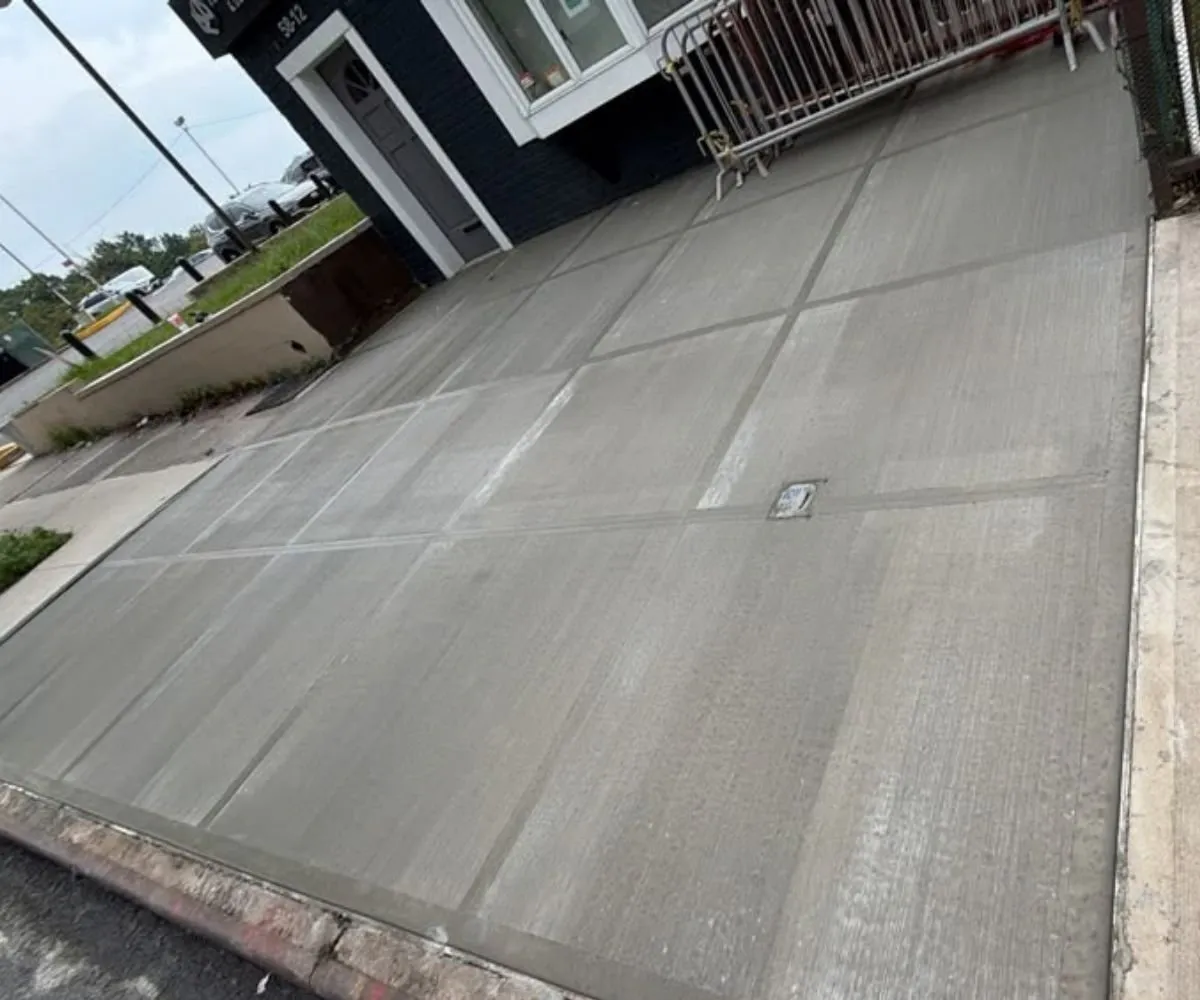
An apron is the part of the sidewalk that a car drives across to reach the driveway. It carries far more weight than a regular flag and takes more punishment at the curb edge, so it needs a thicker, better supported pour. A plain flag laid there tends to crack again within a few seasons.
New work in Flatlands is built to DOT specifications for thickness, slope and finish. Water has to run toward the street and away from the house, so slope matters as much as strength.
A curb cut also needs the right permits. New curb cuts and changes to a driveway can involve the Department of Buildings as well, so check the current rules before you plan anything beyond a like for like repair.
Where a damaged curb sits beside your flags, we tell you and price it on its own, since curb work often goes along with sidewalk work.
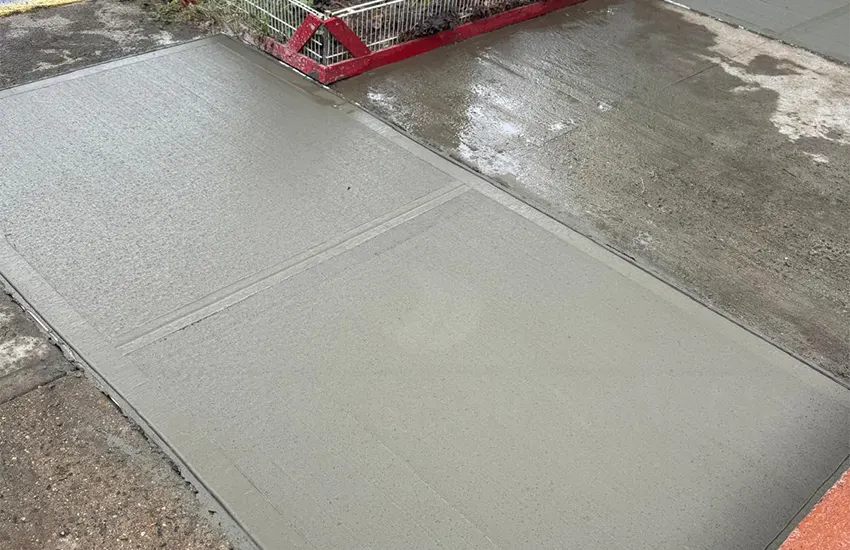
When Is the Right Time to Fix a Flatlands Sidewalk?
As soon as you see a raised edge, a crack that runs through a flag or a sunken apron. Damage rarely stays the same. Water gets under the concrete, freezes and widens the gap, and a small defect that DOT might list as a trip hazard turns into a larger repair.
Winter is hard on Flatlands frontages. Rock salt and freeze and thaw cycles break down old concrete, and you are also the one who has to keep the walk clear of snow and ice. A cracked, uneven surface is harder to shovel and easier to slip on.
A quick check you can do yourself
- Look along the walk for any edge that sits higher than its neighbor
- Check whether water pools on the flags after rain
- Watch for cracks that cross the whole width of a flag
- Note whether the apron has sunk below the curb line
If you find any of these, send us a photo. We will say whether it can be handled with one or two flags or needs a wider replacement. Seasonal timing also matters for pours, so booking early gives the crew room to schedule the work around the weather.
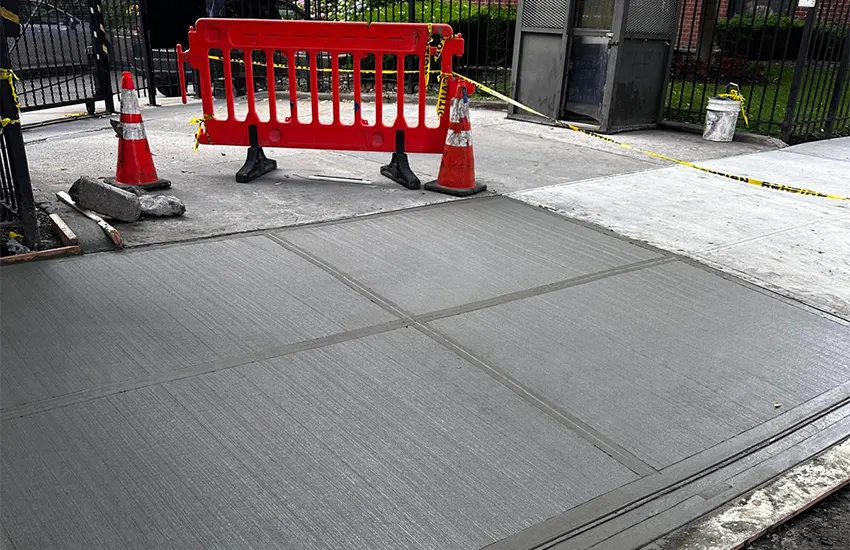
Pricing
What Goes Into a Flatlands Sidewalk Estimate?
The price depends on the number of flags, the presence of an apron, tree root work, curb work, the permit and how easy it is to reach the frontage. We measure the property and write the price down after the visit, not over the phone.
Flag count
Two bad flags and a full frontage are different jobs, so each flag is counted.
Apron work
Sections that cars cross are poured heavier and priced on their own line.
Trees and curbs
Roots and a broken curb change the base work and sometimes involve NYC Parks.
Access
Cars in the driveway and tight side yards shape how the crew works.
Process
How a Flatlands Sidewalk Job Runs
Site visit
We walk the frontage, mark the damaged flags and check the apron.
Written price
One price for removal, base, concrete and cleanup.
DOT permit
We file it. It usually takes two to three business days.
Replacement
Old concrete comes out and new flags are poured on a compacted base.
Cure and finish
The section is barricaded while it cures. The full job takes one to two weeks.
Got a DOT Notice in Flatlands?
We repair every defect listed and give you the records for your dismissal request. Read our guide on what to do about a sidewalk violation.
Nearby
Sidewalk Repair Near Flatlands
The same crew works in the neighborhoods that touch Flatlands.
FAQ
Flatlands Sidewalk Questions
Yes, when the flags beside it are sound. We check them first, because a sunken apron often pulls the neighboring flags down with it.
Most take one to two weeks with the permit and curing. The permit usually takes two to three business days.
Sometimes, when a city street tree caused the damage at an eligible one, two or three family home. Ask NYC Parks or 311 about the Trees and Sidewalks program first.
Yes. The owner of a corner lot is responsible for the frontage on both streets, and we price the two sides together.
Not on the section being poured. We plan the days so your driveway is blocked for as short a time as we can, and we tell you when it is safe to drive over.
Yes. Our estimator visits, measures and writes up a price at no charge. Call (718) 468-8803.
Contact
Get Your Flatlands Sidewalk Quote
Give us your address and describe the damage or the violation. Photos of the damage help us plan the visit.
- Call us(718) 468-8803
- HoursMon to Sat, 9:00 AM to 6:00 PM
- Free on site estimate with a written price
- Licensed and insured, 25+ years in business
- We handle DOT sidewalk permits
- Serving Manhattan, Brooklyn, Queens and the Bronx
Get Your Free Estimate
Takes about a minute. No cost and no obligation.