
Sidewalk Violation Repair
NYC Sidewalk Violations: Repair and Removal
A plain guide to the notice, the lookup, the repair and the dismissal request, from a licensed crew that has fixed NYC sidewalks for more than 25 years.
- Every listed defect repaired to DOT specifications
- Sidewalk permit filed for you
- Photos and paperwork for your dismissal request
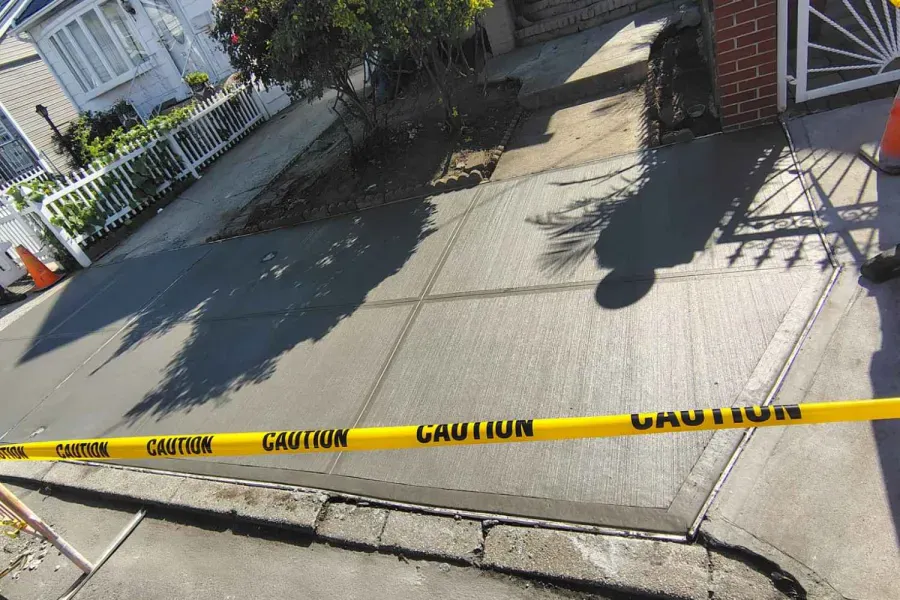
Please note: This page explains the process in general terms. City rules change, so confirm the current requirements for your property with NYC DOT or 311.
What Is a NYC Sidewalk Violation?
A NYC sidewalk violation is a Notice of Violation from the NYC Department of Transportation. It says the sidewalk in front of or beside your property has defects, such as trip hazards or broken flags, and lists them. The owner is expected to have those defects repaired, and the record stays open until DOT dismisses it.
The notice is tied to the property, not to the person who owned it when the inspector came by. If you bought a house with an open violation, it is now yours to deal with.
Most notices include a sketch or list that shows where the defects are along the frontage. Inspectors look at the sidewalk flag by flag. A flag is one square or rectangle of concrete between joints. Your notice may name only two bad flags on a long frontage, or it may cover most of the walk.
A violation is not a fine in the usual sense. It is an order to fix a condition. The money side comes later, either as the cost of hiring a contractor or as a bill from the city if the city ends up doing the work.
Why Do Property Owners Receive Sidewalk Violations?
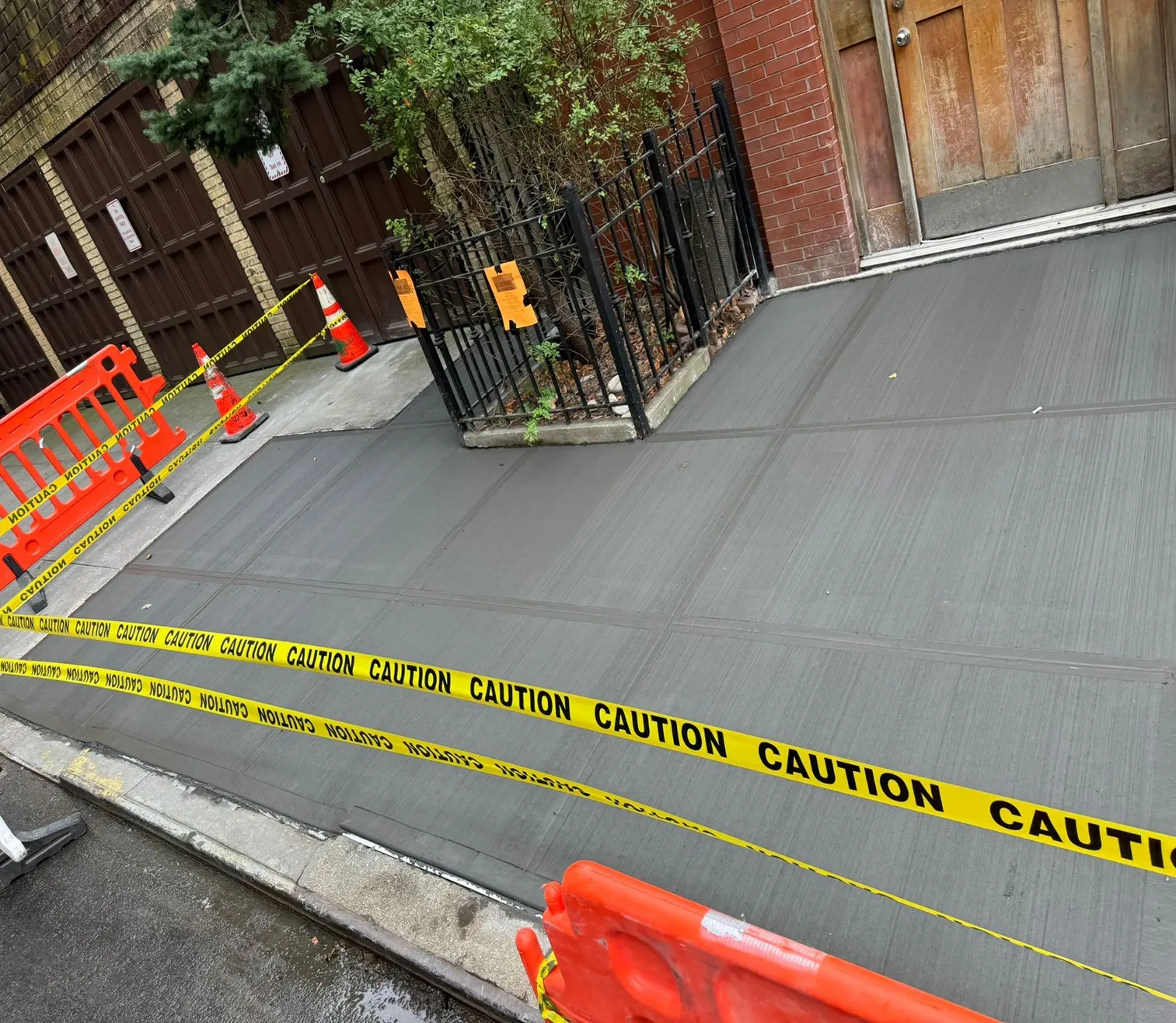
Owners receive sidewalk violations because NYC Administrative Code section 19-152 makes them responsible for installing, repairing and maintaining the sidewalk in front of their property, and next to it on a corner lot. When a DOT inspection finds defects in that sidewalk, DOT can issue a notice to the owner listing what needs repair.
Inspections happen for a few reasons. DOT inspects sidewalks on its own schedule. A complaint made through 311 can also lead to an inspection. So can a claim after someone trips, or a check of a block where other work is planned.
The condition of the sidewalk is what matters in the end. A block where tree roots have lifted several flags, or where old utility patches have sunk, tends to draw attention. Corner properties have more sidewalk, so they have more flags that can fail.
Does it matter what kind of building you own?
The repair duty applies to owners of every type of property, from a one family house to a large apartment building. Liability for injuries is a separate rule, covered further down this page. How the city picks blocks for inspection can change over time, so check with NYC DOT or 311 if you want to know why your block was inspected.
What Conditions Are Listed on a Sidewalk Violation?
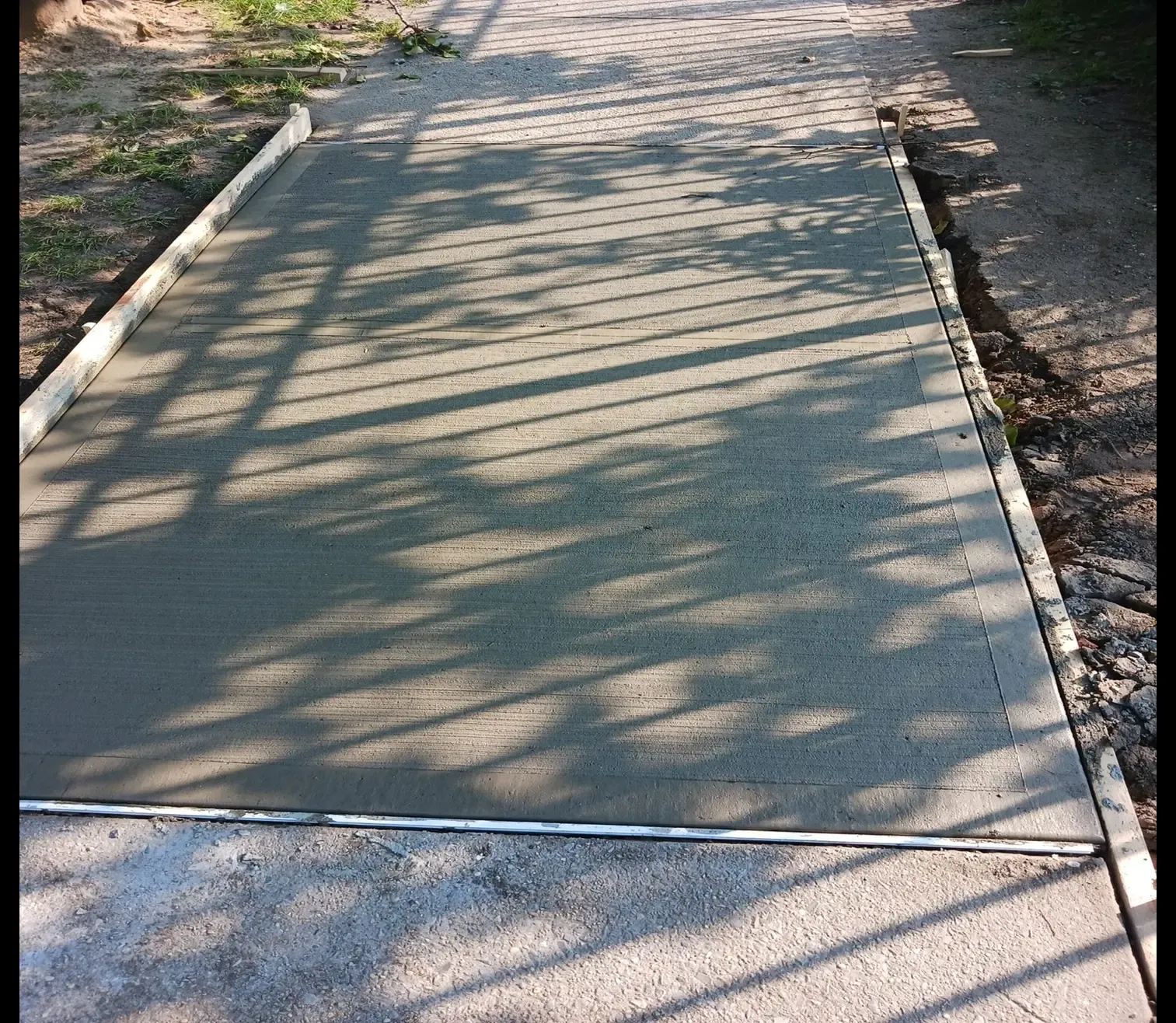
The most common conditions on a NYC sidewalk violation are trip hazards at raised joints, cracked or broken flags, collapsed or undermined flags, improper slope, and defective hardware or grating set in the sidewalk. Street tree roots cause many of these defects. The fix for nearly all of them is to remove the bad flags and pour new concrete.
| Condition | What it looks like | Typical fix |
|---|---|---|
| Trip hazard | One flag sits higher than the next, leaving a lip at the joint that catches a shoe | Replace the raised or sunken flag so the joint is flush |
| Cracked flag | Cracks running across the square, often spreading from a corner | Break out and replace the full flag |
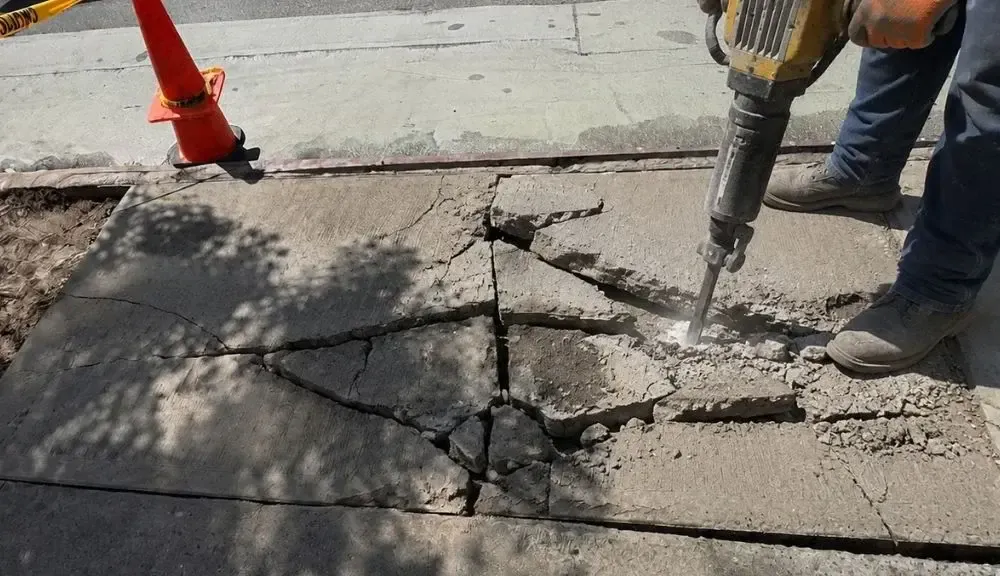
| Broken flag | Loose pieces, missing chunks or a square split into several parts | Remove the pieces, prepare the base and pour a new flag |
| Collapsed or undermined flag | A sunken square, or a hollow under the concrete where soil washed out | Replace the flag and rebuild and compact the base under it |
| Improper slope | Water pools on the walk or runs toward the building instead of the curb | Replace the flags with the pitch corrected toward the curb |
| Defective hardware or grating | Cellar doors, vault covers, meter boxes or grates that rock, stick up or sit low | Reset or repair the hardware so it is level and safe; some items need the owner of that equipment involved |
| Tree root damage | Flags lifted or cracked near a street tree, often tilted toward the pit | Replace the flags around the tree without cutting roots unless NYC Parks approves it |
The exact wording on your notice may be different from this table. Go by what the notice says. When we visit, we match each listed item to the flag on the ground so the repair covers every one of them.
A thin cement patch smeared over a crack almost never satisfies an inspector. It also breaks up after a winter or two. Replacing the flag is the repair that lasts.
How Do You Look Up a Sidewalk Violation on Your Property?
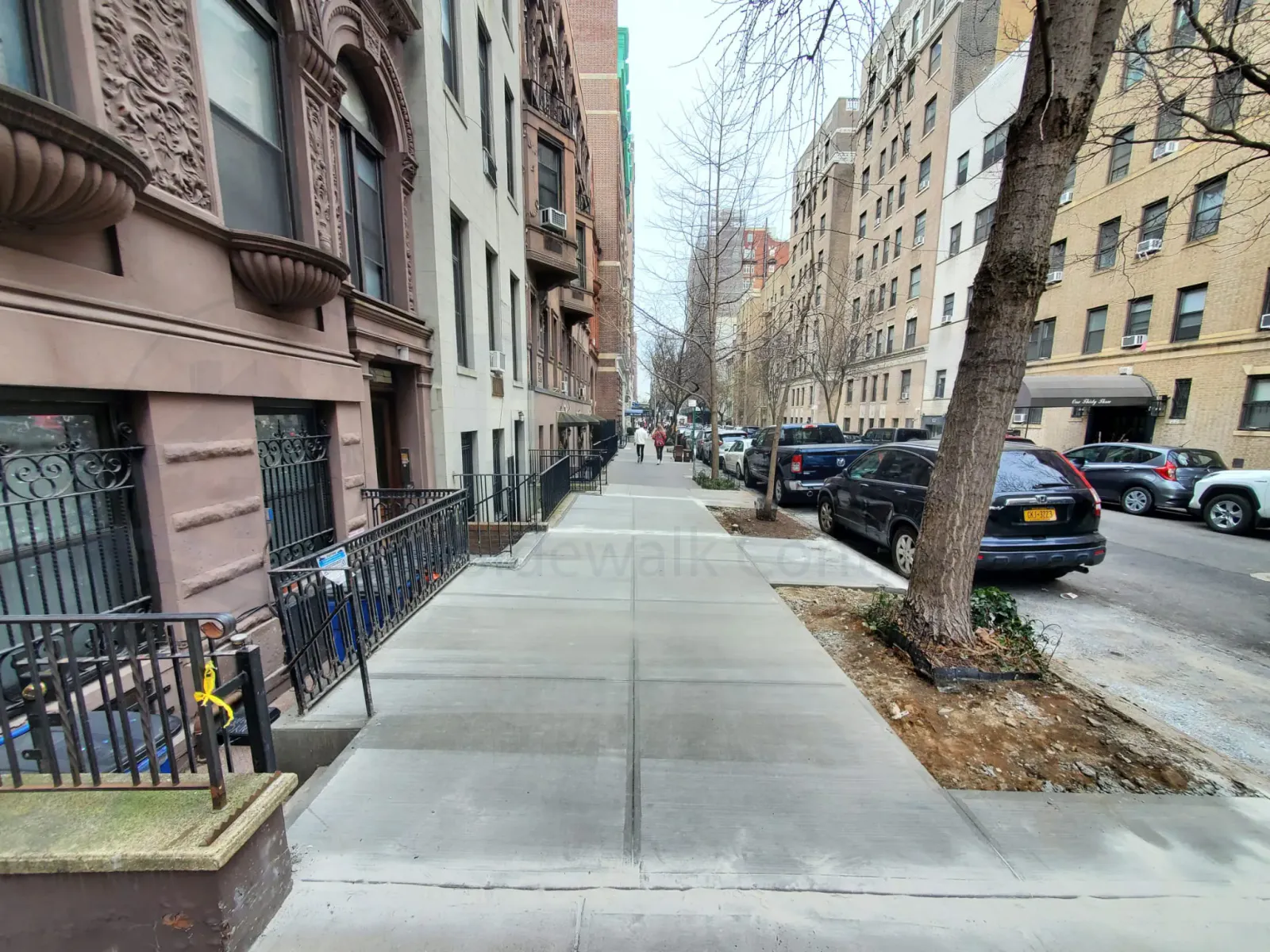
You can look up a sidewalk violation through NYC DOT's sidewalk violation lookup on nyc.gov, or by contacting 311. Search by the property address or by the BBL, which is the borough, block and lot number for the parcel. The record should show whether a violation is open and what was listed.
Start at the official NYC website and search for the DOT sidewalk violation lookup. City pages move from time to time, so searching the site is more reliable than an old bookmark. If you would rather speak to someone, NYC 311 can point you to the right place.
Tips for a clean search
- Use the address exactly as the city lists it. Corner lots can be recorded under the other street.
- If the address search comes up empty, try the BBL. You can find it on a tax bill or deed.
- Check every lot you own on the block. Adjacent parcels can carry separate records.
- Buyers should check before closing. An open violation can come up in a title search.
Keep a screenshot or printout of what you find. It helps your contractor price the job, and it gives you a record to compare against after the repair.
Found an Open Violation on Your Property?
Send us a photo of the notice or the lookup result. We will visit, mark each defect and give you a written price.
What Should You Do After Receiving a Sidewalk Violation?
Read the notice carefully, check which defects it lists and any dates printed on it, then hire a licensed contractor to repair every listed defect. Do not let it sit. If the owner does not make the repair, the city can do the work itself and send the owner the bill, which is often less convenient.
Look for three things on the notice: the list of defects, where they are on the frontage, and any deadlines or instructions. Those dates come from DOT, and they are on the notice for a reason. If anything is unclear, call 311 or DOT and ask before work starts.
Next, check whether a street tree caused the damage. If it did, and your home is a one, two or three family house, a city program may cover some repairs. More on that below.
Then get a written estimate from a licensed and insured contractor. Ask whether the price includes the DOT sidewalk permit, removal of the old concrete, base preparation and cleanup. Ask what paperwork you get at the end. Those documents matter when you request a dismissal.
Have the notice in hand? We can read it with you on site at no charge.
Schedule a Site Visit Call Now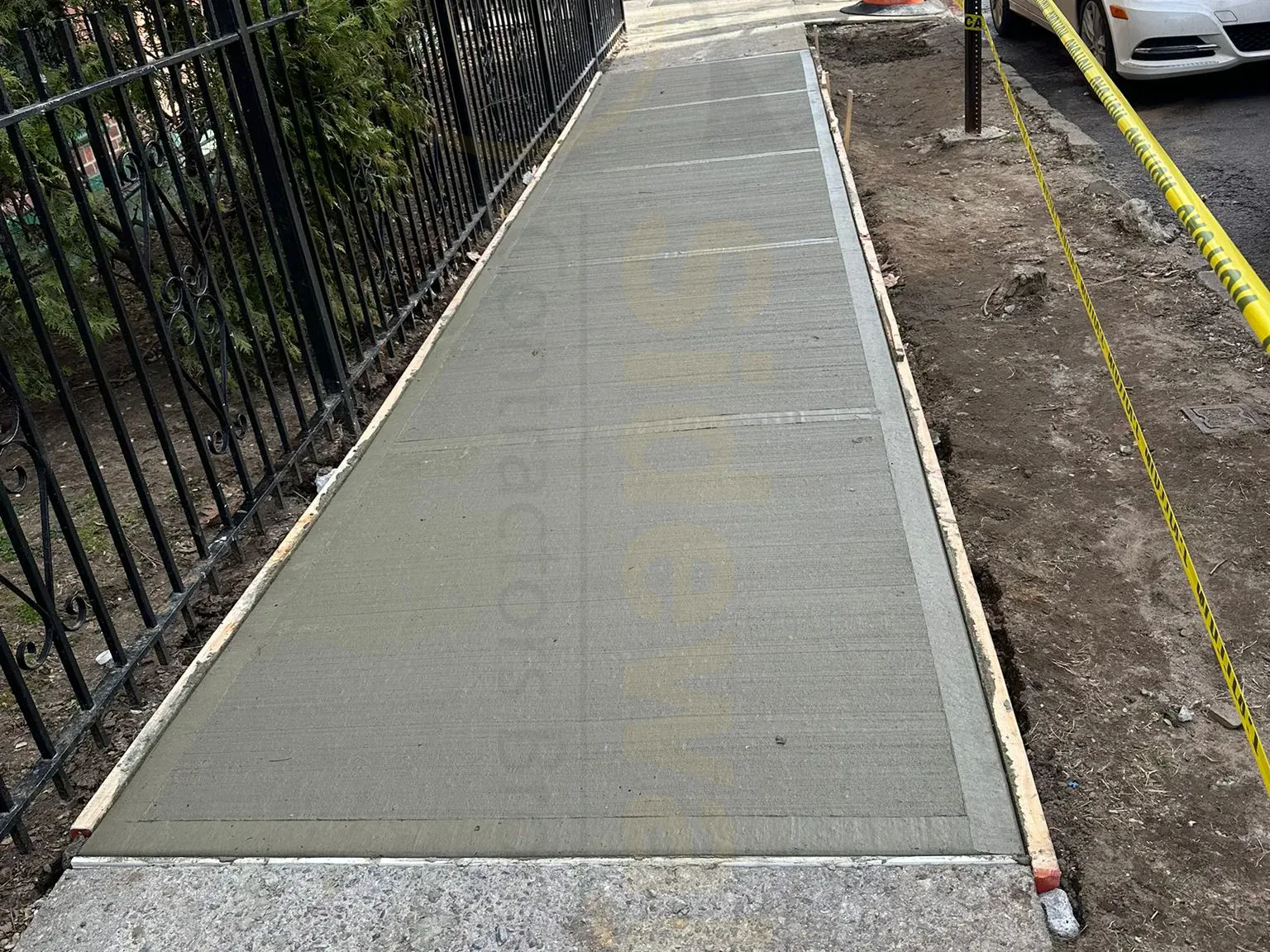
Step by Step
How Do You Remove a Sidewalk Violation in NYC?
To remove a sidewalk violation, you confirm what the notice lists, have every defect repaired to DOT specifications under a sidewalk permit, keep the repair records, and then ask DOT to inspect the work and dismiss the violation. The nine steps below cover the full path from the day the notice arrives to a closed record.
Read the notice
Note each listed defect, where it sits on the frontage and any dates or instructions DOT printed on the notice.
Look up the record
Search the property by address or BBL through nyc.gov or 311 and confirm the violation is open and matches the notice.
Check for tree damage
If a street tree lifted the flags at a one, two or three family home, ask NYC Parks or 311 whether the Trees and Sidewalks program may apply.
Get a written estimate
Have a licensed, insured contractor measure the sidewalk, mark every listed defect and put the price and scope in writing.
File the sidewalk permit
Sidewalk work generally needs a DOT sidewalk permit. Your contractor should file it before any concrete is removed.
Repair every listed defect
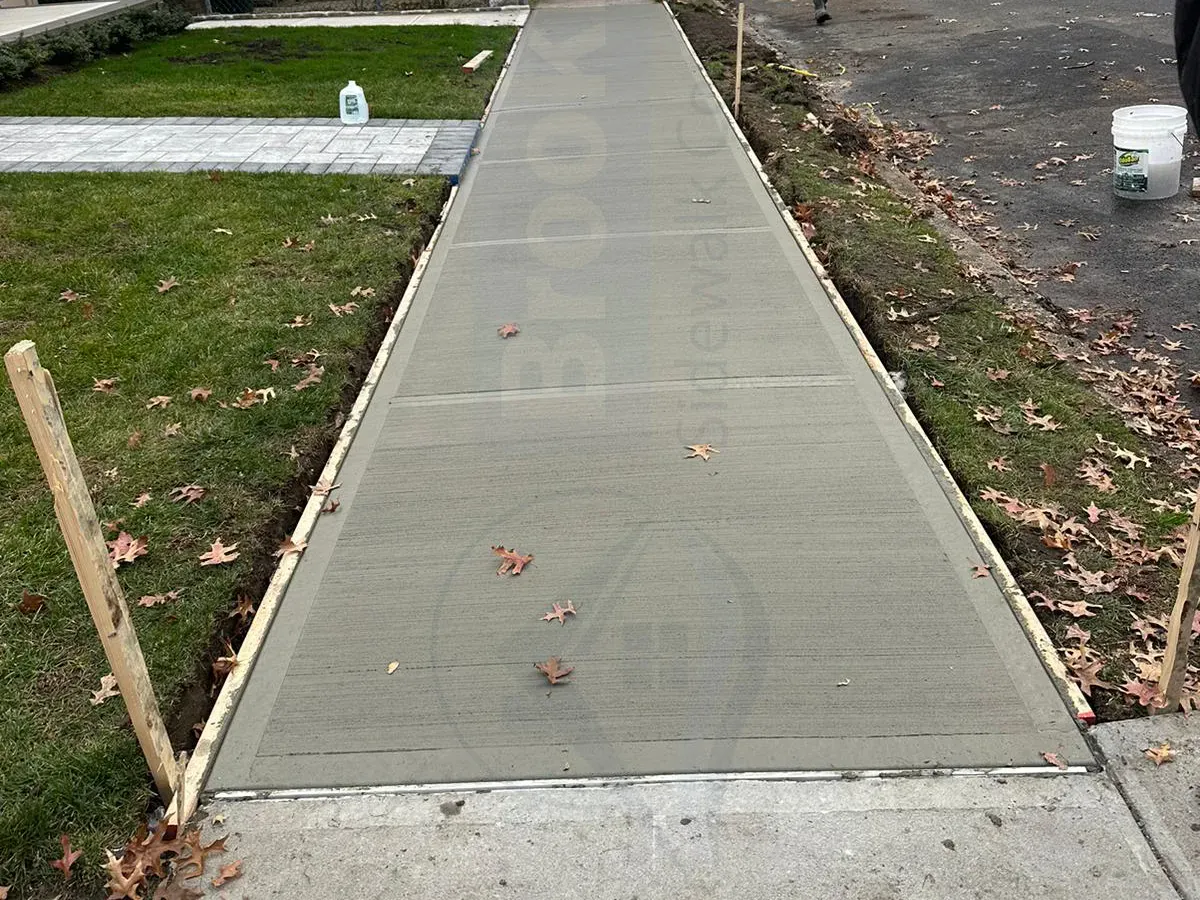
The damaged flags are broken out, the base is prepared and new concrete is poured to DOT specifications for thickness, slope and finish.
Let the concrete cure
The new sidewalk stays protected while it cures. Barriers come down only when it is ready for foot traffic.
Collect your records
Keep the permit, the invoice and dated photos of the finished work. These support your dismissal request.
Request inspection and dismissal
Ask DOT to inspect the repair and dismiss the violation. Confirm the current request process with DOT or 311, then check the record until it shows as closed.
The Work Itself
What Does the Sidewalk Violation Repair Process Involve?
A violation repair follows the same steps as any proper sidewalk replacement: a DOT permit, marking the defective flags, breaking out the old concrete, preparing the base, pouring new flags to DOT specifications and letting them cure. Most jobs take one to two weeks from start to finish, including the permit.
Permit and marking
Our office files the DOT sidewalk permit, which usually takes two to three business days. On site, the crew marks each flag listed on the notice, plus any flag next to it that cannot stay because of the way the joints line up.
Break out and base
Old concrete is saw cut at the joints and broken out, then hauled away. The ground underneath is the part most people never see. Soft soil and voids get dug out, and the base is regraded and compacted so the new flag does not settle.
Pour and finish
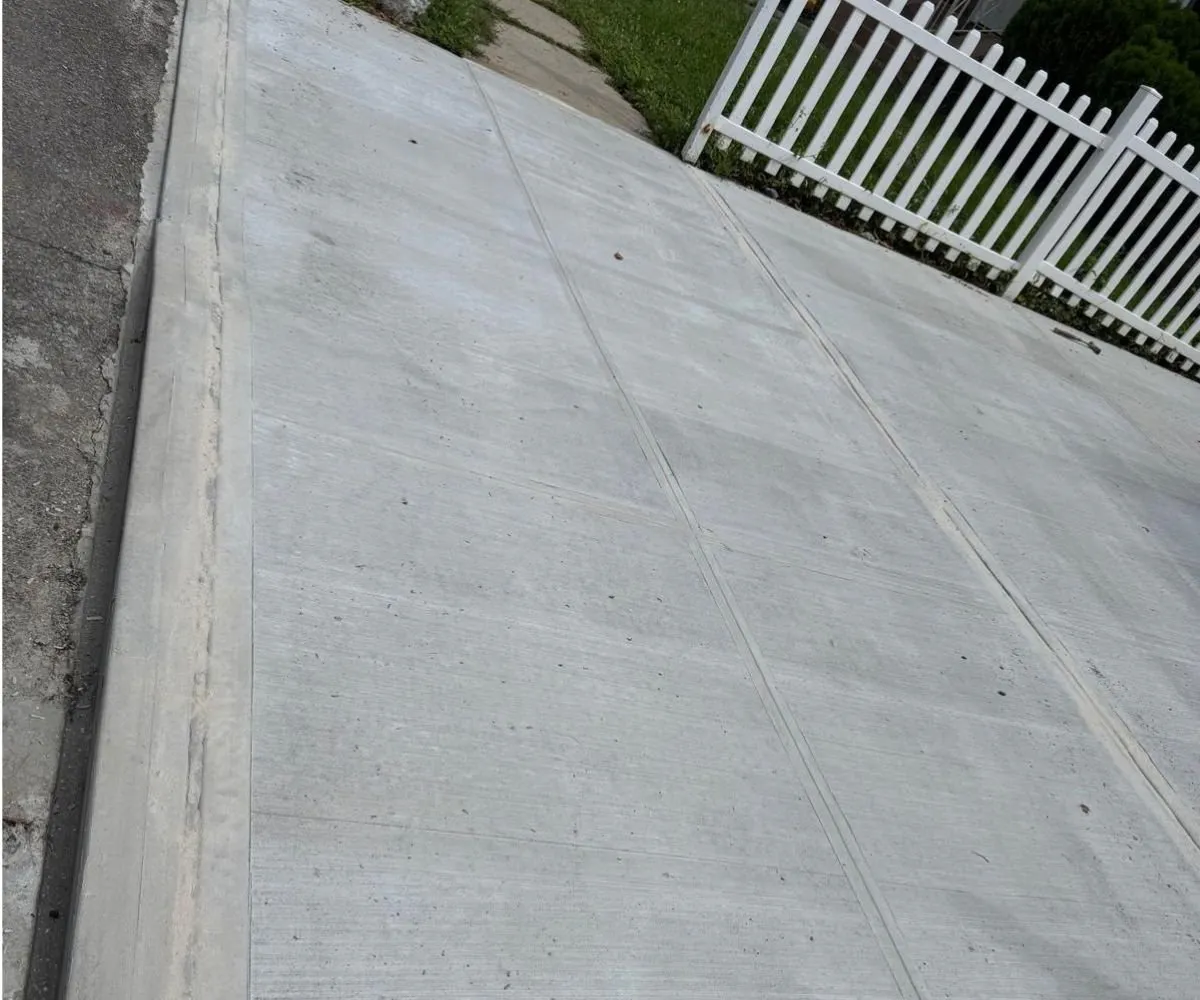
Forms go in, and the new concrete is poured and finished to DOT specifications for thickness, slope and finish. Joints line up with the neighbors, and the surface pitches toward the curb so water leaves the walk.
Curing
Fresh concrete needs time before anyone walks on it and longer before heavy loads. The work stays taped off until it is ready. Then the barriers come down and the site is cleaned.
For a closer look at how we rebuild flags on ordinary jobs, see our sidewalk repair and replacement service.
How Does the Inspection and Dismissal Process Work?
After the defects are properly repaired, the owner can ask NYC DOT to inspect the sidewalk and dismiss the violation. DOT checks that the listed conditions were corrected. If the work passes, the violation can be dismissed and the record updated. Confirm the current request process with DOT or 311 before you start, because it can change.
A repair does not close the record on its own. Someone has to ask for the inspection. Many owners assume the contractor or the permit takes care of this automatically. Ask your contractor who will make the request and what they will hand you for it.
We give owners dated photos of the finished sidewalk, a copy of the permit and an invoice describing the work. Those records show what was done and when. They also help if a buyer's attorney or a lender asks about the violation later.
What if the inspection fails?
A failed inspection usually means a listed defect was missed or a new flag does not meet the specifications. That is why the marking step matters so much. If a defect we repaired is called out, we come back and look at it with you. We cannot promise how long DOT will take or say how its schedule works, so check the status of your request with DOT or 311.
What Permits Does a Sidewalk Violation Repair Need?
Sidewalk work in NYC generally needs a sidewalk permit from NYC DOT. Some jobs bring in other agencies: the Department of Buildings for new curb cuts, driveway changes and some structures, NYC Parks for anything touching a street tree, and the Landmarks Preservation Commission in historic districts. Confirm current permit rules with the city before work begins.
- DOT sidewalk permit. This covers the sidewalk work itself. We file it for every job we take on.
- Department of Buildings. New curb cuts and changes to a driveway can involve DOB. If your violation sits next to a driveway apron, our driveway and apron repair crew can handle both in one visit.
- NYC Parks. Street trees belong to the city. Cutting roots or damaging a street tree without Parks approval is not allowed.
- Landmarks Preservation Commission. On landmarked buildings and in historic districts, stoops, areaways and historic paving such as bluestone or granite can need LPC approval.
A cracked stoop often shows up right next to a violated sidewalk. That work is outside the violation, but it is easier to schedule together. Our stoop and front step repair page covers it.
What Happens If You Ignore a Sidewalk Violation?
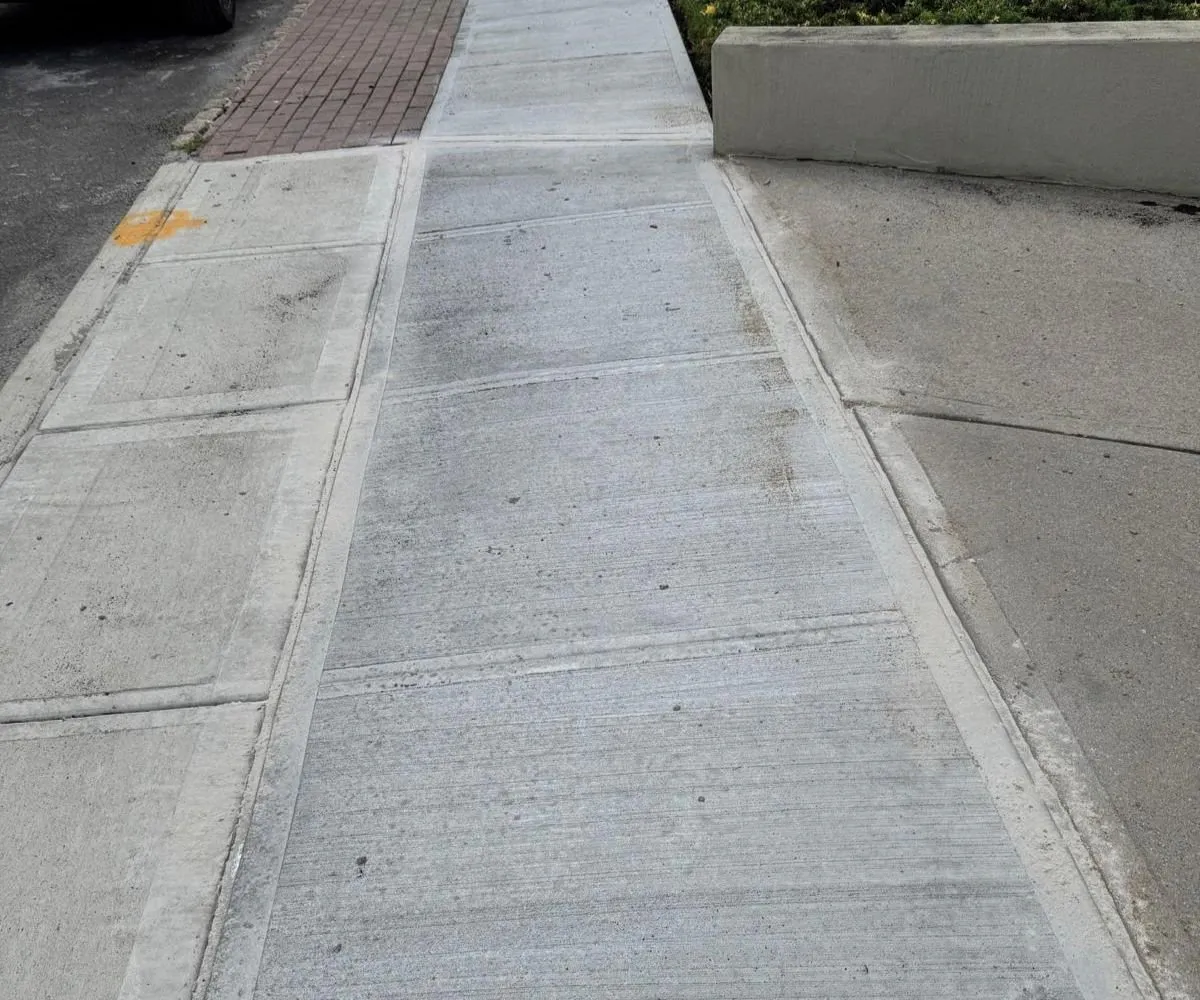
If a violation is ignored, the city can repair the sidewalk and bill the owner. An unpaid bill can become a lien on the property. An open violation can show up in a title search and slow a sale or refinance. Owners of most properties can also be held liable for injuries caused by a sidewalk they failed to maintain.
City repair and billing
The city can hire its own contractor to fix the listed defects. You do not choose the crew or the schedule, and the bill comes to the owner afterward. Unpaid, it can become a lien.
Sales and refinancing
Buyers, lenders and title companies look for open violations. One on the record can mean last minute questions, a request to fix it before closing, or money held back from the sale.
Injury liability
Under Administrative Code section 7-210, owners of most properties can be held liable when someone is hurt because the sidewalk was not maintained. Owner occupied one, two and three family homes used only as residences are an exception to that liability rule. The duty to repair still applies to those homes. Liability questions belong with your attorney or insurer, and the rules can change, so confirm them with the city.
Cost Factors
What Affects the Cost of Fixing a Sidewalk Violation?
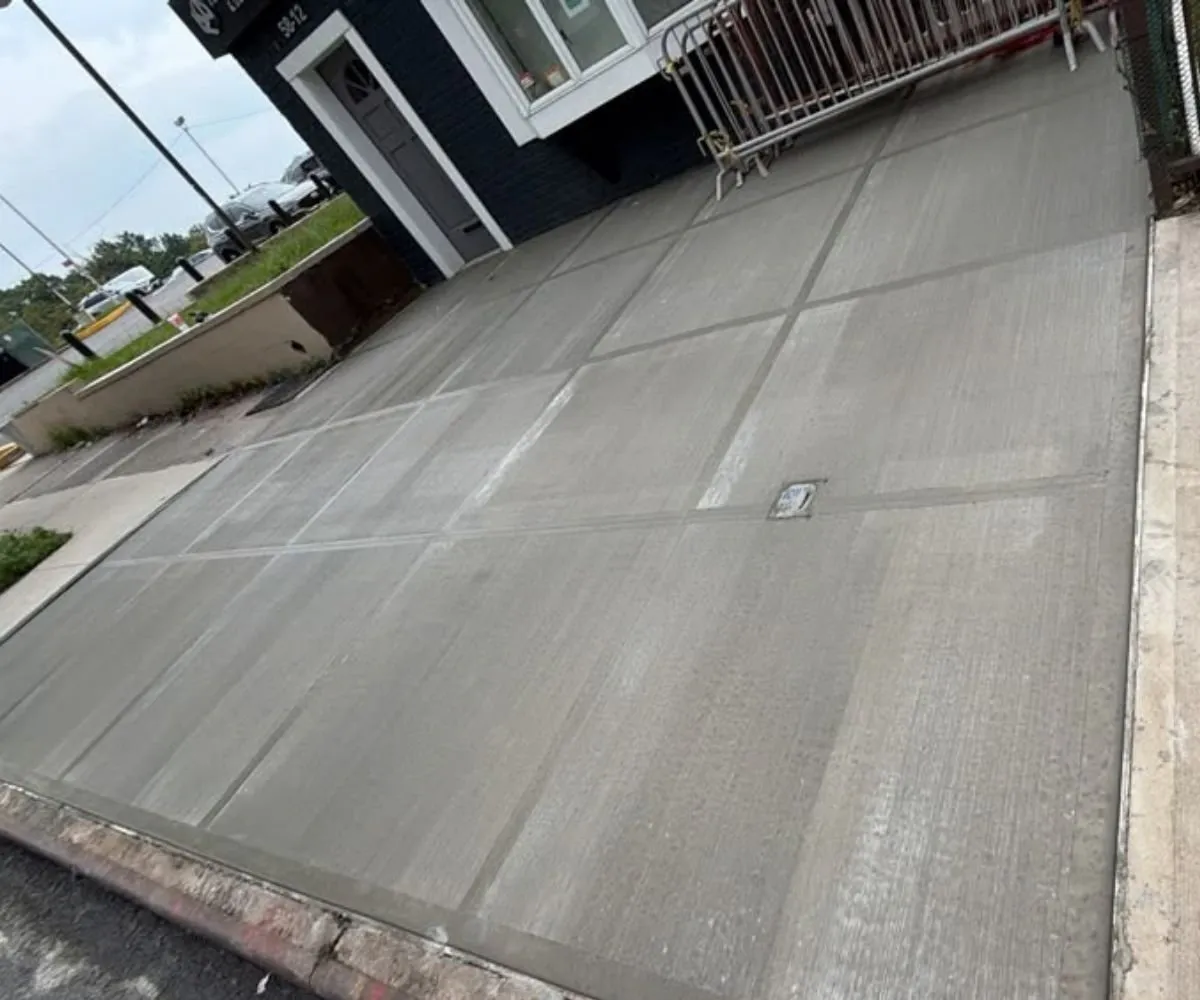
The cost of a violation repair depends mostly on how many flags need replacing and how much square footage that adds up to. Tree root work, curb work, hardware repairs, access for trucks, permit requirements and any special finish on your block also move the price. We give a written price after a free visit rather than a guess by phone.
Number of flags
More listed defects and more square feet mean more removal, concrete and labor.
Base condition
Washed out or soft ground under collapsed flags takes extra digging and compaction.
Street trees
Working around roots takes more care, and the pit edge may need rebuilding.
Hardware and grates
Cellar doors, vault covers and grates add scope when they are part of the notice.
Curb and apron work
A broken curb or driveway apron beside the flags often goes along with the job.
Access and rules
Busy streets, parking limits and landmark approvals add time and planning.
Your price: in writing, after a free look at the notice and the sidewalk.
Request Your QuoteCan the NYC Parks Trees and Sidewalks Program Help?
It may. NYC Parks runs a Trees and Sidewalks program that repairs some sidewalks damaged by city street trees at eligible one, two and three family homes. Not every property or every defect qualifies. Check with NYC Parks or 311 before you pay for a repair, since you may be eligible for help.
Street trees are managed by NYC Parks, not by the owner of the house in front of them. Roots cannot be cut and the tree cannot be damaged without Parks approval. That rule applies whether the city or a private contractor does the work.
Some owners decide not to wait for a program and hire a contractor to repair the flags privately. In that case we work around the tree, leave the pit room to breathe, and do not cut roots without the approval Parks requires. If the program applies to your home and you want to pursue it first, we will tell you so.
Mixed damage is common. A notice may list flags lifted by a tree and, farther down the frontage, flags that cracked for other reasons. Ask Parks or 311 how that affects eligibility for your property.
How We Help
How Does Our Team Help With Sidewalk Violations?
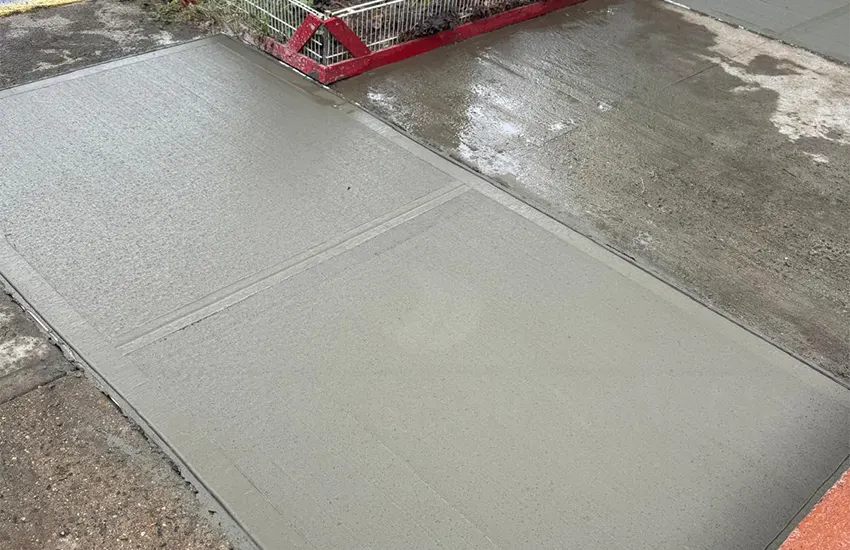
For more than 25 years our crews have repaired NYC sidewalks for owners holding violation notices. We read the notice with you, mark every listed defect, file the DOT sidewalk permit, repair the flags to DOT specifications and hand you the photos and paperwork you need to request a dismissal from DOT.
Notice to permit
Every defect on the notice is matched to a flag on the ground, and our office files the DOT sidewalk permit before work begins.
Built to DOT specifications
New flags are poured on a prepared base to DOT specifications for thickness, slope and finish, so the repair holds up.
Records for dismissal
You get dated photos, the permit and a detailed invoice to support your request that DOT inspect and dismiss the violation.
Property managers with several buildings can start with our citywide sidewalk contractor page. Questions about a notice are welcome by phone at (718) 468-8803, Monday to Saturday.
Credentials
A Licensed Contractor for Your Violation Repair
Sidewalk Violation Help by Borough
We repair sidewalk violations in Manhattan, Brooklyn, Queens and the Bronx. The process on the notice is the same across the city, but the sidewalks are not. Row house blocks, detached homes, hilly streets and big apartment frontages each fail in their own way, and each borough page covers what we see there.
Brooklyn
Tree lined row house blocks mean a lot of root damage and raised joints. Our Brooklyn sidewalk repair page covers the borough. Owners in Park Slope, where brownstone blocks can fall under landmark rules, in Bay Ridge and in Flatbush call us often about notices.
Queens
Queens has many detached and attached homes with long frontages, driveways and curb cuts, so violations often sit next to apron work. See sidewalk work across Queens, or go straight to Astoria, Flushing or Forest Hills.
The Bronx
In the Bronx, sloped streets and large apartment buildings put heavy wear on flags and hardware. Our Bronx sidewalk contractor page has the details, with local pages for Riverdale, Throggs Neck and Pelham Bay.
Manhattan
Manhattan frontages carry heavy foot traffic, cellar doors, vault covers and grates, which makes defective hardware a frequent item on notices. Visit Manhattan sidewalk repair, or the pages for Harlem, the Upper West Side and Washington Heights.
We do not work on Staten Island.
Reviews
What Owners Say About Our Sidewalk Work
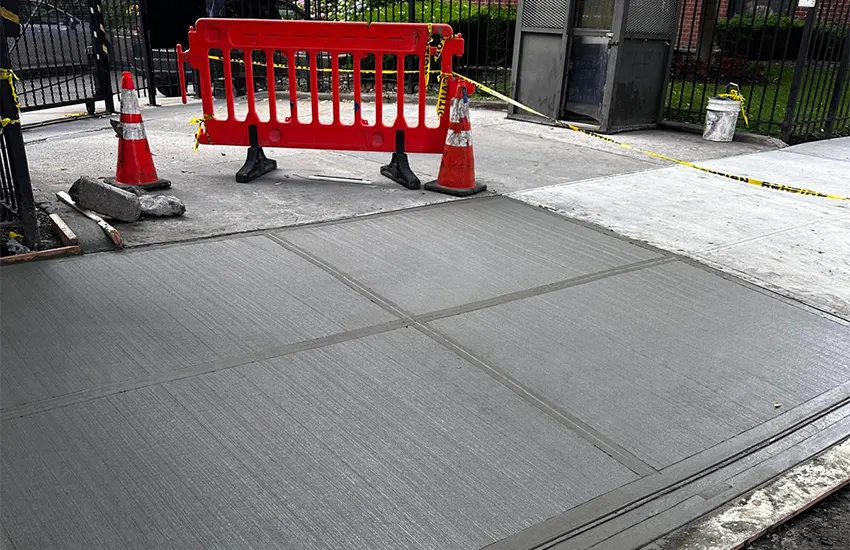
Read reviews from NYC property owners we have worked for on our Google Business Profile.
Reviews from real customers, posted on Google
Honest feedback from the people we have worked for, in their own words.
FAQ
Sidewalk Violation Questions
We are a private licensed contractor and are not affiliated with the NYC Department of Transportation. We repair sidewalks to DOT specifications for property owners and help them prepare to request a dismissal from DOT.
Yes. The owner can hire a licensed contractor to repair the listed defects. If the owner does not, the city can do the repair and bill the owner. Hiring your own contractor lets you choose the crew, the schedule and the price.
Use the NYC DOT sidewalk violation lookup on nyc.gov or contact 311. Search by the property address or by the BBL, the borough, block and lot number from your tax bill or deed.
No. After a proper repair, the owner asks DOT to inspect the work and dismiss the violation. Confirm the current request process with DOT or 311, and keep your permit, invoice and photos.
It can. Open violations can show up in title searches and slow down a sale or refinance. Buyers and lenders often ask for the repair or a dismissal before closing.
NYC Parks manages street trees, and roots cannot be cut without Parks approval. The Trees and Sidewalks program may repair some tree damaged sidewalks at eligible one, two and three family homes. Check with Parks or 311 before you pay for a repair.
Under Administrative Code section 7-210, owners of most properties can be held liable for injuries caused by failing to maintain the sidewalk. Owner occupied one, two and three family homes used only as residences are an exception to that liability rule, though the repair duty still applies. Speak with your attorney or insurer about your situation.
Most repairs take one to two weeks including the DOT permit and curing time. The permit usually takes two to three business days. How long DOT takes to inspect and dismiss is set by DOT, so check with DOT or 311.
Free visit, written price
Clear Your Sidewalk Violation the Right Way
Send a photo of your notice. We will read it with you, repair every listed defect and give you the records for your dismissal request.
Contact
Get Help With Your Sidewalk Violation
Share the property address and a photo of the notice if you have it. We will call to set up a free visit and a written estimate.
- Call us(718) 468-8803
- HoursMon to Sat, 9:00 AM to 6:00 PM
- Free on site estimate with a written price
- Licensed and insured, 25+ years in business
- We handle DOT sidewalk permits
- Serving Manhattan, Brooklyn, Queens and the Bronx
Get Your Free Estimate
Takes about a minute. No cost and no obligation.