
Brick, Block and Stone
Masonry Contractor in New York City
Cracked brick, loose stone, rusting lintels and leaning garden walls repaired or rebuilt by a licensed NYC crew with more than 25 years in the trade.
- Facades, chimneys, parapets and retaining walls
- DOB permits handled when the job needs one
- Free visit and a written price
What We Build and Repair
What Masonry Work Do We Handle in NYC?
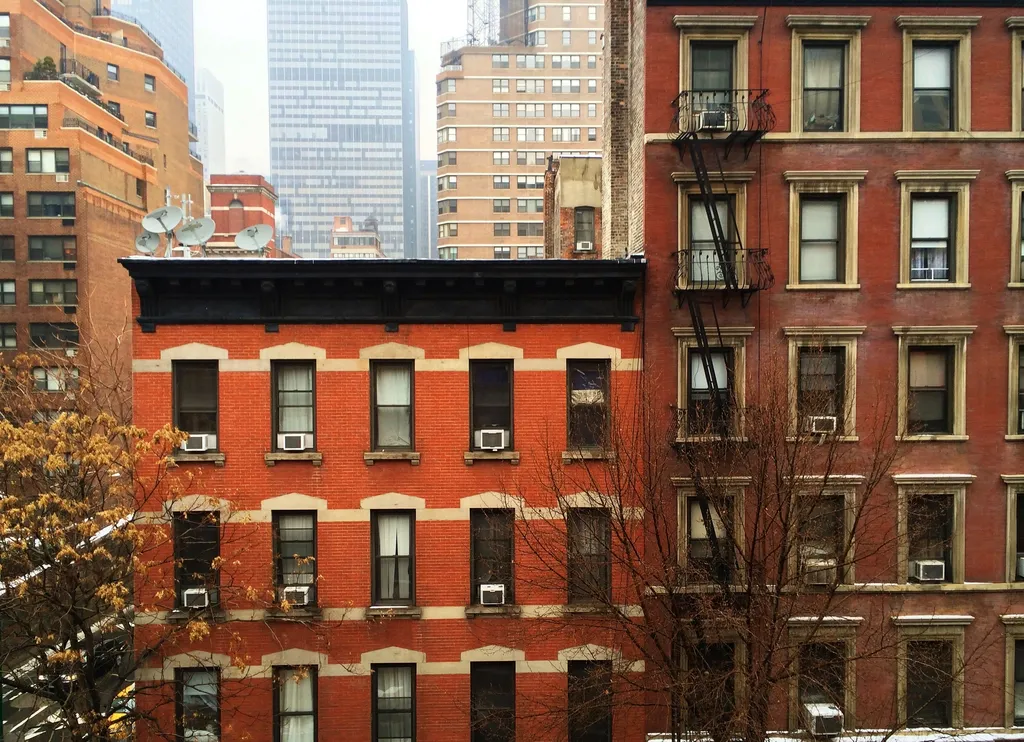
We repair and rebuild brick, concrete block and stone on New York City properties. That covers front facades, garden and yard walls, retaining walls, chimneys, parapets, stone sills and the walls around areaways. The work ranges from replacing a few broken bricks to taking down and relaying a whole section of wall.
- Cracked or bulging brick facades
- Rusting steel lintels over windows
- Loose or leaning chimneys
- Parapets with open joints or loose caps
- Cracked stone sills and lintels
- Leaning garden and retaining walls
- Crumbling areaway walls
- Spalled block on side and rear walls
Many jobs also need new mortar in the joints around the repair. When that is the main problem, our repointing service is usually the better fit.
Why Does Brick and Stone Fail on NYC Buildings?
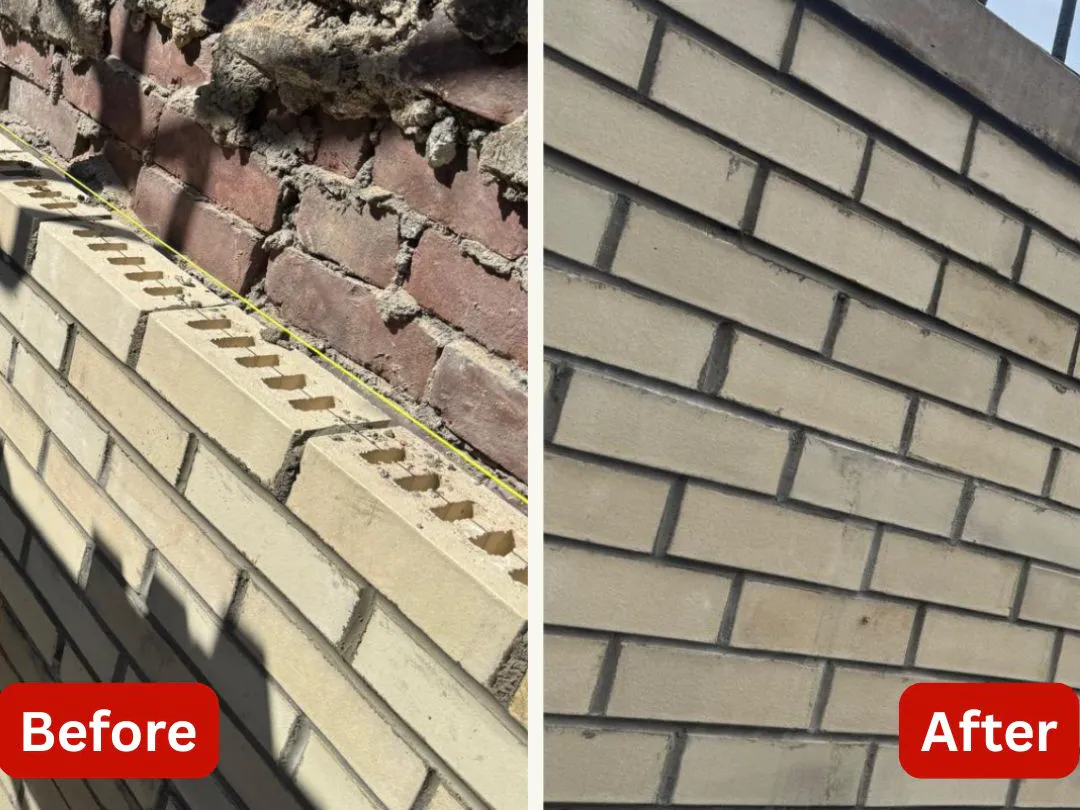
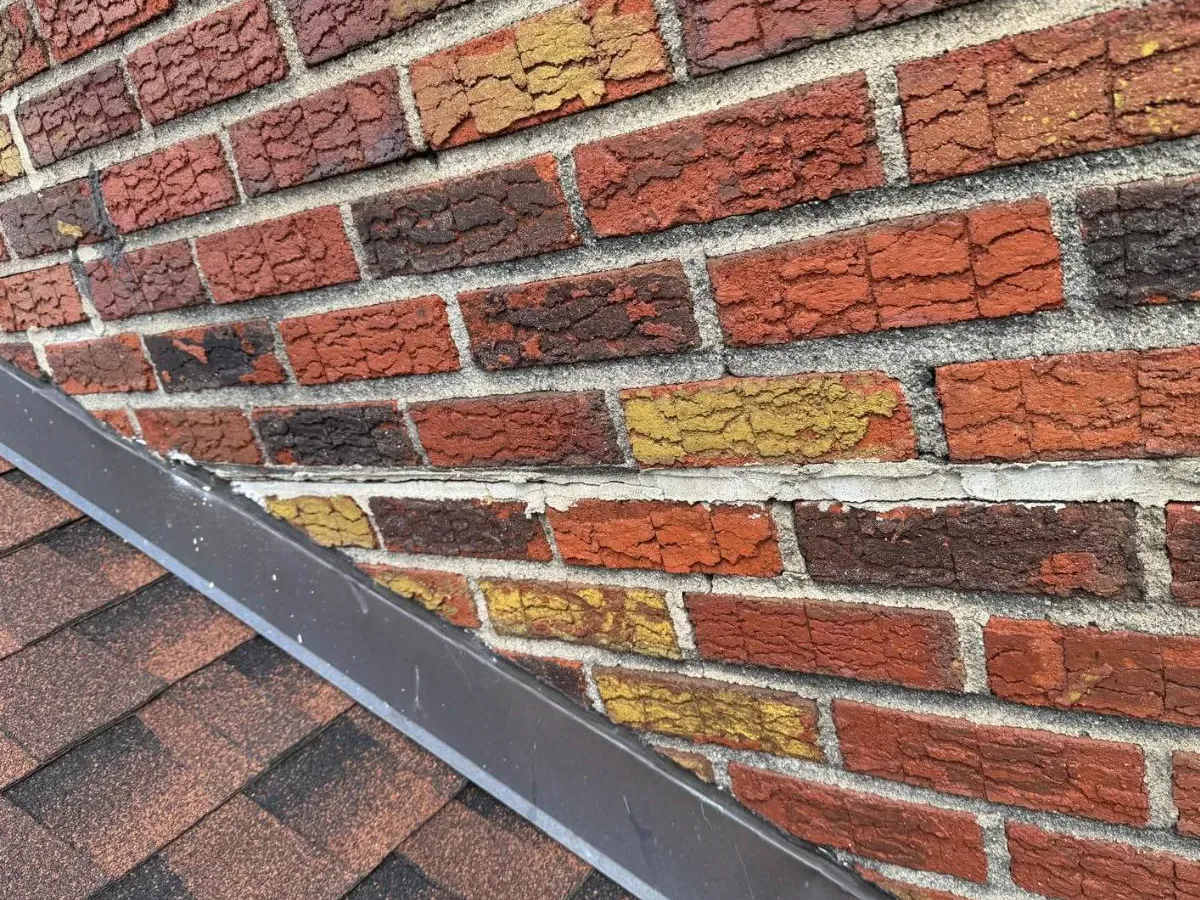
Most masonry damage in New York City starts with water. Rain gets into open joints and cracks, freezes in winter and pushes units apart. Steel buried in the wall rusts and swells. Walls also move when the ground under them settles, and old lime mortar simply wears out after decades of weather.
Rusting steel lintels
Most older brick buildings have a steel angle or beam over each window and door opening. Once water reaches that steel, it rusts. Rust takes up more room than the steel it replaces, so it lifts the brick above it.
The signs are easy to spot from the street. Look for a horizontal crack running out from the top corner of a window, brick that steps up over the opening, or orange stains below it. Patching the crack does not stop the rust. The lasting fix is to open the brick, clean or replace the steel, protect it, and rebuild the wall above.
Water behind the face
Parapets and chimneys take weather from both sides and from the top. When a coping stone or chimney cap cracks, water runs straight down into the wall. The face brick then loosens, bulges or pops off in winter.
Settlement and movement
A stair step crack that follows the mortar joints often points to movement below. Garden and retaining walls lean when soil and water push from behind and there is no path for the water to drain. That kind of crack can also tie into the foundation, which is a job for our foundation crack repair team and, in some cases, an engineer.
Age and the wrong repairs
Many row houses in Brooklyn, Manhattan and the Bronx were laid with soft lime mortar. Past repairs with hard cement mortar or thick coatings can trap water and crack the brick faces. Brownstone is especially sensitive to this.
Seeing cracks over a window or a leaning wall? Have a mason look before it gets worse.
Book an Inspection Call Now
Should You Repair or Rebuild a Masonry Wall?
Repair makes sense when the damage is local: a few cracked bricks, one loose sill, or a small patch of spalled stone on an otherwise sound wall. Rebuilding makes sense when the wall bulges, leans, has loose units over a large area, or when rusted steel inside it has to come out.
| What you see | What usually makes sense |
|---|---|
| A few cracked or missing bricks | Cut out and replace the units, matched as closely as possible |
| Crack from the corner of a window, rust stains | Open the brick, treat or replace the lintel, rebuild above it |
| Cracked or sagging stone sill | Repair the stone or set a new sill with proper slope and drip |
| Loose top courses on a chimney or parapet | Take down to sound brick and rebuild with a new cap or coping |
| Garden or retaining wall leaning out | Rebuild the section and give water a way to drain out |
| Face brick bulging away from the wall behind | Assessment first, then rebuild with ties back to the structure |
Matching matters on a street facade. We look for brick with a similar color, size and texture, and we mix mortar to suit the wall. On landmarked buildings the match may also need approval before any work starts.
You will get an honest answer on site. If a smaller repair will hold, we tell you so.
Brick Falling or Walls Cracking?
Send us a photo of the wall and your address. We will set up a free visit and put the scope in writing.
Do You Need a DOB Permit for Masonry Work in NYC?
It depends on the scope. Structural masonry, such as rebuilding a bearing wall, changing an opening or major lintel work, generally needs a Department of Buildings permit and may need plans from a licensed engineer or architect. Small repairs often do not. We handle DOB permits when a job needs one.
Several other rules can apply to the same job:
- Scaffolds and sidewalk sheds. Work above a public sidewalk often needs protection for people walking below. Sheds and many scaffolds have their own DOB requirements.
- Historic districts. On landmarked buildings and in historic districts, work on facades, stoops, areaway walls and cornices can need Landmarks Preservation Commission approval before it starts. That includes the brick, stone and mortar you choose.
- Engineer review. Walls that lean, bulge or show movement may need a licensed engineer to decide what the fix should be. The repair then follows that design.
Permit and landmark rules change. Before you hire anyone, confirm current requirements with DOB, LPC or 311.
What Does Local Law 11 Mean for Your Facade?
Local Law 11, the city's Facade Inspection and Safety Program (FISP), requires buildings taller than six stories to have their exterior walls inspected every five years. A qualified inspector files the report with DOB. If the report finds unsafe or damaged masonry, the owner has to arrange repairs.
This rule applies only to taller buildings. A three story brownstone or a two family house in Queens is not part of the program, though the same kinds of damage still need attention.
For buildings that are covered, our role is the repair work, not the inspection. We work from the conditions the inspector lists, such as cracked brick, loose stone, rusting lintels or failed parapets, and coordinate with the inspector or engineer on the building's team.
Filing cycles, deadlines and categories are set by DOB and can change. Check the current FISP requirements with DOB or your building's inspector.
Pricing
What Affects the Cost of Masonry Repair in NYC?
Masonry cost depends on the size of the area, how high it is, how hard it is to match the existing brick or stone, whether structural work like lintel replacement is involved, and what permits, scaffolding or approvals the job needs. We price each job after seeing the wall in person.
Size of the repair
A few bricks and a full wall section are very different jobs.
Height and access
Work above the first floor may need a scaffold, lift or sidewalk protection.
Material matching
Old brick, brownstone and limestone take more time to match well.
Structural work
Lintel replacement and rebuilding bearing walls add labor and planning.
Permits and approvals
DOB permits, LPC approval or FISP related work can be part of the scope.
Condition behind the face
Hidden rust or loose backup brick can change what the job needs.
Your masonry price: written after a free on site visit, with the scope spelled out.
Get a Free EstimateHow a Job Runs
How Does a Masonry Repair Job Work?
A masonry job starts with a look at the wall and the cause of the damage. You get a written scope and price. Permits and access are arranged next. Then the crew takes out the damaged units, fixes what is behind them, rebuilds with matched materials and cleans up.
Walk the wall
We check the brick, stone, joints and steel, and look for where water is getting in.
Written scope
You get a price and a clear list of what will be repaired or rebuilt.
Permits and access
We file DOB permits when needed and set up scaffold or protection for the height.
Take out and repair
Damaged brick or stone comes out. Rusted lintels are cleaned or replaced.
Rebuild and finish
New units are laid in matched mortar, with caps, sills and flashing set to shed water.
Why Us
Why Owners Hire Us for Masonry Work
25+ years in NYC
More than 25 years on New York buildings, from brownstone facades to block garage walls.
Licensed and insured
Construction, injury and workers compensation insurance on every job we take.
Permits handled
We file DOB permits when the scope calls for one and work with your engineer or architect.
More Services
Work That Often Goes With Masonry Repair
Steps Repair
Loose treads, crumbling stoops and unsafe entry steps rebuilt in concrete, brick or stone.
Learn More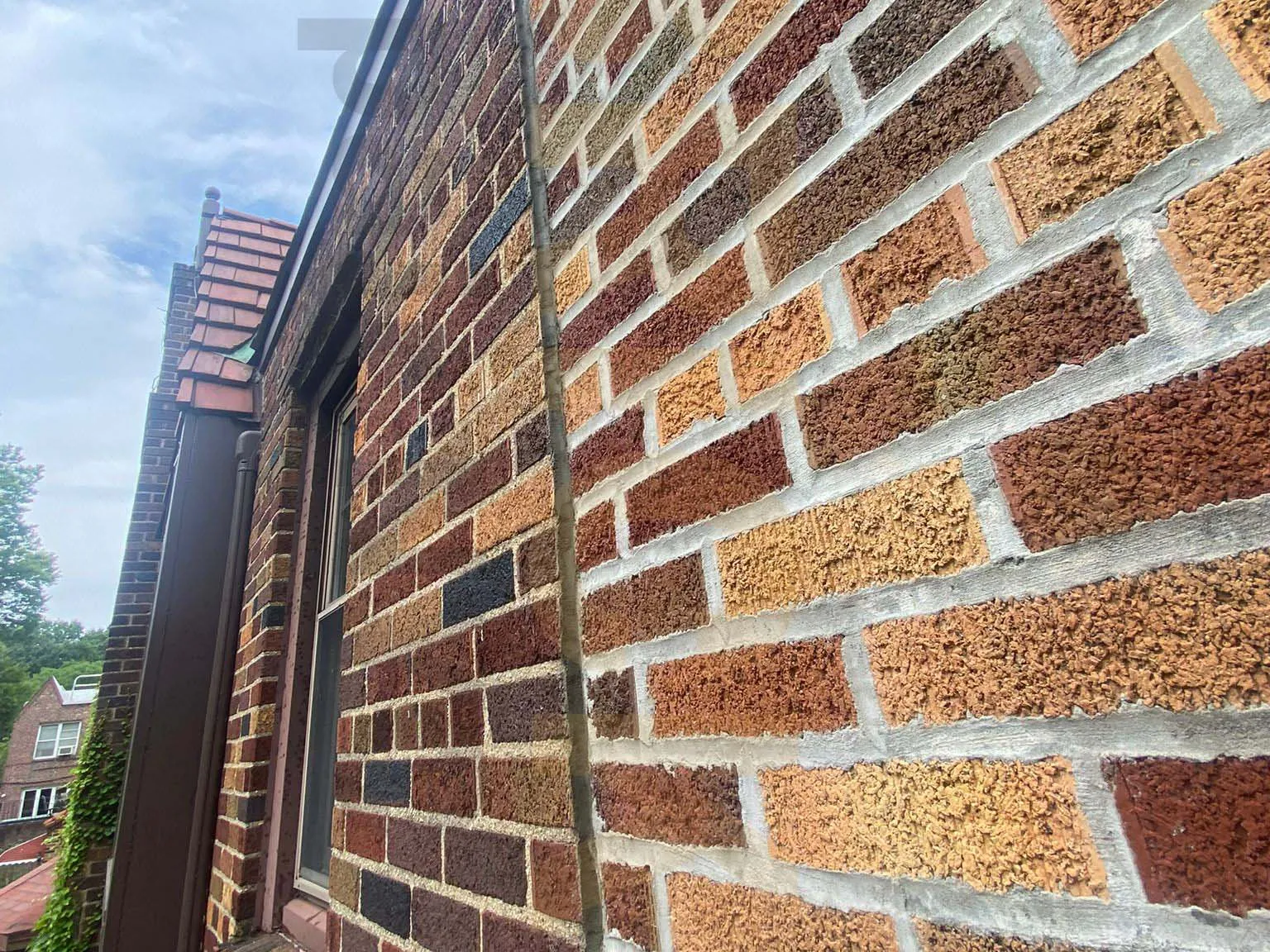
Brick Pointing
Failing mortar joints cut out and repointed to stop leaks and keep walls sound.
Learn More
Foundation Repair
Cracked, bowing and settling foundation walls repaired before the damage spreads.
Learn MoreService Areas
Where Do We Do Masonry Work?
We work on brick, block and stone across Manhattan, Brooklyn, Queens and the Bronx. The housing stock changes from borough to borough, so each page below covers what we see there, from brownstone facades to block retaining walls. Owners with buildings in more than one borough can start at our citywide masonry page.
FAQ
Masonry Questions From NYC Owners
We look for brick close in color, size and texture, and we adjust the mortar color to suit. An exact match on very old brick is not always possible. We show you options before the wall goes up.
A crack running out from the top corner of a window often comes from a rusting steel lintel lifting the brick. Other causes are possible, so the wall needs a look in person. Patching the crack alone usually does not stop it from coming back.
It can be. A wall that leans or bulges can fall, especially after heavy rain or a freeze. Keep people away from it and have it checked. Retaining walls holding back soil may also need an engineer to review the fix.
Yes. We rebuild loose or cracked chimney brick above the roof and set new caps. Flue liners that serve a boiler or heater are a separate job, often handled by a heating or plumbing contractor.
Brownstone is a soft stone that weathers differently from brick. Hard cement patches and the wrong coatings can trap water and speed up damage. In a historic district, repairs to the facade can also need LPC approval.
FISP applies to buildings taller than six stories. Smaller buildings are not part of the program. Check with DOB for the current rules and your building's filing cycle.
We work in Manhattan, Brooklyn, Queens and the Bronx. We do not serve Staten Island. Pick your borough on this page to see the conditions we see there.
Free on site estimate
Get Your Masonry Repair Priced
Tell us what you are seeing on the wall, or send a photo. We will set up a free visit and give you a written scope and price.
Contact
Request a Masonry Estimate
Share the address and a photo of the wall, chimney or facade if you can. We will call you to arrange a free on site look.
- Call us(718) 468-8803
- HoursMon to Sat, 9:00 AM to 6:00 PM
- Free on site estimate with a written price
- Licensed and insured, 25+ years in business
- We handle DOT sidewalk permits
- Serving Manhattan, Brooklyn, Queens and the Bronx
Get Your Free Estimate
Takes about a minute. No cost and no obligation.