
University Heights Concrete Replacement
Concrete Replacement in University Heights, the Bronx
Worn entrance slabs, courtyard paving, stair landings and sidewalk flags removed and poured again on the hills above the Harlem River.
- Old concrete broken out and hauled away
- New base and a pitch that drains
- Free visit and a written price
Local Conditions
Why Does Concrete Fail on University Heights Slopes?
Many University Heights blocks run steeply toward the Harlem River. Rain moves fast over sloped slabs and washes soil from under them, so slabs on hills sink or crack sooner than slabs on level ground. Stairways and landings add edges where water pools.
Pre war apartment buildings and walk ups often have small paved courtyards, side passages and rear service areas cut into the hillside. Each is held by a retaining wall or the building itself, and water behind those walls pushes on the slab above.
Entrance landings take constant use from tenants, students and deliveries. Where a stoop meets a sidewalk on a slope, the landing may be the only level spot, so it wears hard.
Around the college and on Sedgwick Avenue, tree roots can lift paving. Away from the campus, tree cover is lighter, and traffic and age do most of the harm.
Is It Time to Replace Your Slab or Just Patch It?
Patch hairline cracks and small chips. Replace the slab when it has sunk, broken apart, flaked through the surface or tilts toward a wall. On a slope, a slab that has lost its base underneath will keep moving, so a patch rarely lasts.
We tap the slab, look for hollow sounds and watch where water goes during a rain or with a hose. If water flows toward the building or collects at the foot of a stair, the pitch needs resetting too.
What about the public sidewalk?
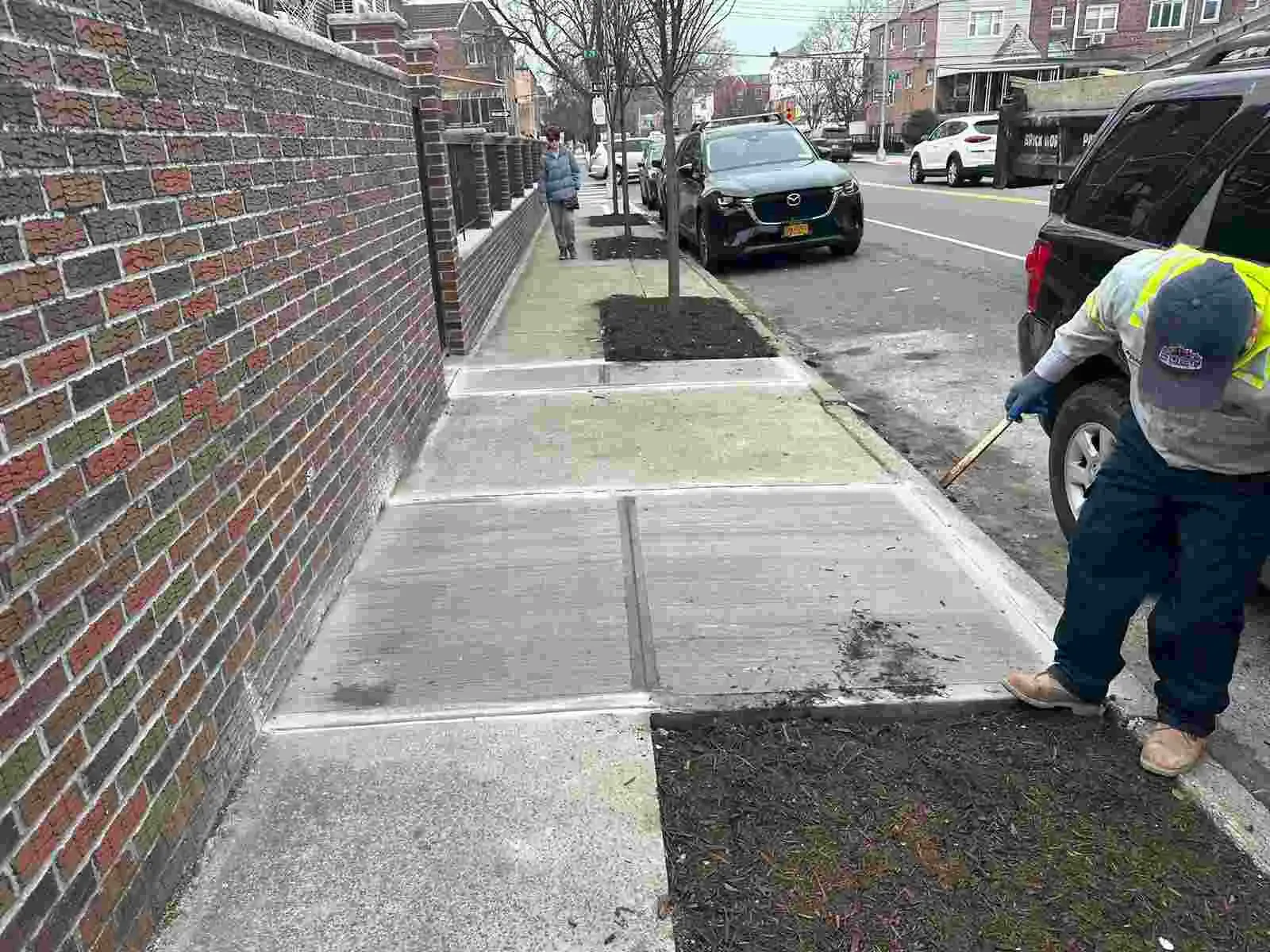
Sidewalk flags are separate. They need a DOT permit, and owners maintain them under Admin Code 19-152. We handle the permit and can replace flags and courtyard slabs in the same visit. Our page on sidewalk violations covers notices.
A slab entirely inside your lot does not call for the DOT sidewalk permit. Retaining walls and structural work can involve the Department of Buildings, and we flag that early. Confirm current rules with the city. University Heights has no historic district that we can confirm.
Slab sinking or draining toward the building? We will inspect it and tell you plainly.
Book an Inspection Call NowHow Do We Replace Concrete on a Hillside Lot?
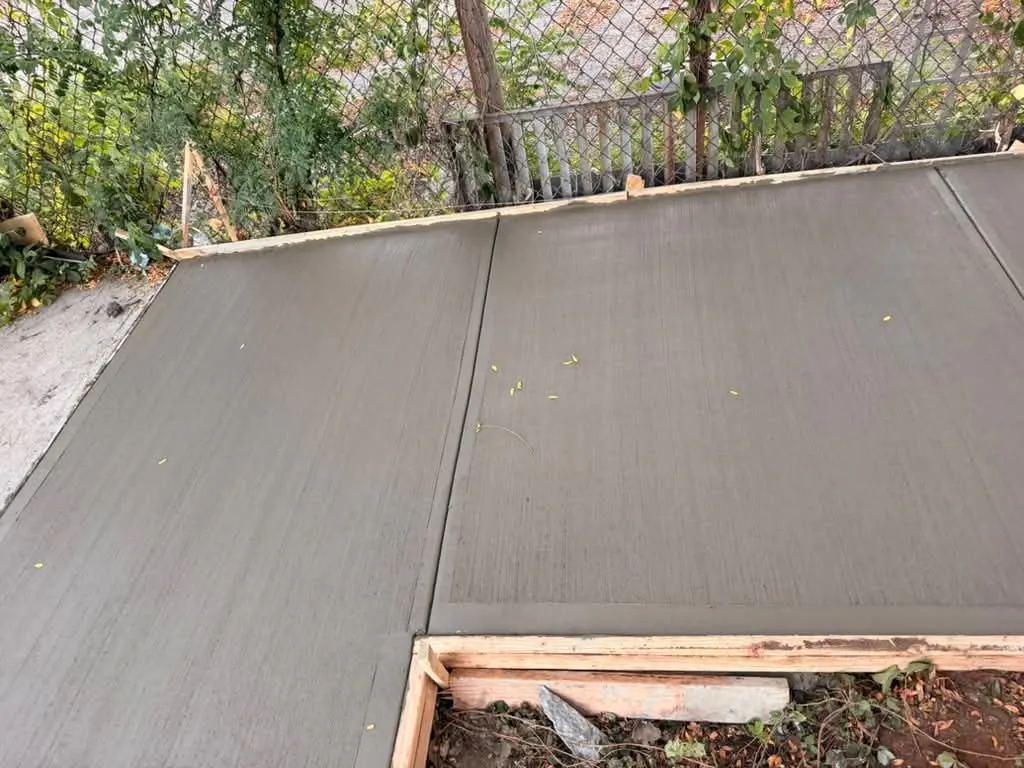
The crew cuts the old slab into sections, breaks it out and carries it off. They rebuild the base so it holds on a slope, set forms to the pitch you need and pour. Control joints are cut, the surface is finished for grip and the slab is protected while it cures.
Access is the hard part on a hillside. Hand tools and small loads are common for courtyards behind buildings, and we plan the haul route before demolition starts.
Where water comes from behind a retaining wall, we leave a path for it to escape under or through the slab area. Trapping that water is how new slabs fail.
Cost Factors
What Changes the Price of Concrete Replacement?
Size
More area and thicker slabs use more concrete and more labor.
Access
Courtyards reached through a stairway or narrow passage need hand carried loads.
Base and drainage
A slope that sheds water onto the slab may need extra base work and a drain path.
Demolition
Thick or reinforced old concrete takes longer to break out and haul away.
We write one price after we see the site, with each part of the job listed.
Get a Free EstimateTimeline
How Long Does Replacement Take?
Once the crew starts, a courtyard or landing goes quickly, with curing time on top. Jobs that include public sidewalk flags need a DOT permit, which usually takes two to three business days.
Visit and estimate
We measure the slab, check the slope and write the price.
Breakout
The old concrete is cut and carried away.
Base and forms
A new base goes in and forms are set to the pitch.
Pour and cure
Concrete is poured, finished and protected.
Public Flags Outside Your Building?
If DOT cited the sidewalk in front of your property, we repair it and give you records for the dismissal request. Read our guide on what a DOT sidewalk violation means.
Nearby
Concrete Replacement Near University Heights
Nearby neighborhoods where we also replace concrete.
FAQ
University Heights Concrete Questions
Yes. We plan the haul route and use hand tools and small loads when access is tight.
The base under it probably washed out. Replacing the slab with a rebuilt base ends the cycle.
Not the sidewalk permit. Retaining walls or structural work may involve the Department of Buildings, so we review your scope.
Yes. The DOT permit for the public flags is ours to file, and we line up both parts so the crew comes once.
Yes. We measure and write the price down at no cost. Call (718) 468-8803.
Contact
Request Your University Heights Concrete Quote
Tell us which slabs are failing and add photos if you can.
- Call us(718) 468-8803
- HoursMon to Sat, 9:00 AM to 6:00 PM
- Free on site estimate with a written price
- Licensed and insured, 25+ years in business
- We handle DOT sidewalk permits
- Serving Manhattan, Brooklyn, Queens and the Bronx
Get Your Free Estimate
Takes about a minute. No cost and no obligation.