
Carroll Gardens Concrete Work
Concrete Replacement in Carroll Gardens, Brooklyn
Broken garden walks, sunken yard slabs and crumbling areaways torn out and rebuilt on row house lots between Court Street and the waterfront.
- Front garden walks and rear yard slabs
- Base prep and drainage handled
- Free visit with a written price
Local Conditions
Where Does Concrete Fail on a Carroll Gardens Lot?
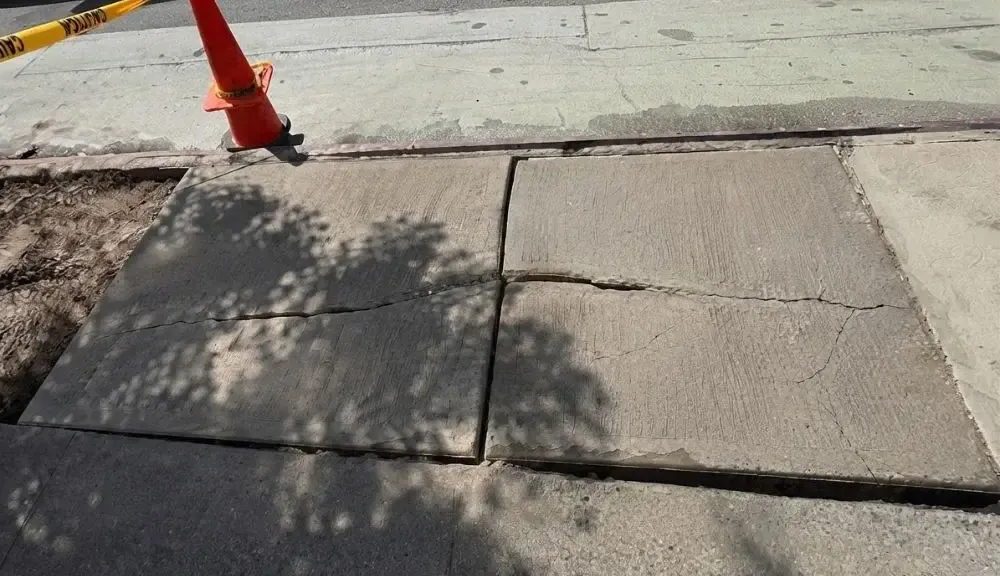
Concrete fails first where water collects and the ground moves. On Carroll Gardens row house lots that means front garden walks, the strip beside the stoop, areaways below street level and the slab in the rear yard. Age and a thin original base do the rest.
Many houses here sit behind deep front gardens, especially on the Place blocks. The short walk from the gate to the stoop is often old concrete, cracked where roots and frost have pushed it for decades. Iron fences and garden walls run right beside it, which limits how a crew can work.
In back, small yards behind brownstones usually hold a patio slab, a shed pad or a path to a rear door. These slabs settle when the soil underneath washes out, and water then pools toward the house wall instead of away from it.
Areaways under the stoop take the worst of the water. Rain, snow melt and salt collect there, and the floor slab breaks up faster than any other concrete on the property.
How Do You Know a Slab Needs Replacement and Not Repair?
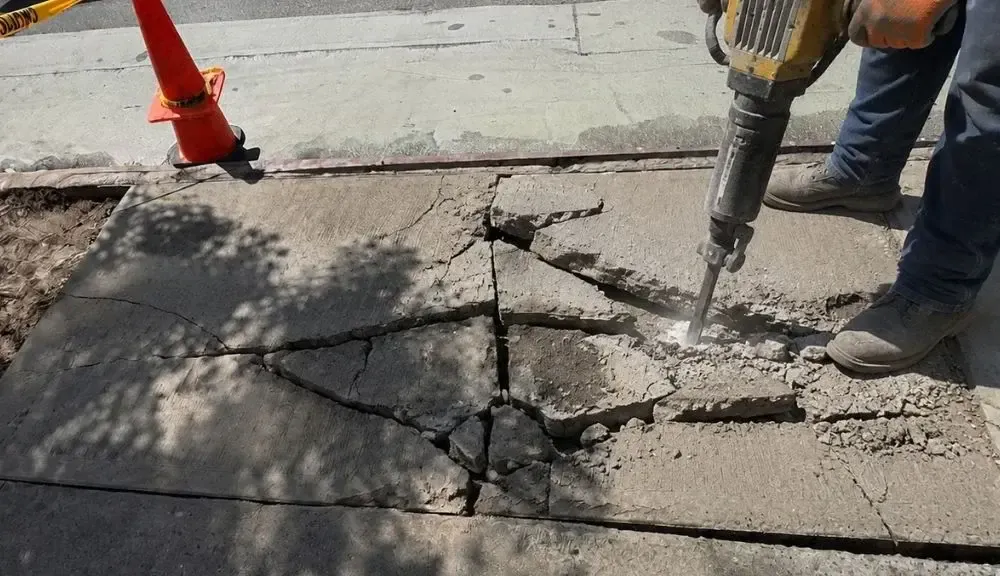
A slab needs replacement when cracks are wide and uneven, when parts have sunk or tilted, or when water pools on it. Filling cracks does not fix a bad base. If the concrete has moved, it will keep moving, so the safe fix is to remove it and pour new.
Hairline cracks in an otherwise flat slab are usually cosmetic. A crack where one side sits higher than the other is a trip hazard and a sign the ground below has shifted.
- Garden walks tilted toward the house
- Rear yard slabs with standing water
- Areaway floors crumbling at the drain
- Concrete pulling away from the stoop
- Old patches over patches
- Slabs lifted by tree roots
Access is the practical question on a brownstone lot. Rear yards often can be reached only through the house or a narrow side passage, so we plan how broken concrete leaves the property and how new material comes in, and we protect floors and walls along the way.
Cracked slab in a Carroll Gardens yard or garden walk? Have someone look at the base before you pour anything.
Book an Inspection Call NowWhat Does Concrete Replacement Involve on a Row House Lot?
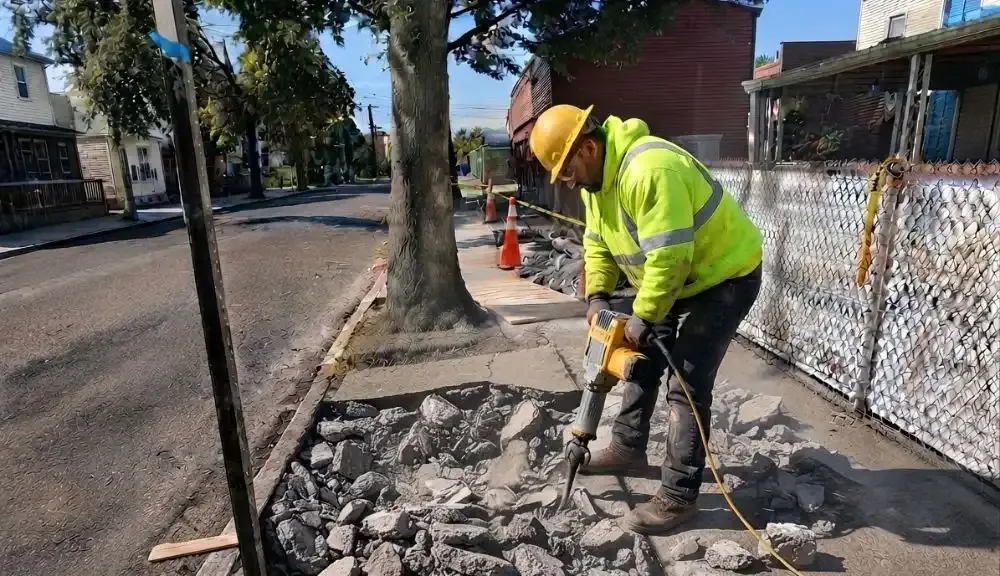
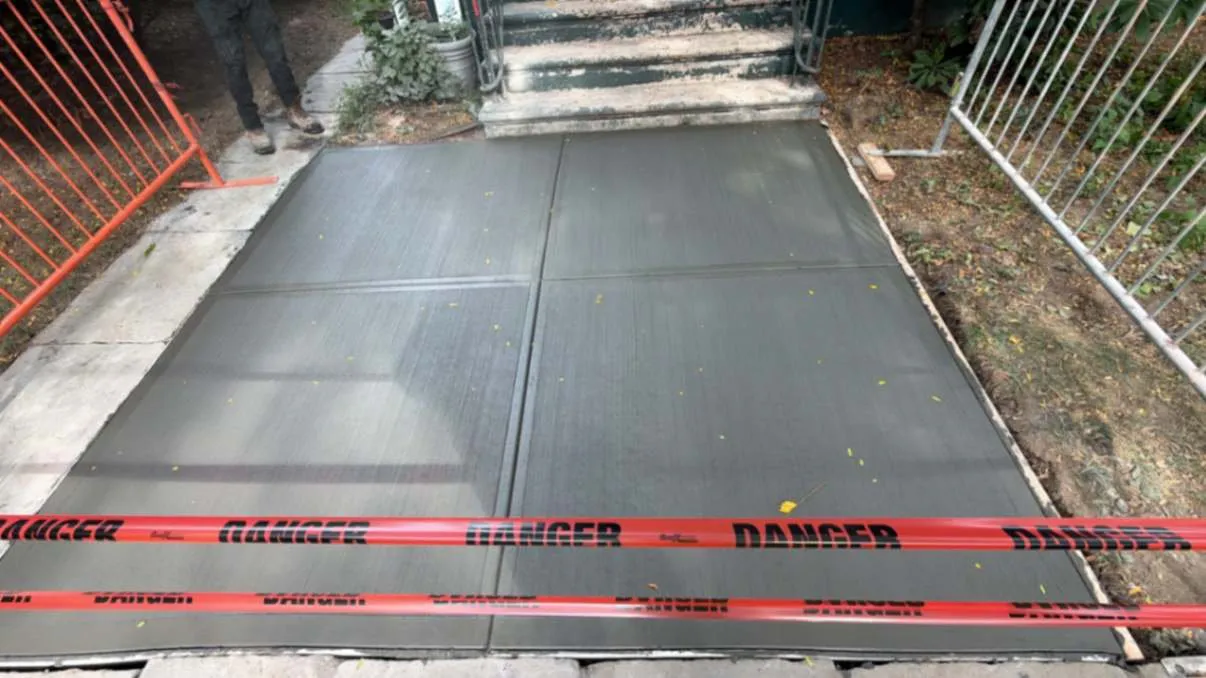
The crew saws and breaks out the old slab, hauls it away, then rebuilds the base so it drains. New concrete is poured with reinforcement where the job calls for it, finished, and left to cure. Slope is set so water runs away from the building foundation and toward a proper drain.
Drainage gets the most attention. A slab that pitches toward the basement wall sends water where you do not want it, so we set the grade before we pour. Where a yard has no place for water to go, we tell you and talk through options.
Concrete beside the public sidewalk is a different case. Work in the sidewalk itself generally needs a DOT sidewalk permit, and we file it. If a defect in front of your house is on a violation notice, our guide on clearing NYC sidewalk violations explains the steps.
Part of Carroll Gardens lies inside the Carroll Gardens Historic District, around parts of President and Carroll Streets. Changes visible from the street, such as front garden work, can need Landmarks Preservation Commission review, so confirm with the city before you start.
Should You Replace Concrete in Sections or All at Once?
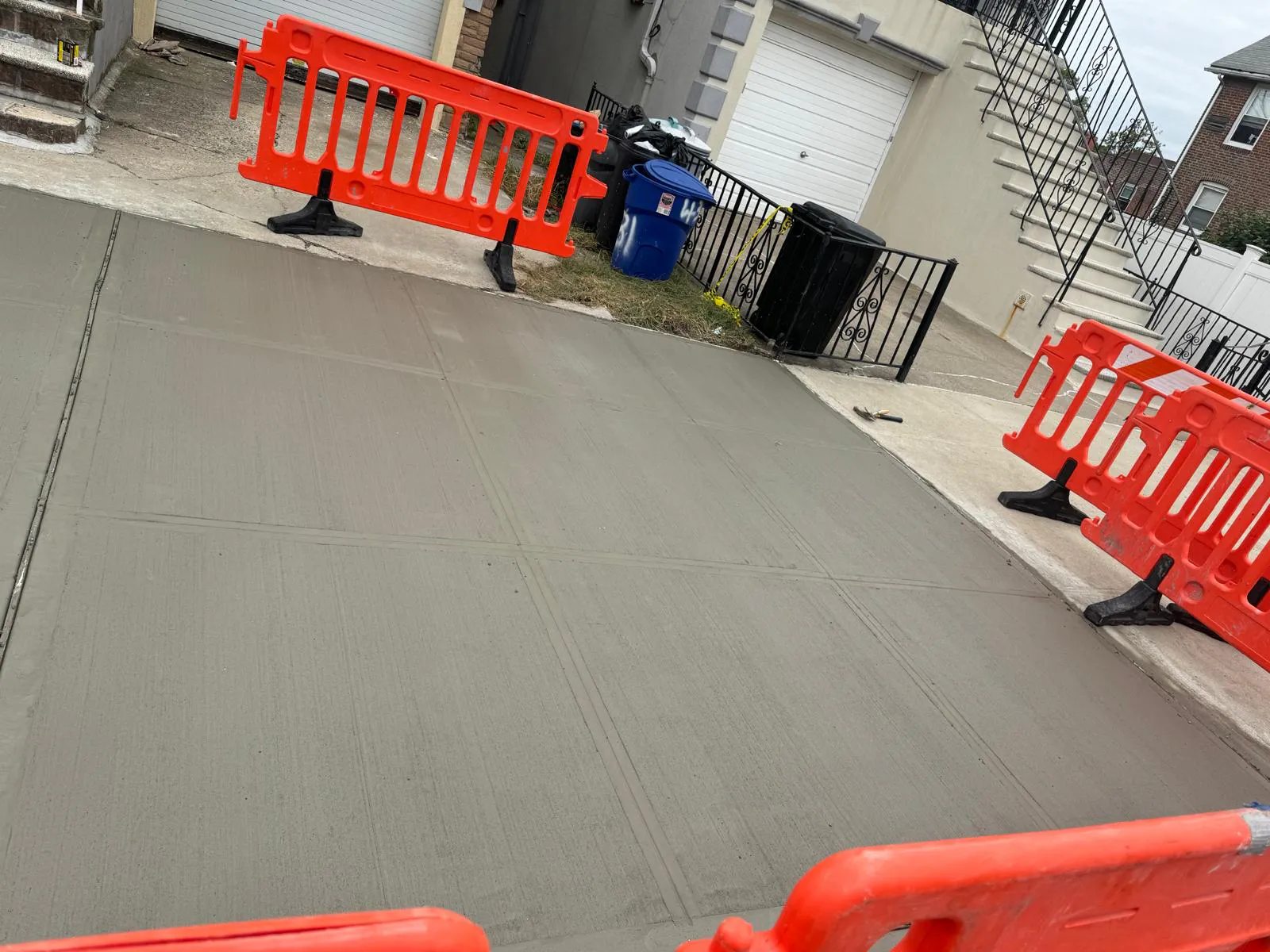
Replacing everything at once usually gives a better result, because the new slab has one consistent base and pitch. Doing it in sections makes sense when budget or access forces a phase, but seams between old and new concrete are where cracks tend to reappear.
On a Carroll Gardens lot, a common plan is to do the front garden walk first, since it faces the street and can appear on a violation notice, then rebuild the rear yard slab later. Both are straightforward when scoped separately in writing.
Color and finish are worth discussing. New concrete looks lighter than weathered slabs beside it. Over a season the difference fades, and a broom finish gives grip on the wet days when brownstone steps and walks are slick.
If you plan other work, such as new steps or a garden wall, tell us early. Pouring the slab after the masonry avoids damage to fresh concrete, and doing the drainage at the same time keeps water away from your basement wall.
Pricing
What Affects the Cost of Concrete Replacement in Carroll Gardens?
Cost depends on the area, how much old concrete must be broken out and hauled, the base and drainage work, and how hard the space is to reach. A small front walk and a full rear yard are very different jobs, so the price follows your scope in writing.
Area to replace
Square footage drives material and labor more than anything else.
Demolition and hauling
Thick or reinforced old slabs take longer to remove and carry out.
Base and drainage
Fixing pitch and adding a drain path is part of a slab that lasts.
Access
Yards reached only through the house or a narrow passage add handling time.
Process
How Long Will Your Carroll Gardens Concrete Job Take?
Small yard and walk jobs move quickly once the site is cleared. When the work includes the public sidewalk, plan on one to two weeks including the permit, which usually takes two to three business days, and curing time. The crew tells you the schedule before starting.
Free visit
We measure the area, check slope and note how the concrete can be reached.
Written price
You receive the full scope, in writing, before any work.
Demolition
Old concrete is broken out and hauled from the property.
Base and forms
The base is compacted and pitched, and forms set to the new grade.
Pour and cure
Concrete is poured, finished and protected while it cures.
Concrete in Front of Your House on a DOT Notice?
We repair the public sidewalk section and file the permit, so the notice and your private concrete are handled together. Read our guide on sidewalk violations and how they get resolved.
Nearby
Concrete Replacement Near Carroll Gardens
We also replace concrete in the neighborhoods around Carroll Gardens.
FAQ
Carroll Gardens Concrete Questions
Yes. We plan the demolition to protect iron fences, gate posts and garden walls. Sections come out by hand or with small tools where a fence sits tight to the walk.
The slab has probably settled or was poured without enough pitch. New concrete is set to drain away from the building. If there is no drainage path, we tell you before you decide.
We look at the access during the free visit. Often material moves through the house or a side passage, and we protect the floors and walls along that path.
Private yard work is usually different from sidewalk work, which generally needs a DOT permit. Rules can change, so confirm with the city and ask us about your situation.
It can. Parts of Carroll Gardens are inside a historic district, and visible front work may need Landmarks Preservation Commission approval. Check with the city first.
Foot traffic is usually fine after the concrete has cured enough, and the crew will tell you when. Heavy furniture and planters should wait longer, since concrete keeps gaining strength for weeks.
Yes. We look at the slab, measure it and put the price in writing without charging for the visit. Dial (718) 468-8803 to schedule your visit.
Contact
Request Your Carroll Gardens Concrete Quote
Describe the yard, walk or areaway and send a photo if you can. We will set a time for a free visit.
- Call us(718) 468-8803
- HoursMon to Sat, 9:00 AM to 6:00 PM
- Free on site estimate with a written price
- Licensed and insured, 25+ years in business
- We handle DOT sidewalk permits
- Serving Manhattan, Brooklyn, Queens and the Bronx
Get Your Free Estimate
Takes about a minute. No cost and no obligation.