
Cypress Hills Concrete Contractor
Concrete Replacement in Cypress Hills, Brooklyn
Broken yard slabs, cracked walkways and heaved patios torn out and poured fresh at Cypress Hills homes, from the hillside blocks to the streets near Atlantic Avenue.
- Old concrete broken out and hauled away
- Grading that sends water away from the house
- Written price after a free visit
When Should Concrete Around a Cypress Hills Home Be Replaced?
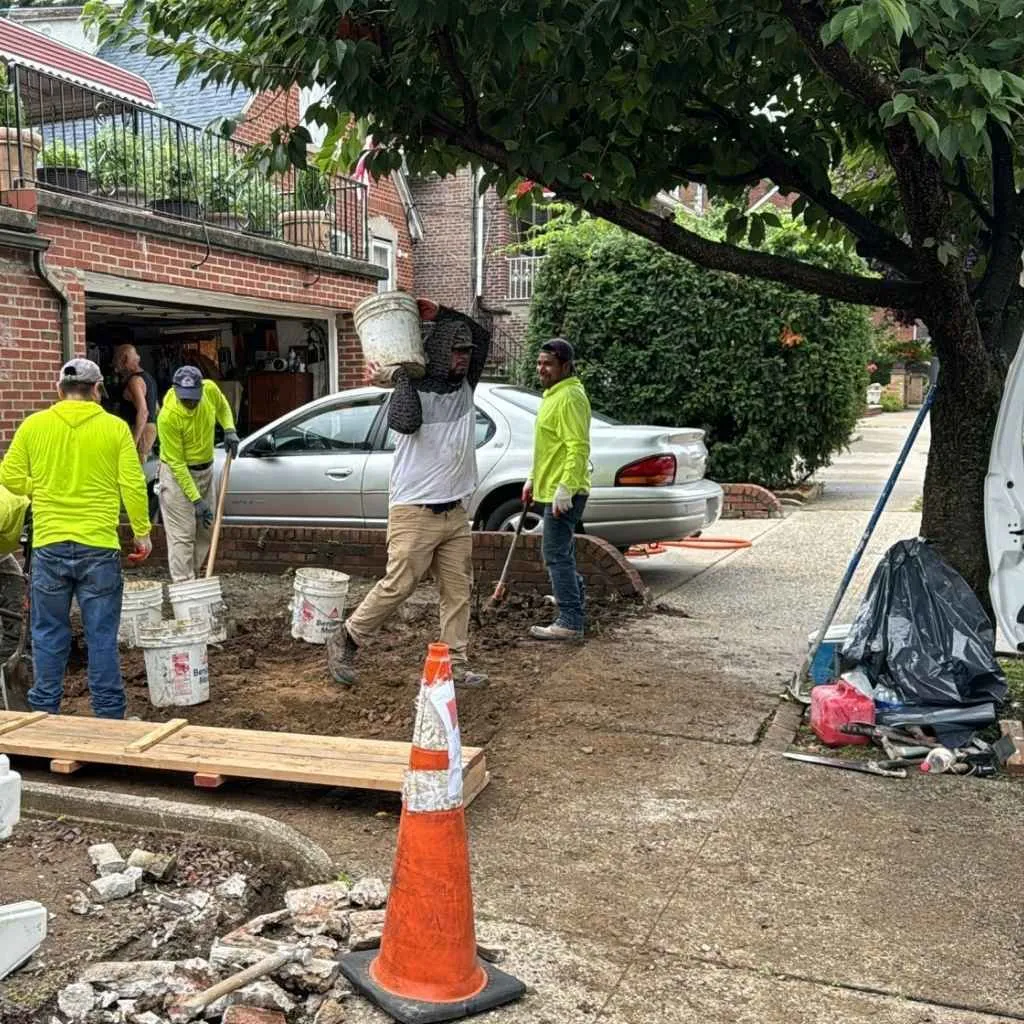
Replace it when the slab has cracked in several places, tilted, sunk or holds water after rain. Patching works on a stable slab with a single crack. When the ground below has moved or washed out, the surface will keep breaking, and fresh concrete on a rebuilt base costs less over time.
Cypress Hills has a lot of two family homes, wood frame and brick row houses and small apartment buildings. Most have a slab of some kind: a rear yard patio, a side walkway, a set of steps to the basement or a strip of concrete along the fence.
These slabs were often poured decades ago on a thin base. Water from downspouts and hillside runoff gets under the edges, freezes, and lifts the concrete. Once the slab lifts, it never settles back to the way it was poured.
How Does the Hillside Change Concrete Work in Cypress Hills?
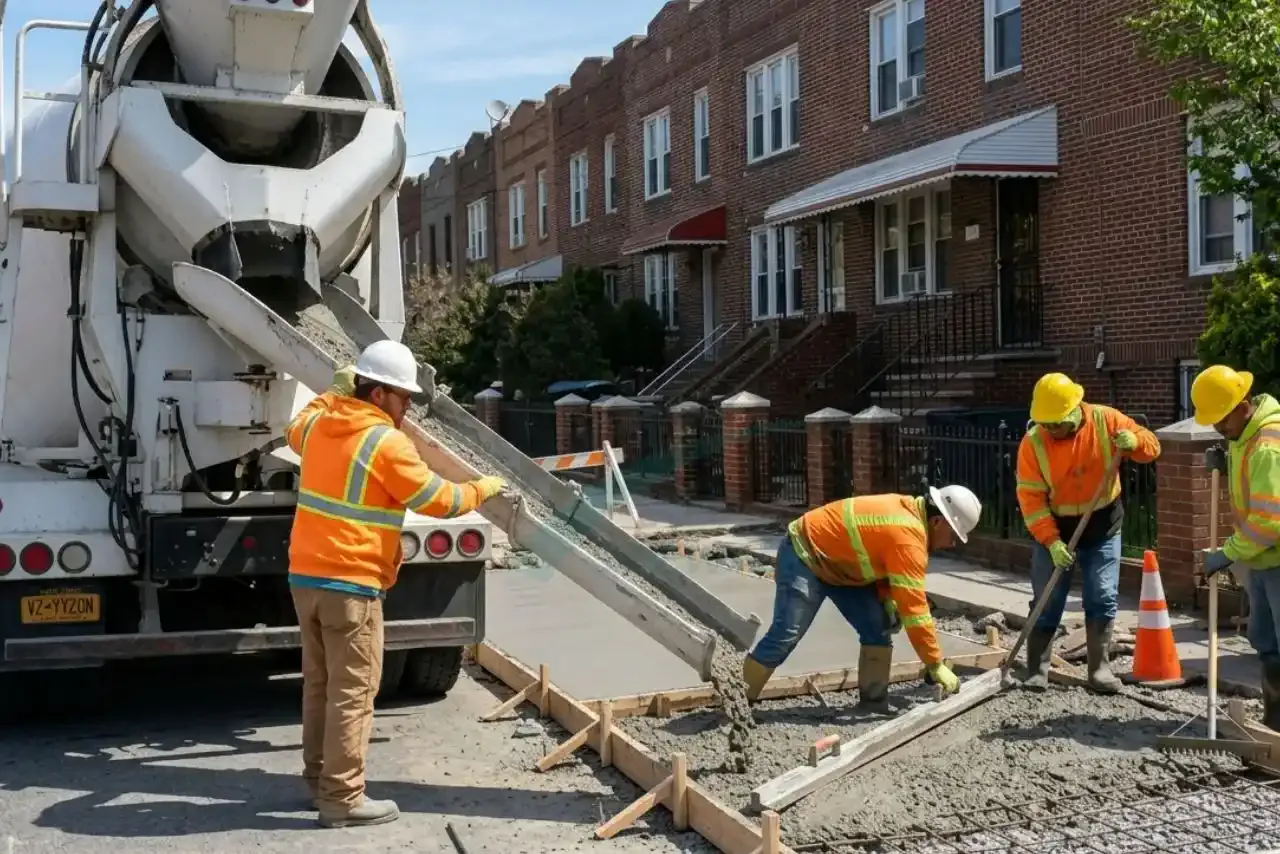
Blocks that climb toward Highland Park send runoff downhill, often toward the houses below. Concrete on these lots has to be graded so water leaves the building. New slabs are pitched away from foundation walls and toward a drain or the street, instead of being poured flat.
Many lots here sit above or below their neighbors. Retaining edges, step downs and side passages are common, and each one has to be poured so it drains. A walkway that pitches toward a basement window will eventually send water inside.
Before pouring, we look at where water goes now. Downspout locations, the slope of the yard and the position of the basement door all tell us how to shape the new slab.
Rear yards with limited access
Many rear yards can only be reached through a side passage or the house itself. We bring material in by wheelbarrow when a machine cannot fit, and we plan the schedule to match.
What Makes Older Yard Slabs Fail in Cypress Hills?
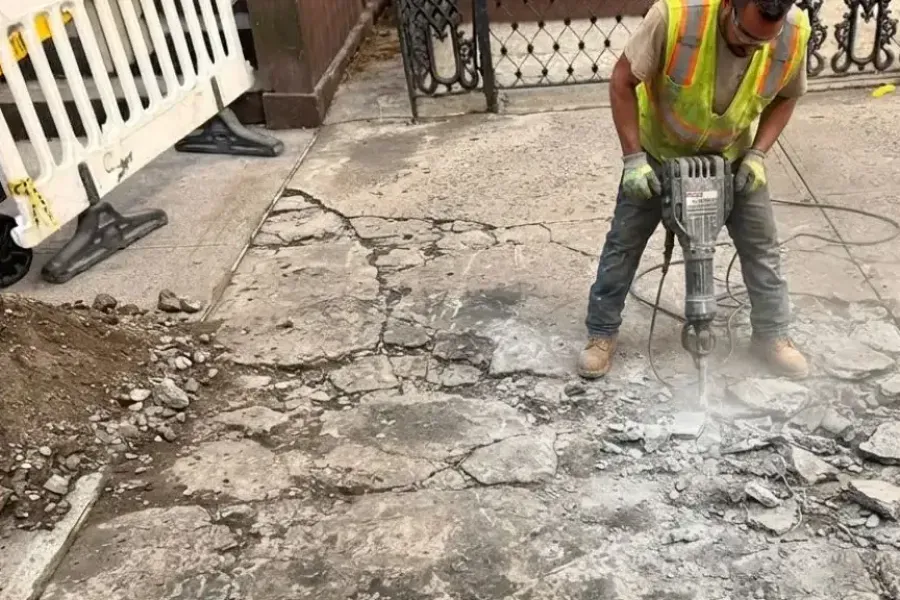
Poor bases, downspouts that drain onto the slab and repeated freezing are the usual reasons. Slabs poured decades ago often sit on little more than loose fill. Water gets underneath, the soil moves, and the concrete above it follows, cracking along the weak lines.
Wood frame houses and older brick homes here often have small paved yards that were added over the years. Some were poured over topsoil or rubble, and many were never given any slope at all. Those slabs hold puddles, and puddles freeze.
Tree roots and fence posts add their own stress. A root under a slab pushes it up on one side. A post set in concrete can crack the slab around it as it rusts or shifts.
Which Concrete Problems Do We See in Cypress Hills, and What Is the Fix?
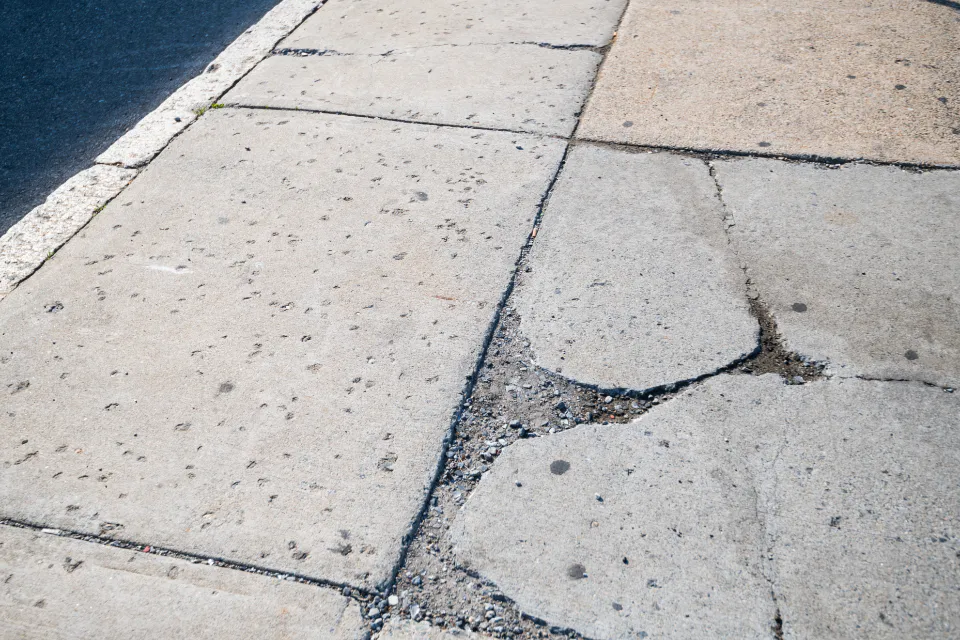
The common failures are tilted yard slabs, cracked walkways, sunken patios and basement floors that have heaved. Each fix starts by removing the old concrete and correcting the base. The table below shows how the usual problems are handled.
| Problem | What we do |
|---|---|
| Yard slab tilts toward the house | Break out, re-grade the base and pour with a pitch away from the wall |
| Patio sunk in one corner | Remove, fill and compact the void, and pour a new slab |
| Side walkway cracked and uneven | Replace with a properly drained walkway |
| Basement floor heaved or cracked | Break out the floor, check the base and pour new |
| Old patches that do not match | Replace the whole section for an even surface |
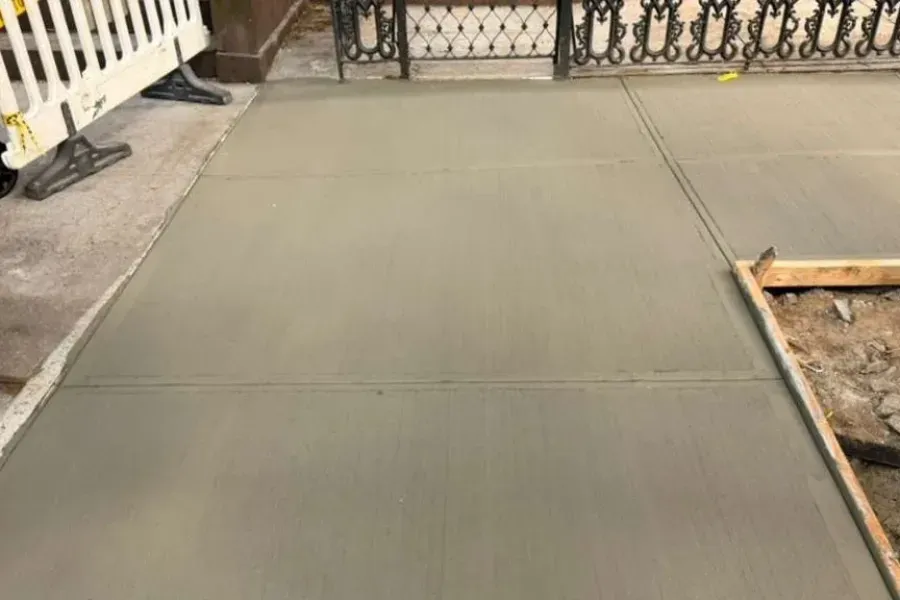
If the slab is next to a public sidewalk, the two often fail together. A DOT notice on the sidewalk is a common reason to look at the rest of the concrete too. Our guide to resolving a DOT sidewalk violation shows what happens once the repair is done.
Can a Cracked Slab Be Saved Instead of Replaced?
Sometimes. A stable slab with a hairline crack can be sealed, and a slab with one damaged panel can have just that panel replaced. If the surface is sound and drains well, replacement is not needed. We tell you honestly which situation you are in.
Owners are sometimes surprised to hear that we recommend leaving concrete alone. A short crack that has not moved in years is usually cosmetic. Replacing it would cost money and fix nothing.
Signs it is time to replace include a slab that rocks underfoot, cracks that keep opening, steps in the surface that catch a shoe, and water that stands for hours after rain.
Ready to Replace the Slab Behind Your House?
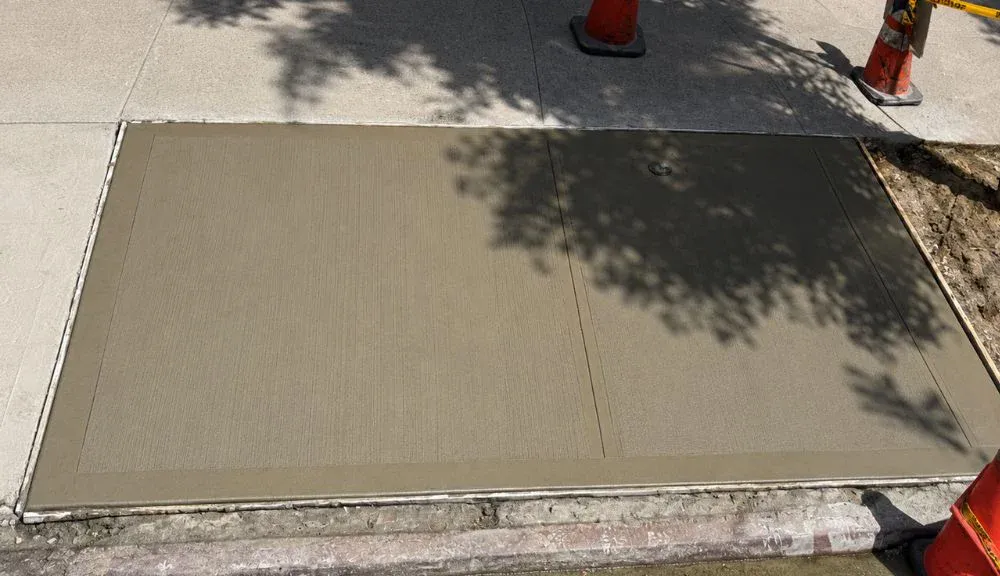
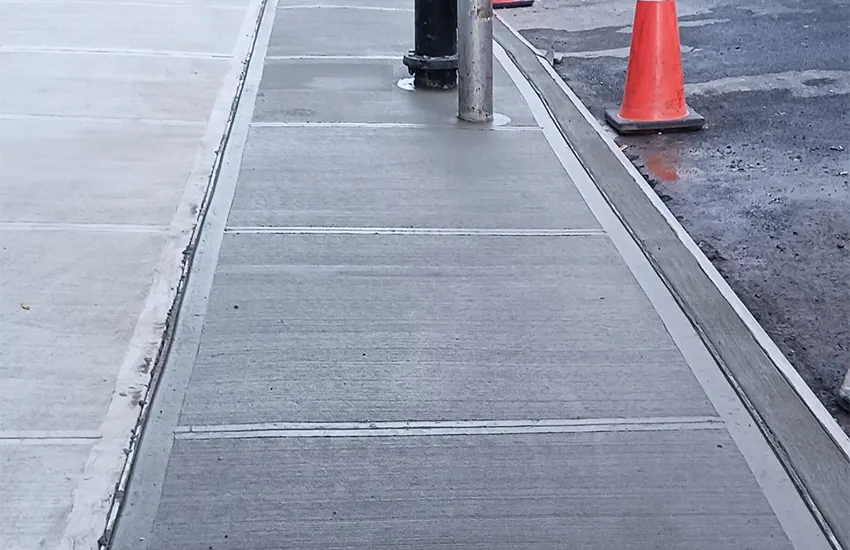
Tell us what you have now and send a photo. We will explain the steps and put the price in writing.
What Does Replacing Concrete in Cypress Hills Depend On?
The area, the demolition and hauling, the condition of the base, any reinforcement, drainage changes and access are the main factors. A patio behind a row house is a very different job from a walkway along a hillside lot. We price each after seeing the site, in writing and at no cost.
Permits are part of the picture only when the concrete touches the public sidewalk or involves structural work. A yard slab behind the house does not normally need a sidewalk permit. If any part of the job does, we file it and tell you what to expect. Confirm current rules with the city if you are unsure.
Cypress Hills has no landmark district that we can confirm, which keeps approvals simpler than in some Brooklyn neighborhoods. Structural changes are still the exception, and we say so up front.
Steps
How a Cypress Hills Concrete Job Runs
Site visit and price
We look at the slab, the drainage and the access, then give you a written price.
Demolition
Old concrete is broken out and hauled off the property.
Base and forms
The ground is compacted and the forms are set to the pitch we want.
Pour and finish
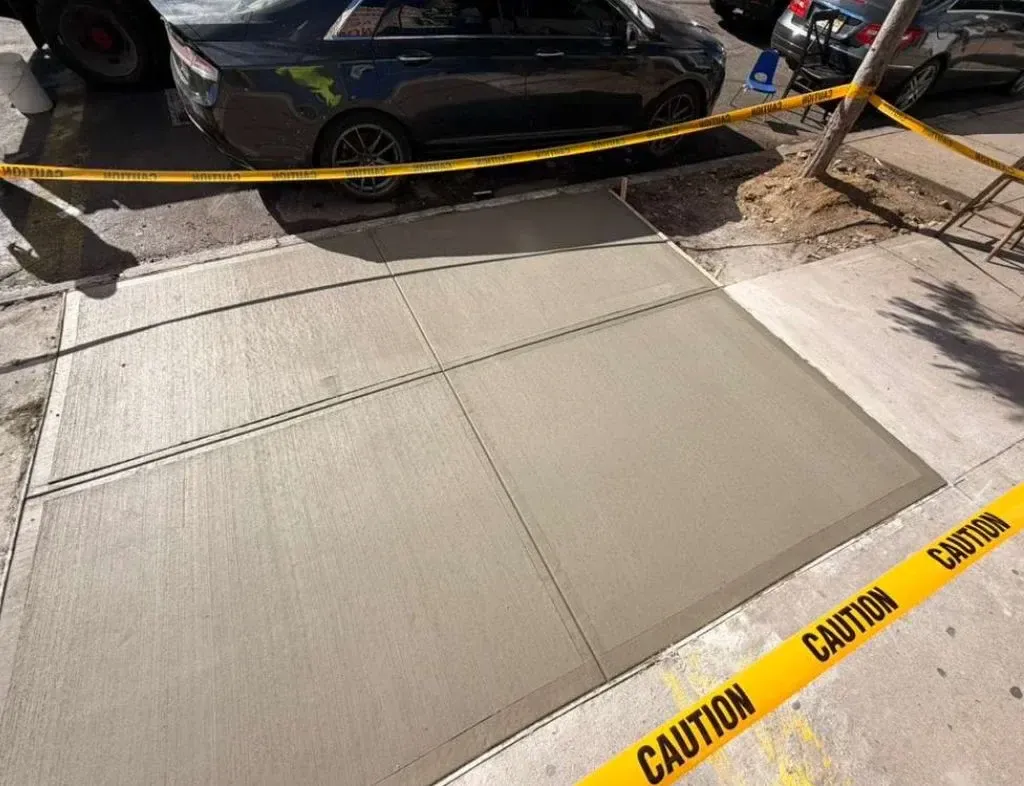
New concrete is poured, leveled and finished for safe footing.
Curing
We tell you when it is safe to walk on and when heavier loads can return. Jobs with permits take one to two weeks.
Nearby
Concrete Replacement Near Cypress Hills
We pour concrete in the neighborhoods that touch Cypress Hills.
FAQ
Cypress Hills Concrete Questions
Yes. We grade the base and pitch the new slab so water runs away from the building. On a slope we also check where runoff collects, so it does not pool at a door or window.
It can be. If the floor has cracked or lifted, we break it out, correct the base and pour a new slab. If water pressure is the cause, we also talk about drainage.
Yes. Demolition and hauling are part of a replacement, and the written price lists them so you can see what is included.
We give you specific dates at the end of the job because curing depends on the weather. Foot traffic comes back first and heavier loads later.
A slab behind your house usually does not need a sidewalk permit. Work on the public sidewalk generally does, and we file it. Confirm current rules with the city or 311.
Call (718) 468-8803. We come to the property, measure it and give you a written price at no cost.
Contact
Get a Cypress Hills Concrete Quote
Give us the address and describe the slab or walkway. Photos of the cracks and the drainage help us plan ahead.
- Call us(718) 468-8803
- HoursMon to Sat, 9:00 AM to 6:00 PM
- Free on site estimate with a written price
- Licensed and insured, 25+ years in business
- We handle DOT sidewalk permits
- Serving Manhattan, Brooklyn, Queens and the Bronx
Get Your Free Estimate
Takes about a minute. No cost and no obligation.