
Flatlands Concrete Contractor
Concrete Replacement in Flatlands, Brooklyn
Cracked back yards, sunken patios and broken front walks torn out and poured again on the brick house lots of Flatlands.
- Yards, patios, walkways and side slabs
- Base and drainage done right
- Free visit and a written price
Which Concrete Areas Get Replaced on Flatlands Lots?
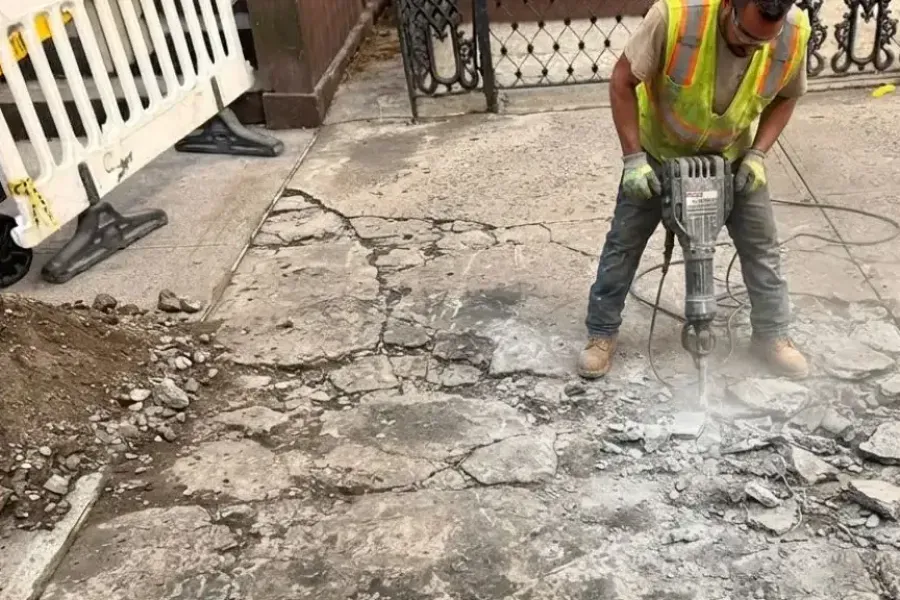
On Flatlands lots the usual jobs are the back yard slab or patio, the walk from the street to the front door, the strip along the side of the house and the garage floor. Cracked, sunken or pooling concrete is the main reason owners call, usually after years of settling.
Most of the housing is attached and semi detached brick, with plenty of one and two family houses on lots that leave room for a driveway and a yard. That mix of yard space and vehicle paths means concrete covers a lot of the property.
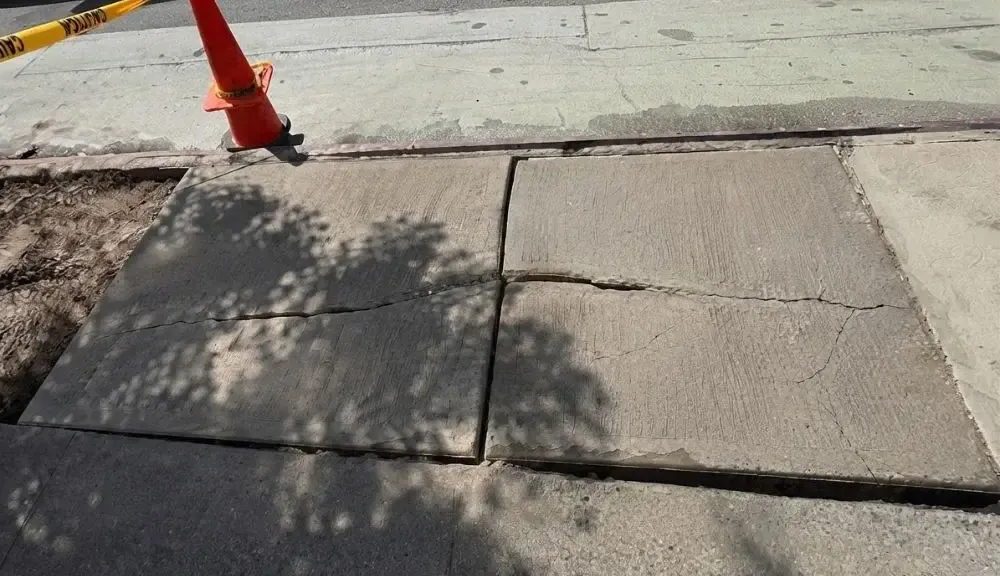
Older slabs were often poured on thin or poorly compacted base. Over time the soil under them settles, and the slab cracks or tilts. When a slab tilts toward the house, rain runs toward the foundation, which is a good reason not to wait.
| Problem | What We Do |
|---|---|
| Back yard slab cracked and tilted | Remove it, rebuild the base and pour a new slab sloped away from the house |
| Front walk broken or uneven | Replace the path and match it to the stoop and gate |
| Side strip pooling water | Repour with correct slope so water leaves the wall |
| Garage floor crumbling | Break out the damaged floor and repour with a proper base |
The Method
Why Replace Concrete Instead of Patching It?
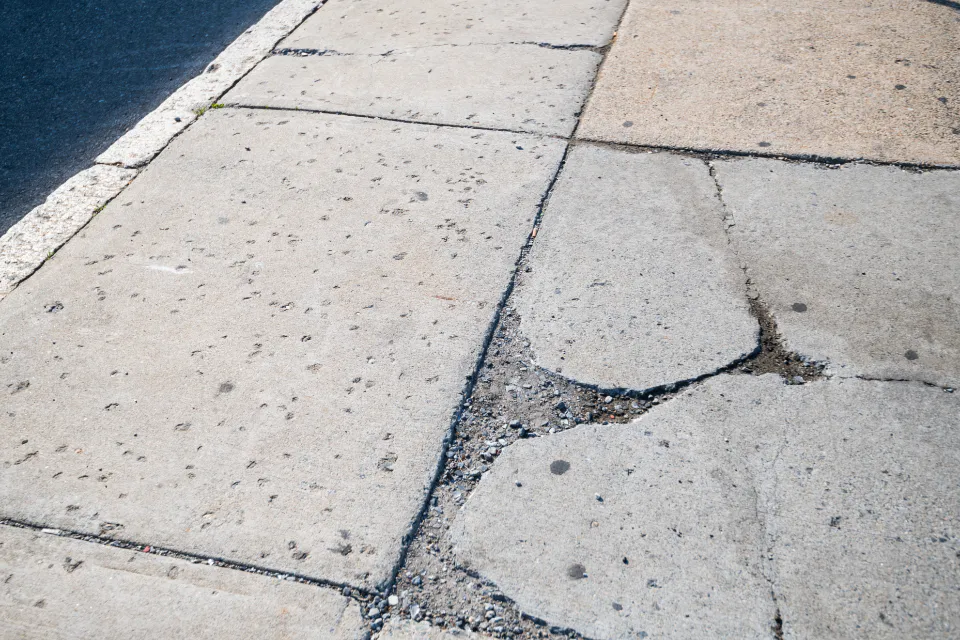
Patching covers a symptom. When a slab has cracked through, sunk or crumbled on the surface, the cause is usually the base under it, and a patch does not fix that. Replacing the concrete lets the crew rebuild the base, set the slope and pour a slab that lasts.
Small surface chips can sometimes be repaired. A crack that runs all the way through, or a slab that has moved out of level, needs to come out. We tell you which case you have when we visit.
For work in front of the house that meets the public sidewalk, DOT rules and permits may apply. Confirm them with the city, or ask us what we know.
How Does Water Behave on a Flatlands Concrete Lot?
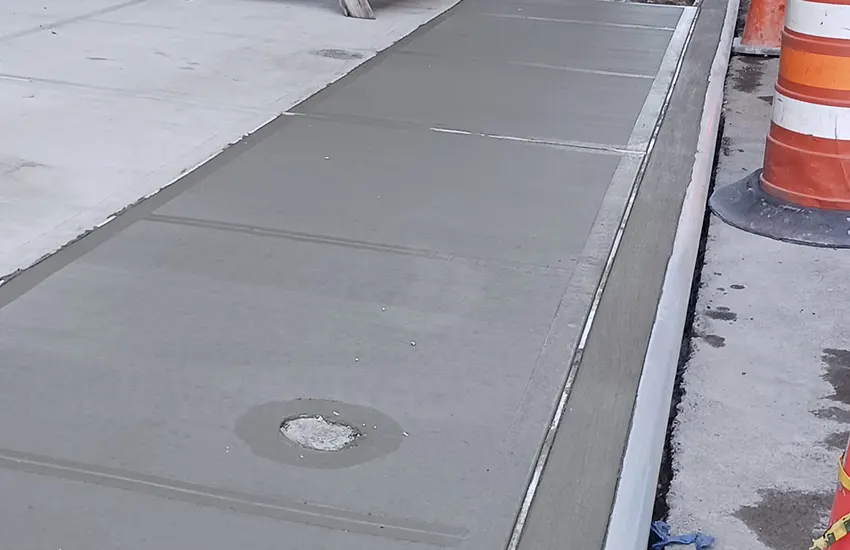
Water should run away from the house. On many older lots the concrete has settled so that rain pools against the wall or collects in a low spot in the yard. A replacement pour fixes the slope, which is often the most useful part of the job.
Flatlands is mostly inland, with lower ground toward Paerdegat Basin at the eastern edge. Heavy rain can still overload sewers here, so it helps to give surface water somewhere to go instead of letting it soak in beside the foundation.
Pooling water also freezes. A patio with a low spot turns into an ice sheet in winter, and the freeze and thaw cycle makes the cracks wider each year.
Slope and drainage checks
Before we pour, we check where the downspouts drain and where the yard falls. If water has nowhere to go, we talk through options such as a slight regrade or a drain, and price them separately.
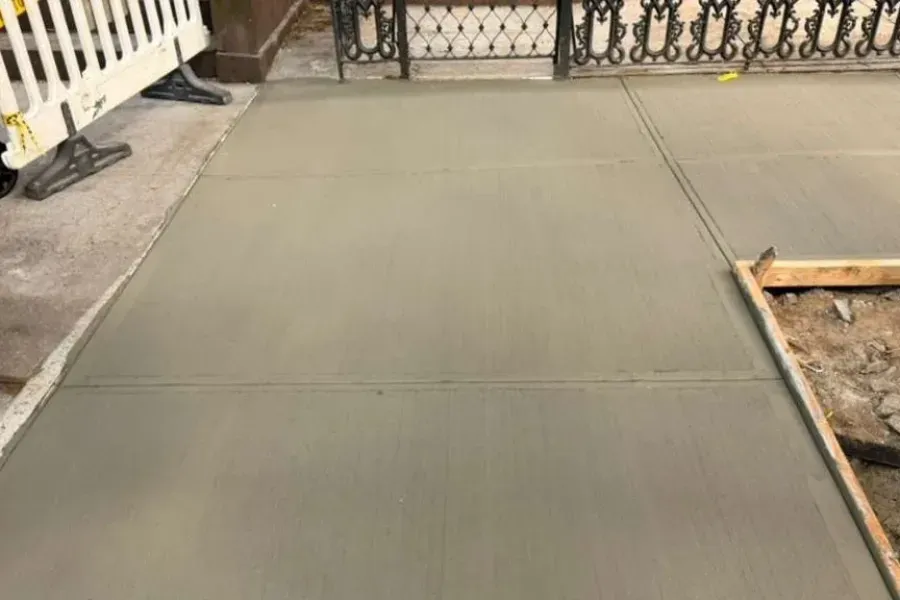
Is Your Slab Tilting Toward the House?
Photograph it from two angles and send it over.
What Is Involved in Tearing Out and Repouring a Slab?
The crew breaks out the old concrete, hauls it away, compacts and levels the base, sets forms and reinforcement where needed, pours the new concrete and finishes it. Curing then takes time before the surface is ready for use. Access to the yard often sets the schedule.
Many Flatlands houses have a narrow path along the side. If a machine cannot fit, the crew carries out the old concrete by hand, which takes longer. We look at the access route on the visit so the estimate reflects it.
- Demolition and hauling of the old concrete
- Base preparation and compaction
- Forms, reinforcement and the pour
- Finishing, curing and cleanup
If part of the concrete ties into the public sidewalk, a DOT sidewalk permit generally applies, and we file it for the jobs we do. A violation on the frontage can be handled on the same visit, and our page on how sidewalk violations work explains the process.
How Long Should New Concrete Be Kept Clear?
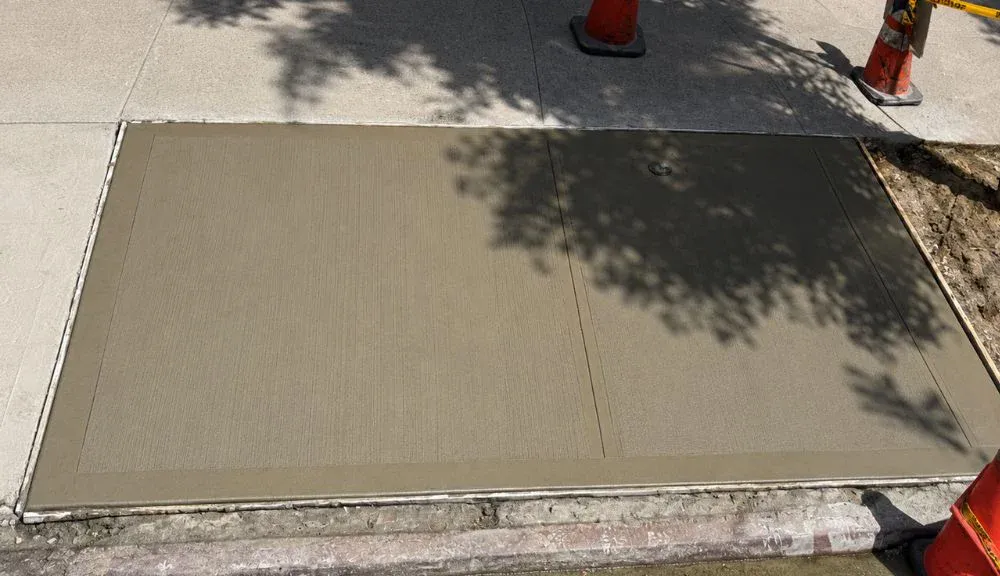
Keep foot traffic off until we say it is set, and keep vehicles off much longer. New concrete gains strength over days and weeks. Driving on a new slab too soon can crack it, and that is one of the most avoidable causes of early failure.
We barricade the area while it cures and tell you when you can walk on it, and when you can use it for heavier loads such as a car or a grill. A typical job with permit and curing takes one to two weeks.
Weather matters as well. Heavy rain or a hard freeze can delay a pour. If the forecast is poor, we would rather move the day than pour into bad conditions.
What Should Flatlands Owners Decide Before a Pour?
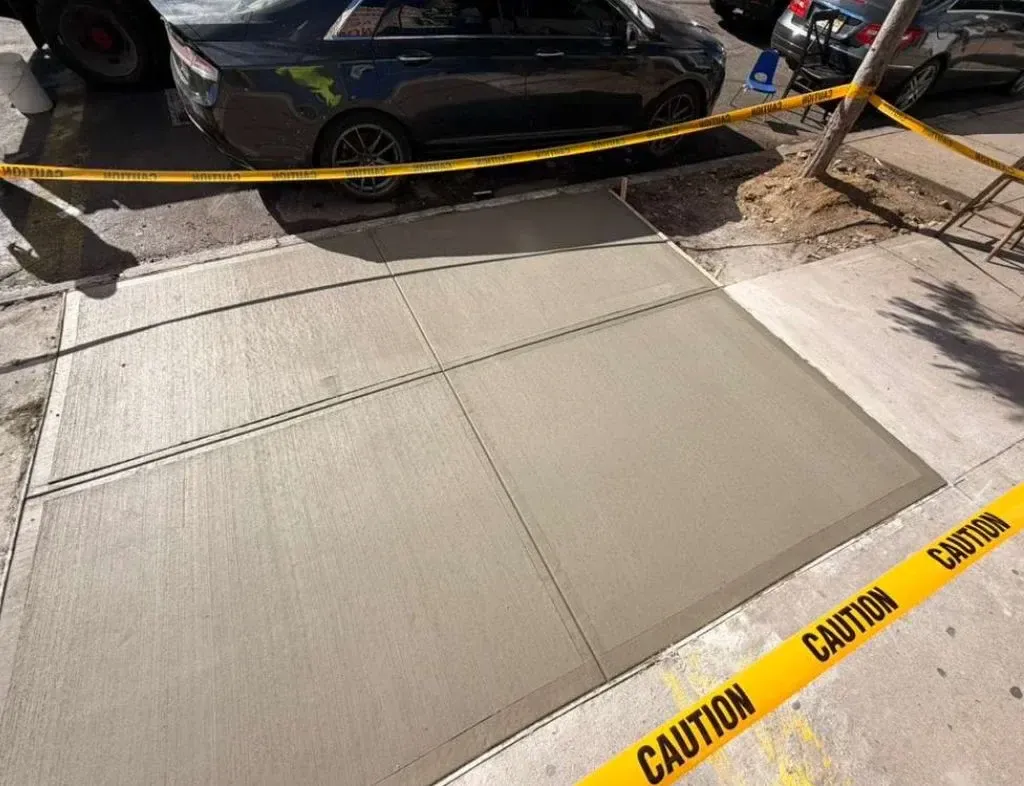
Decide what the area will be used for, how much weight it will carry, where the water should go and what finish you want. A patio with chairs needs less than a slab that will hold a vehicle. Those choices shape the base, thickness and surface texture we recommend.
Finish matters more than most owners expect. A smooth trowel finish looks clean but can be slick when wet. A light broom finish gives grip and is the usual choice for walkways and steps.
- Use of the area, whether people, cars or storage
- Surface finish, from smooth to broomed
- Where downspouts and yard drains connect
- Whether any part meets the public sidewalk
If you are unsure, tell us at the visit. We can show what works on similar lots and explain the tradeoffs before you commit.
Pricing
What Affects Concrete Replacement Cost in Flatlands?
Cost follows the area being replaced, how much old concrete is removed, the base work needed, reinforcement, drainage changes and access. We measure on site and give you a written price, since these details vary a lot between lots.
Area and thickness
Square footage and the load the slab must carry set the amount of concrete.
Demolition
Breaking out and hauling old concrete is a real part of the work.
Base and drainage
A soft base or a slope fix adds steps that pay off later.
Access
Narrow side yards and long carry distances add labor.
Process
How a Flatlands Concrete Job Runs
Site visit
We measure the area, check the slope and look at access.
Written price
A price covering demolition, base, pour and cleanup.
Permit if needed
We file the DOT permit when the work touches the sidewalk. It usually takes two to three business days.
Demolition and base
Old concrete goes out and the base is compacted.
Pour and cure
New concrete is poured and finished, then barricaded to cure.
Nearby
Concrete Replacement Near Flatlands
We also pour and replace concrete in the neighborhoods around Flatlands.
FAQ
Flatlands Concrete Questions
Yes, when the rest is sound. We cut a clean line and tie the new section to the old one. If the whole slab has settled, replacing all of it gives a better result.
Foot traffic is usually fine after the concrete has set, which we confirm on site. Furniture and heavy items wait longer. Vehicles wait longest.
The color is close at first and evens out as it weathers. If the old slab is stained or very worn, expect some difference at the beginning.
Yes. Demolition and hauling are part of our written estimate, so you do not have to arrange a dumpster or a crew yourself.
Damage to the public sidewalk can, and it is the owner's duty to repair it. Ask about our sidewalk violation work if you have a notice.
Yes. The visit, the measuring and the written price cost you nothing. Call (718) 468-8803 to arrange a time.
Contact
Request Your Flatlands Concrete Quote
Give us the address and describe the areas you want replaced. Send photos of the cracks and the yard if you have them.
- Call us(718) 468-8803
- HoursMon to Sat, 9:00 AM to 6:00 PM
- Free on site estimate with a written price
- Licensed and insured, 25+ years in business
- We handle DOT sidewalk permits
- Serving Manhattan, Brooklyn, Queens and the Bronx
Get Your Free Estimate
Takes about a minute. No cost and no obligation.