
Financial District Concrete Replacement
Concrete Replacement in Financial District, Manhattan
Broken slabs, worn curbs and failing entrance concrete removed and poured new on tight Lower Manhattan sites, with permits handled where a job needs them.
- Old concrete removed and hauled away
- New base, new pour, clean finish
- Free on site written estimate
When Does Concrete in the Financial District Need Replacing?
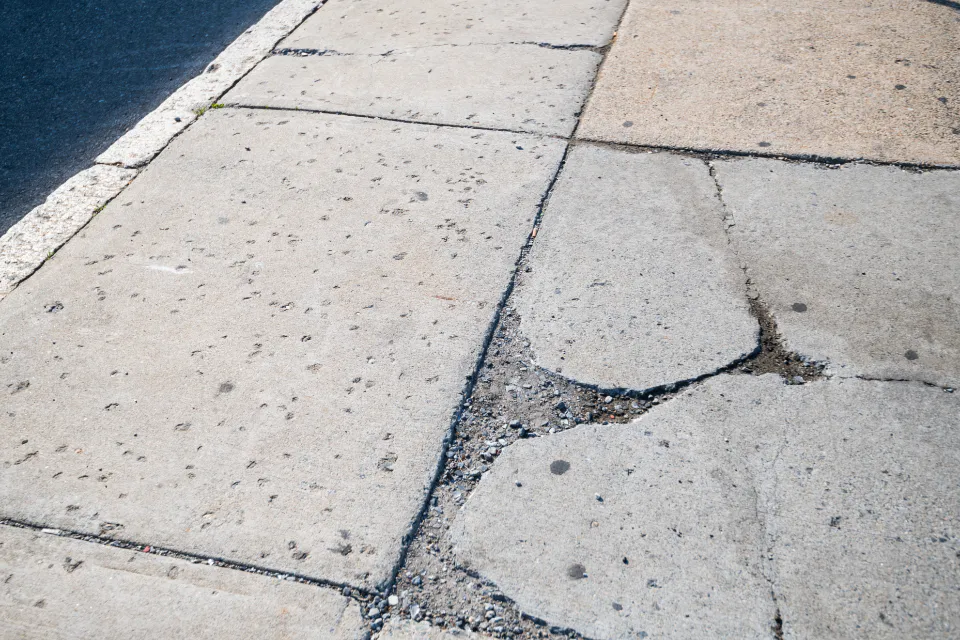
Concrete needs replacing when it has cracked through, sunk, crumbled at the surface or no longer drains. Patching a slab like that only delays the cost. In the Financial District, heavy use, trucks and water reaching basements below make full replacement common.
Lower Manhattan buildings sit tight against the street. Their concrete is mostly the sidewalk frontage, loading entrances, curb edges and the slab at a doorway. Each of those takes constant wear from foot traffic and delivery vehicles.
A few signs say a slab is past repair. Cracks wider than a pencil line, slabs that rock when stepped on and surfaces that flake away in sheets all point to a failed base or worn concrete. Pooling water after rain tells you the slope has been lost.
Which Concrete Areas Do Property Owners Replace Here?
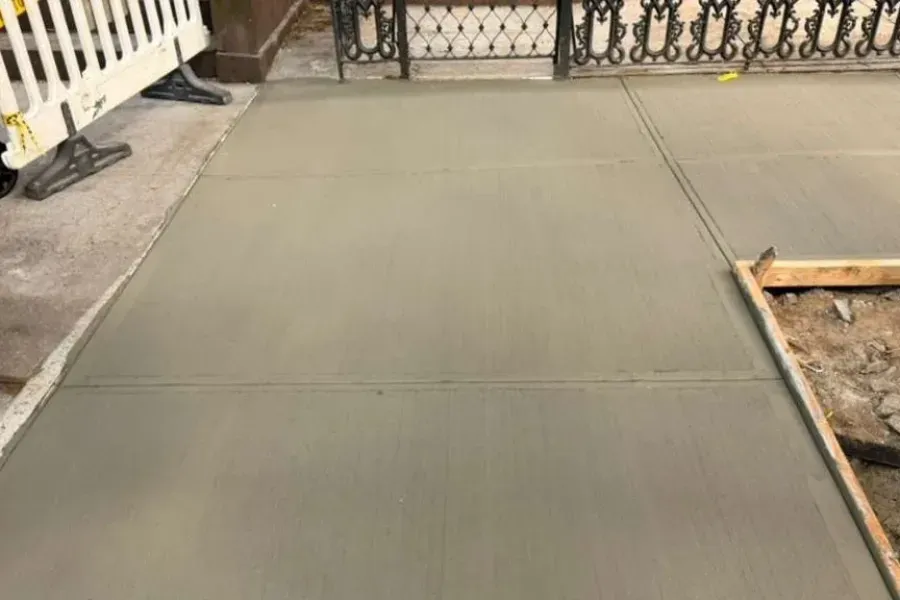
Owners here mostly replace sidewalk frontage, loading area slabs, curb sections, entrance landings and the concrete around building ramps. The table lists the usual areas and what drives the work in each one.
| Area | Typical cause of failure | What changes in the job |
|---|---|---|
| Sidewalk frontage | Foot traffic, water, utility cuts | DOT permit, check for vaults below |
| Loading entrance slab | Truck weight, repeated turning | Thicker slab, strong base |
| Curb section | Impact and salt | Curb form and set to line |
| Entrance landing | Settlement, water under the slab | Rebuild the base and slope away from the door |
| Building ramp | Cracks and worn surface | Keep the slope and a non slip finish |
Most Financial District jobs are small to mid sized sections rather than big open pours. We scope each one to the real damage, not to a standard package.
What Makes Concrete Work in Lower Manhattan Different?
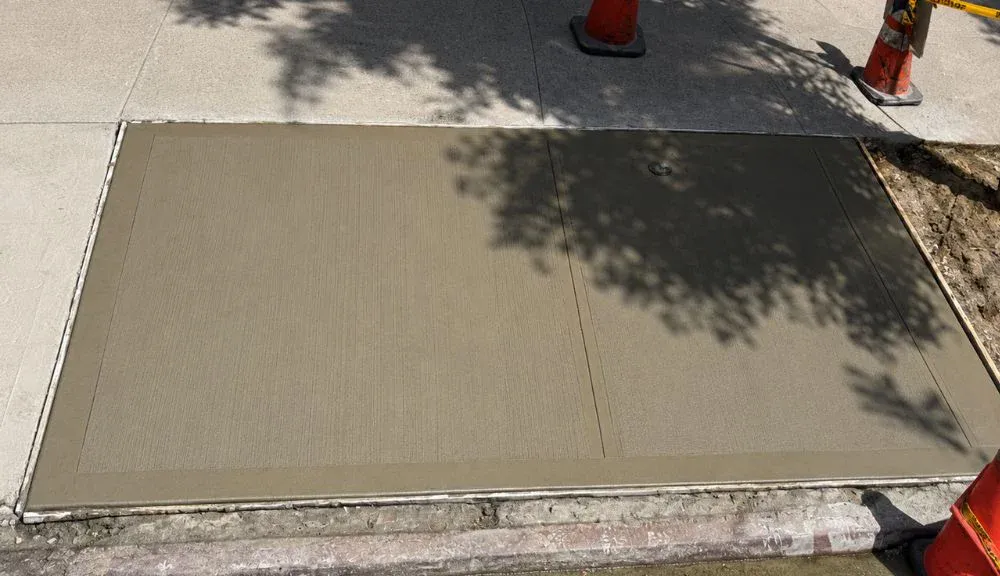
Sites are narrow, streets are busy and the ground under the slab is often not ground at all. Vaults, utility lines and old foundations sit just below the surface. Access, timing and approvals matter as much as the pour itself.
Before breaking out any slab, we look for signs of a vault or cellar below. Pouring over a void is not the same as pouring over soil, and the structure may need a qualified person to review it first. We tell you early if we see that risk.
Part of the area is low lying and was flooded by Hurricane Sandy, including Water Street and the Seaport. A new slab there should drain away from doors and be sealed at the joints so water does not return to the basement.
Some blocks fall inside the Stone Street, Fraunces Tavern Block or South Street Seaport historic districts. Visible changes to materials on those blocks may need Landmarks review, so confirm with the city before you order.
Which permits can concrete work involve?
Work in the public sidewalk generally needs a DOT permit, and we file it for you. Work wholly on private property does not need the DOT sidewalk permit, but structural work and curb cuts can need DOB permits. Confirm current rules with the city.
Replacing Concrete to Clear a DOT Violation?
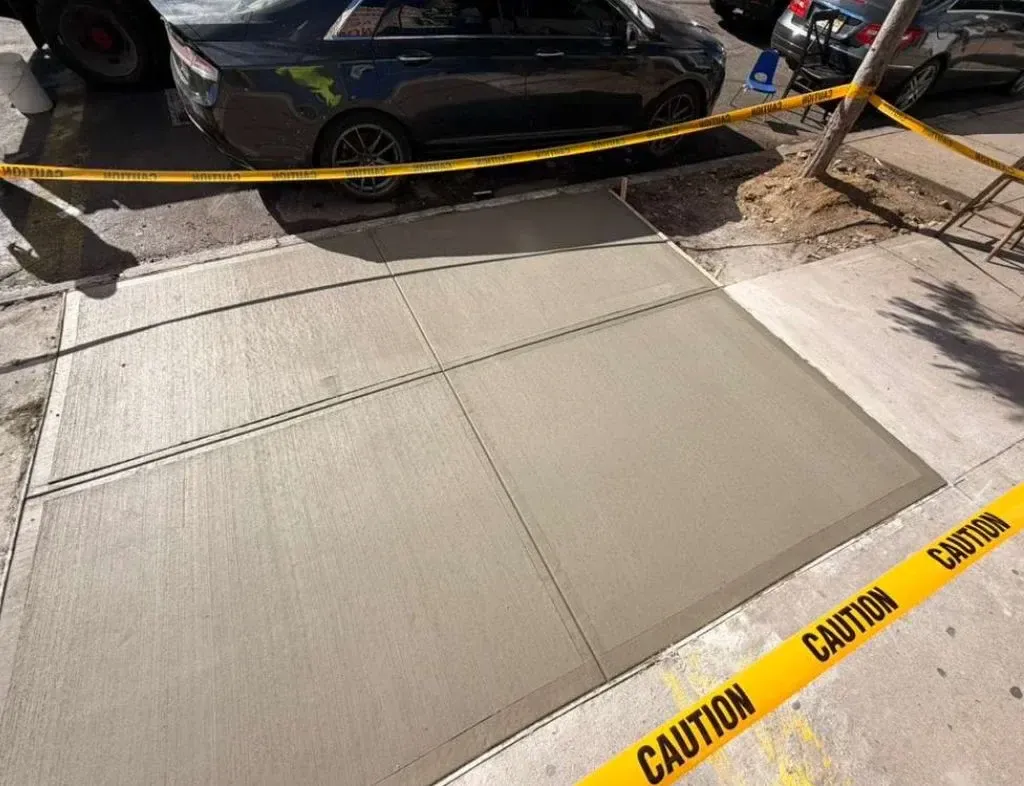
If the city cited cracked sidewalk flags at your building, replacing them is the usual fix. After the repair, the owner can ask for the violation to be dismissed. Read our guide on See how sidewalk violations are handled.
Ready to Replace Worn Concrete?
Share the address and a few photos and we will set up a free visit.
How Long Does Concrete Replacement Take?
A standard sidewalk replacement usually runs one to two weeks. Permit approval is separate and follows city timing, described as two to three business days. Larger or more complex jobs take longer, and we explain the schedule in your estimate.
The steps below show how a typical job moves from first visit to a finished slab.
Visit and measure
We inspect the slab, check for vaults and note access limits.
Written price
The scope and cost are put in writing.
Permits
We file the DOT or DOB paperwork the job needs.
Break out and prepare
The old slab is broken out and a new base goes in.
Pour and finish
Fresh concrete is placed, finished and covered while it sets.
Nearby
Concrete Replacement Near the Financial District
Nearby neighborhoods where we also replace concrete.
FAQ
Financial District Concrete Questions
Often yes. We can stage the pour in sections so part of the entrance stays usable. We plan this with you at the site visit.
We look for vault lights, hollow sounds and building records during the visit. If we suspect a void, we say so and recommend a qualified review before any breaking begins.
Yes. We file the DOT sidewalk permit and any DOB permit your job needs. We are a private contractor with no link to NYC DOT.
They overlap. Repair fixes limited damage, while replacement removes the old slab and builds a new one on a rebuilt base.
Call (718) 468-8803 or send the form below. You get a free on site written estimate.
Contact
Request Your Financial District Concrete Estimate
Tell us the address, the size of the area and what is failing. Photos help us plan the visit.
- Call us(718) 468-8803
- HoursMon to Sat, 9:00 AM to 6:00 PM
- Free on site estimate with a written price
- Licensed and insured, 25+ years in business
- We handle DOT sidewalk permits
- Serving Manhattan, Brooklyn, Queens and the Bronx
Get Your Free Estimate
Takes about a minute. No cost and no obligation.