
Manhattan Concrete Contractor
Concrete Replacement in Manhattan
Areaways that pitch toward the townhouse door, rear yards reached only through the parlor floor, cellar slabs that cracked after a flood. We replace concrete in the tight spaces Manhattan buildings actually have.
- Areaways, rear yards, cellar floors and plazas
- Everything carried through the building when needed
- Written price after a free visit
Areaways
How Do You Replace a Townhouse Areaway?
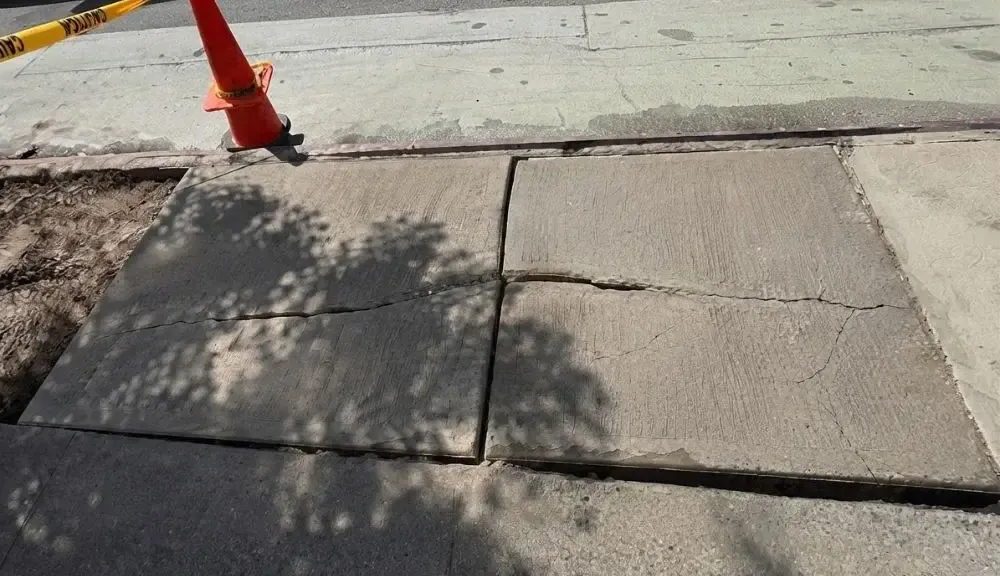
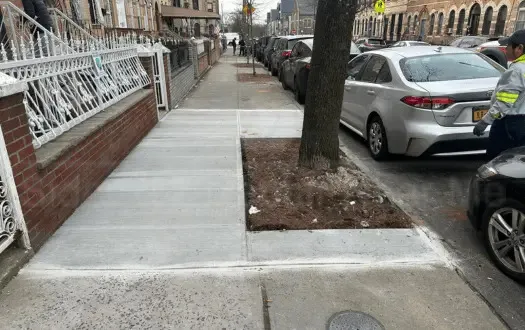
We break out the old slab, check the drain, rebuild the base and pour new concrete pitched to the drain and away from the building. Areaways on the Upper West Side, the Upper East Side, Harlem and in the Village often slope toward the door under the stoop, so water ends up in the cellar. Fixing that pitch is usually the point of the job.
Many of these blocks are inside historic districts. Changes to areaway paving, fences and railings there can need Landmarks Preservation Commission review, so a like for like slab is often the simplest path. Check with the Commission before planning anything that changes the look.
Can You Replace a Rear Yard Behind a Manhattan Townhouse?
Yes. Townhouse and brownstone rear yards in places like Carnegie Hill, Gramercy Park, Murray Hill and Hamilton Heights have no alley, so every piece of old concrete leaves through the building and every bag of stone comes in the same way. We protect the route, usually through the cellar or the service entrance under the stoop, and plan the pour around it.
Most of the effort on these jobs goes into handling, not concrete. Old slabs are broken into pieces that can be carried, loaded at the curb and hauled away. Parking a truck on a Manhattan side street takes planning, and the schedule reflects that.
Drainage in a walled yard
Rear yards in Manhattan are often boxed in by the house and neighbors' walls, with one drain in the middle or a corner. If the old slab settled, water ponds away from that drain or runs to the back wall of the house. The new pour is pitched to the drain, and a blocked or broken drain line is found before we pour. Drain work can bring in a plumber, and we tell you up front.
Tenement buildings in the East Village, the Lower East Side and Chinatown have rear yards too, often small concrete courts behind the building that collect trash, water and old patches. The same approach applies.
Yard only reachable through the house? That is normal here. We will plan the route at the visit.
Book an Inspection Call Now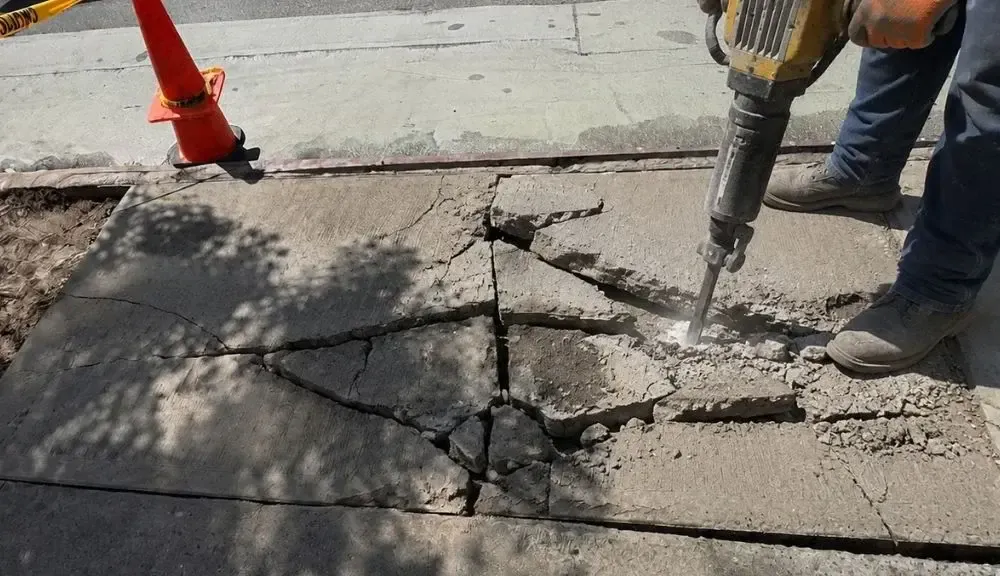
When Should a Cellar or Basement Slab Be Replaced?
Replace a cellar slab when it has heaved, sunk, broken into loose pieces, or stays wet through cracks. Old Manhattan cellars often have thin floors poured over soil or rubble. After flooding, such as in the low lying blocks of the Financial District, the Lower East Side and Alphabet City during Hurricane Sandy, the base under them can wash out.
| What you see in the cellar | What usually makes sense |
|---|---|
| Fine cracks on a flat, dry floor | Leave it or seal the cracks |
| A sunken section near a floor drain | Cut out that section, rebuild the base and pour |
| Heaving or hollow sounding floor | Remove the slab and rebuild from firm ground |
| Water coming up through cracks | Plan drainage or a sump with the new slab |
| Cracks in the foundation walls | Have the walls assessed before pouring |
A new floor does not stop water coming through the walls. Our Manhattan basement waterproofing work covers that side. Anything that touches footings, foundation walls or columns can need a licensed engineer and a Department of Buildings permit.
Do You Replace Plazas, Garage Entrances and Loading Areas?
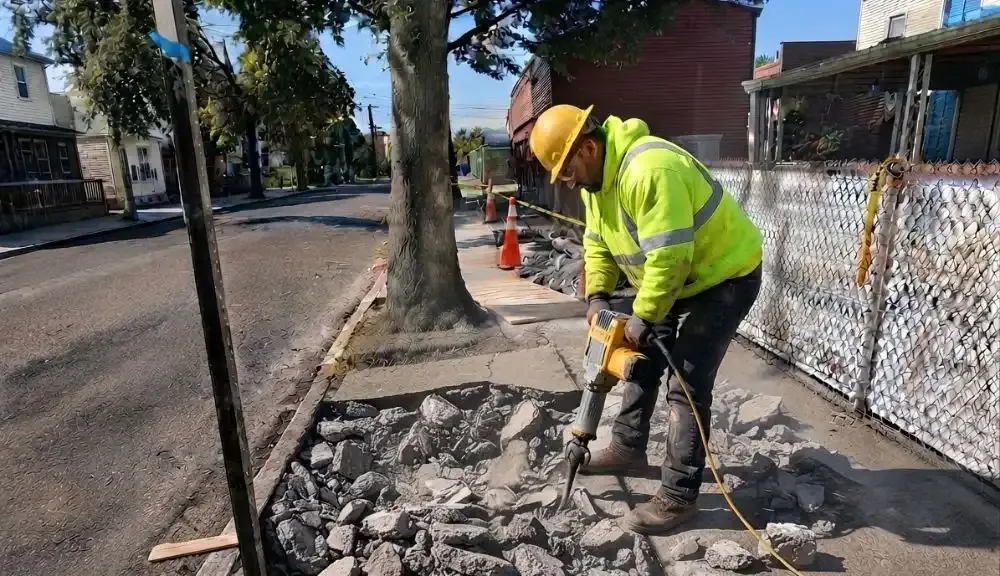
Yes, for building owners and managers. Residential towers in Lincoln Square and Midtown have plazas, garage entrances and loading areas that crack under cars and trucks. Those slabs need a thicker section, reinforcement and a well compacted base, and the work is phased so the garage or dock stays usable.
Some areas are managed differently. Battery Park City is run by the Battery Park City Authority and Roosevelt Island by the Roosevelt Island Operating Corporation, so we confirm who controls a plaza or walk before quoting there.
Where a garage entrance or plaza meets the public sidewalk, that part falls under DOT rules and generally needs a DOT permit. Our Manhattan sidewalk repair team handles the flags, and if DOT has already cited them, our violation removal guide explains the steps. Rules change, so confirm current requirements with the city.
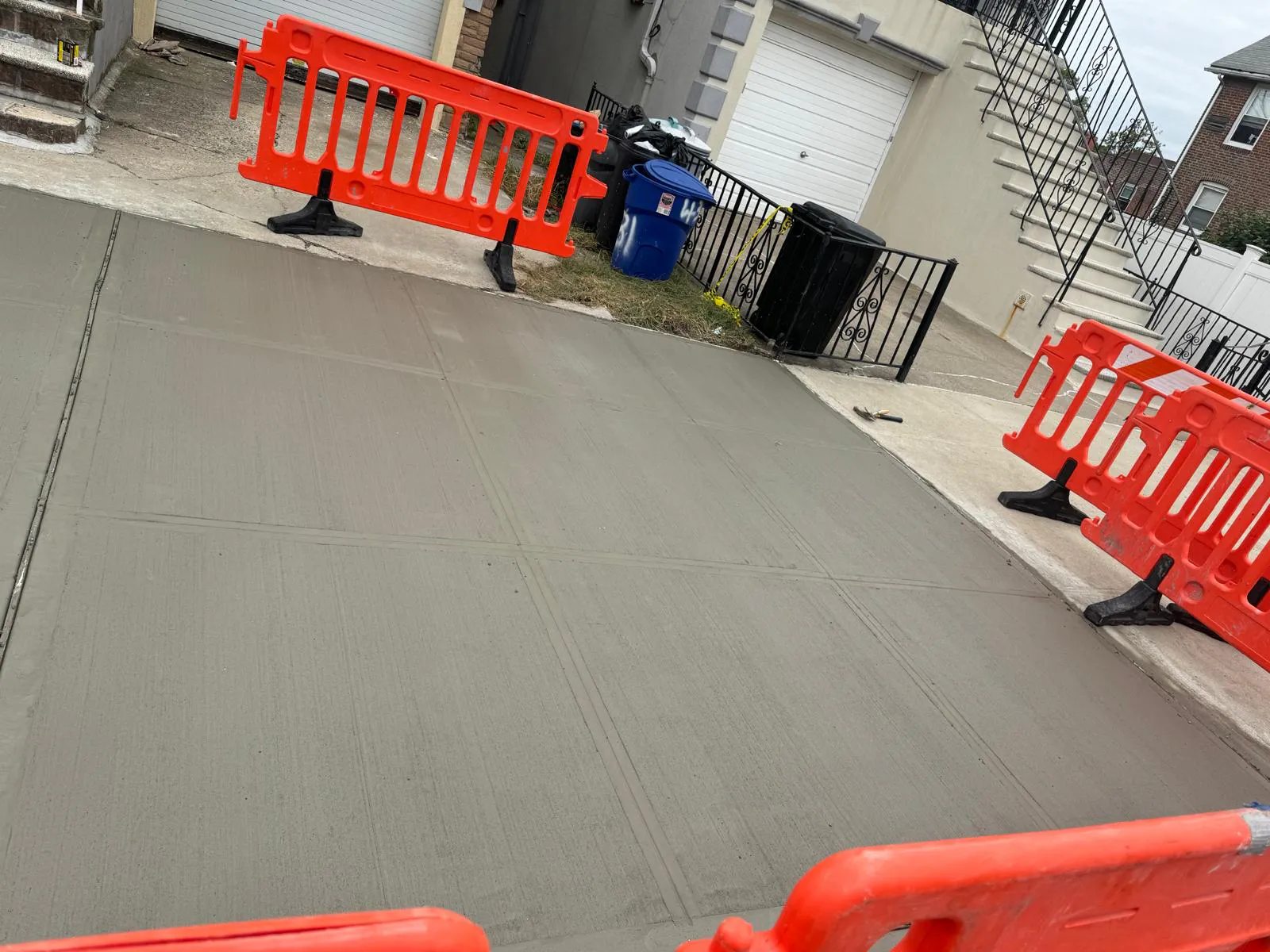
Areaway Draining Into the Cellar?
Send a photo of the slab and the drain. We will visit, check the pitch and give you the price in writing.
Pricing
What Affects Concrete Replacement Cost in Manhattan?
Manhattan concrete replacement cost is driven by access more than size. The price depends on how material moves in and out of the building, the area and thickness of the old slab, base and drain work, reinforcement for vehicle areas, protection of finished interiors along the route, and any landmark review for areaways.
Route through the building
Stairs, hallways and cellar doors set how fast material can move.
Protection
Finished floors and doorways along the route have to be covered.
Drains
Clearing or replacing a yard or areaway drain changes the scope.
Staging on the street
Truck access and debris loading on a side street take planning.
Manhattan jobs get a free visit and a written price that lists every item.
Get a Free EstimateProcess
What Are the Steps in a Manhattan Concrete Job?
A Manhattan job starts with a visit to measure the slab, find the drain and walk the route through the building. After you approve the written scope, we protect the route, break out and carry away the old concrete, rebuild the base, set the drain and forms, and pour and finish the new slab.
Walk the route
We measure the slab and plan how material gets in and out.
Written scope
Access, removal, drainage and the pour are priced item by item.
Protect and remove
The route is covered, and old concrete is broken up and carried out.
Base and drain
Firm base built, drain checked, pitch set.
Pour and cure
New slab finished and protected until it is ready.
Neighborhoods
Manhattan Neighborhoods for Concrete Replacement
Choose a neighborhood to read about the areaways, yards and slabs we replace there.
- Alphabet City
- Battery Park City
- Carnegie Hill
- Chelsea
- Chinatown
- Civic Center
- East Harlem
- East Village
- Financial District
- Flatiron District
- Gramercy Park
- Greenwich Village
- Hamilton Heights
- Harlem
- Hudson Heights
- Hudson Square
- Inwood
- Kips Bay
- Koreatown
- Lenox Hill
- Lincoln Square
- Little Italy
- Lower East Side
- Manhattan Valley
- Marble Hill
- Meatpacking District
- Midtown
- Midtown East
- Midtown South
- Morningside Heights
- Murray Hill
- NoHo
- Nolita
- Roosevelt Island
- SoHo
- South Harlem
- Stuyvesant Town
- Sutton Place
- Theater District
- Tribeca
- Two Bridges
- Union Square
- Upper East Side
- Upper West Side
- Washington Heights
- West Harlem
- West Village
- Yorkville
No neighborhood matches that name. Call (718) 468-8803 and we will tell you if we cover your block.
Other Boroughs
Concrete Replacement Beyond Manhattan
Read the full concrete replacement guide for how we prepare the base and handle drainage. Managing property in several boroughs? Start at NYC concrete replacement by borough.
FAQ
Manhattan Concrete Replacement Questions
Yes. We break out the old slab, check that the drain works and pour new concrete pitched toward the drain and away from the door. On landmarked blocks, check with the Landmarks Preservation Commission before changing how the areaway looks.
Through the building, usually by the cellar or the service entrance under the stoop. We cover floors and doorways along the route, and the handling is part of the written price.
We look at whether the slab has heaved or lost its base and where water is getting in. A new floor on a rebuilt base can follow, but water coming through walls needs its own plan first.
Usually the work can be phased so part of the entrance stays open. Vehicle areas get a thicker, reinforced slab, and the section that meets the public sidewalk generally needs a DOT permit.
Both. We work with managing agents and boards on yards, courts, plazas and cellar floors, and with townhouse owners on areaways and rear yards.
Yes. Our office is on West 56th Street, and we work in every Manhattan neighborhood listed above. Call (718) 468-8803 to set up a free visit.
Contact
Get a Manhattan Concrete Estimate
Tell us the address and whether it is an areaway, yard, cellar floor or plaza. A photo of the slab and the drain helps.
- Call us(718) 468-8803
- HoursMon to Sat, 9:00 AM to 6:00 PM
- Free on site estimate with a written price
- Licensed and insured, 25+ years in business
- We handle DOT sidewalk permits
- Serving Manhattan, Brooklyn, Queens and the Bronx
Get Your Free Estimate
Takes about a minute. No cost and no obligation.