Stuyvesant Town Concrete Replacement
Concrete Replacement in Stuyvesant Town, Manhattan
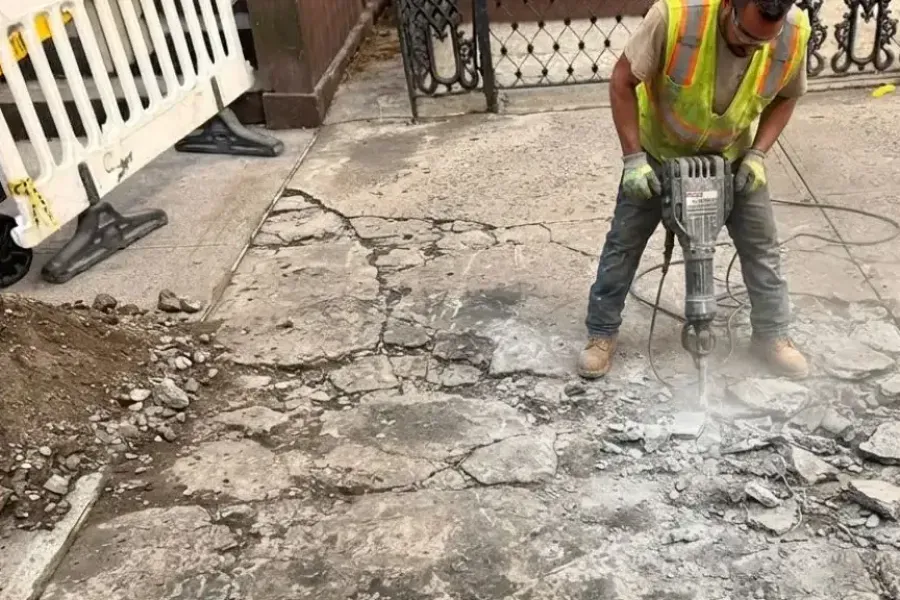
Failed slabs removed and poured new for loading zones, curb aprons, ramps and entrances on the edges of the complex and the buildings around it.
- Old concrete broken out and hauled away
- New base, forms and finish
- Permits filed when the job needs them
Local Conditions
Where Does Concrete Wear Out Around Stuyvesant Town?
Concrete fails fastest where weight, salt and water meet. Around a large post war apartment complex, that means service drives, loading spots, trash enclosure pads, ramps at entrances and the slabs along the public edge. Replacement makes sense when the surface is crumbling or the slab has moved.
The red brick buildings here were put up in the late 1940s, and the setting is one managed complex with private walks and lawns. Work inside it is the owner’s decision. Our concrete work centers on the perimeter and on the smaller properties beside it.
Ground matters too. The blocks near the FDR Drive and the East River are low lying, and the area flooded in Hurricane Sandy. Slabs placed on soft or wet fill can drop at one corner. Before pouring, we check what lies under the old concrete and rebuild the base where it has washed or sunk.
Heavily planted grounds add another factor. Roots push up pads and ramps near planting beds. If a root is the cause, we explain what can be done within the limits that apply to street trees and what should wait for the right approval.
When Is Replacement Better Than a Patch?
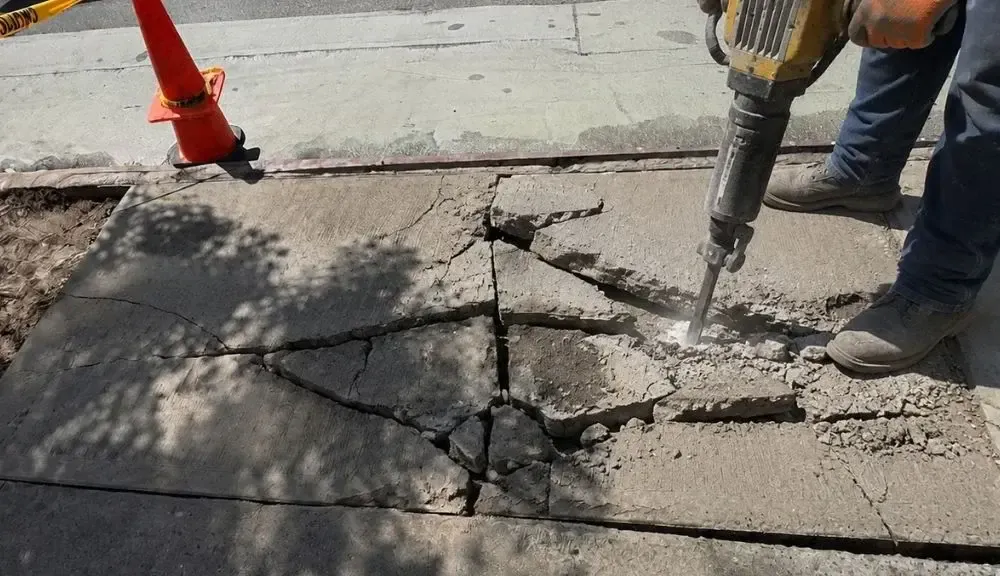
Patch a slab when the damage is shallow and the concrete underneath is sound. Replace it when cracks run all the way through, when the surface flakes in sheets or when the slab has dropped, tilted or pulled away from the curb. A patch over a bad base only hides the next failure.
Look for edges that no longer meet the neighboring slab, steps of more than a coin thickness between sections and water that now sits where it used to drain. Those signs tell us the base has moved.
What about the apron where a driveway or loading zone meets the street?
The apron is the sloped slab between the roadway and the property. It carries trucks and takes the worst of the curb impact. Curb cuts and work that touches the roadway edge can involve city approvals, so we sort out the permit path before we break anything out.
Concrete work that stays on private property, such as a parking slab or an interior ramp, does not need the DOT sidewalk permit. Structural pieces, retaining walls and curb cuts may still need Department of Buildings review, so ask the city what applies to your site.
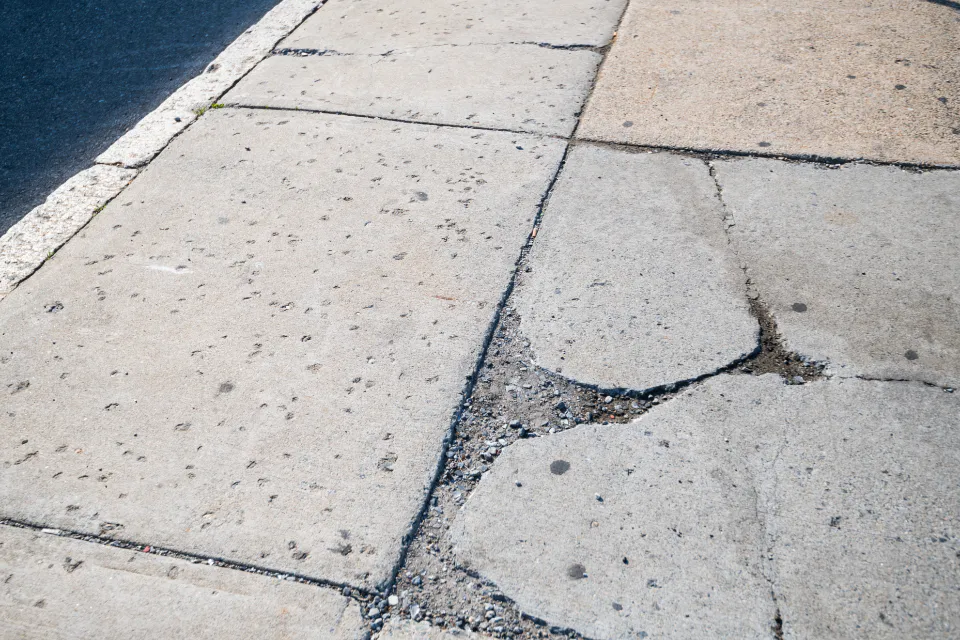
Slab cracked through at a loading spot or ramp? We will measure it and write down the cost.
Book an Inspection Call NowCost Factors
What Shapes the Cost of Replacing Concrete?
Slab area and thickness
More square footage and heavier traffic call for more material and, sometimes, steel reinforcement.
Demolition and haul off
Old concrete has to leave the site. Tight Manhattan access affects how we load and carry it out.
Base repair
Low lying ground near the river may need compacted stone before the forms go in.
Finish and drainage
A broom finish and a correct pitch keep water moving, and the pitch is set during forming.
Every slab is different, so we price after a visit instead of guessing from a description. The estimate lists scope, materials and finish.
Get a Free EstimateProcess
What Happens From First Visit to Cured Slab?
Look and measure
We check the old slab, the pitch and what lies under it.
Break out
The failed concrete is cut, removed and carted away.
Base and forms
We compact the base, set the forms and place any reinforcement.
Pour and cure
Fresh concrete is placed, finished and protected while it cures.
Replacing Concrete Because of a Sidewalk Notice?
If a DOT violation names slabs at the public edge of your property, those slabs count as sidewalk work. Our guide explains how violations work after repair. Read our guide on See how sidewalk violations work.
Nearby
Concrete Replacement Close By
Neighborhoods next to the complex where we also pour new concrete.
FAQ
Stuyvesant Town Concrete Questions
Those belong to the owner, so any decision about them sits with management. We handle perimeter and nearby building work.
People can usually walk on it well before a truck can drive over it. We tell you the timing for your mix and the weather on the day.
Poor base preparation and missing control joints are common causes. We cut joints on a layout and prepare the base to avoid that.
It depends on the work. Sidewalk and curb pieces generally need city permits, and structural items may need the Department of Buildings. Confirm with the city for your site.
The address, a few photos and the slab size if you know it. Call (718) 468-8803 or fill in the form below.
Contact
Request Your Stuyvesant Town Concrete Quote
Tell us where the slab is, what it carries and how it has failed.
- Call us(718) 468-8803
- HoursMon to Sat, 9:00 AM to 6:00 PM
- Free on site estimate with a written price
- Licensed and insured, 25+ years in business
- We handle DOT sidewalk permits
- Serving Manhattan, Brooklyn, Queens and the Bronx
Get Your Free Estimate
Takes about a minute. No cost and no obligation.