Union Square Concrete Replacement
Concrete Replacement in Union Square, Manhattan
Failed slabs at loft, office and retail buildings around the park are broken out and poured again on a base that is built to last.
- Saw cutting, demolition and hauling
- New slabs poured and jointed
- Free visit and written estimate
Where Does Concrete Fail Around Union Square?
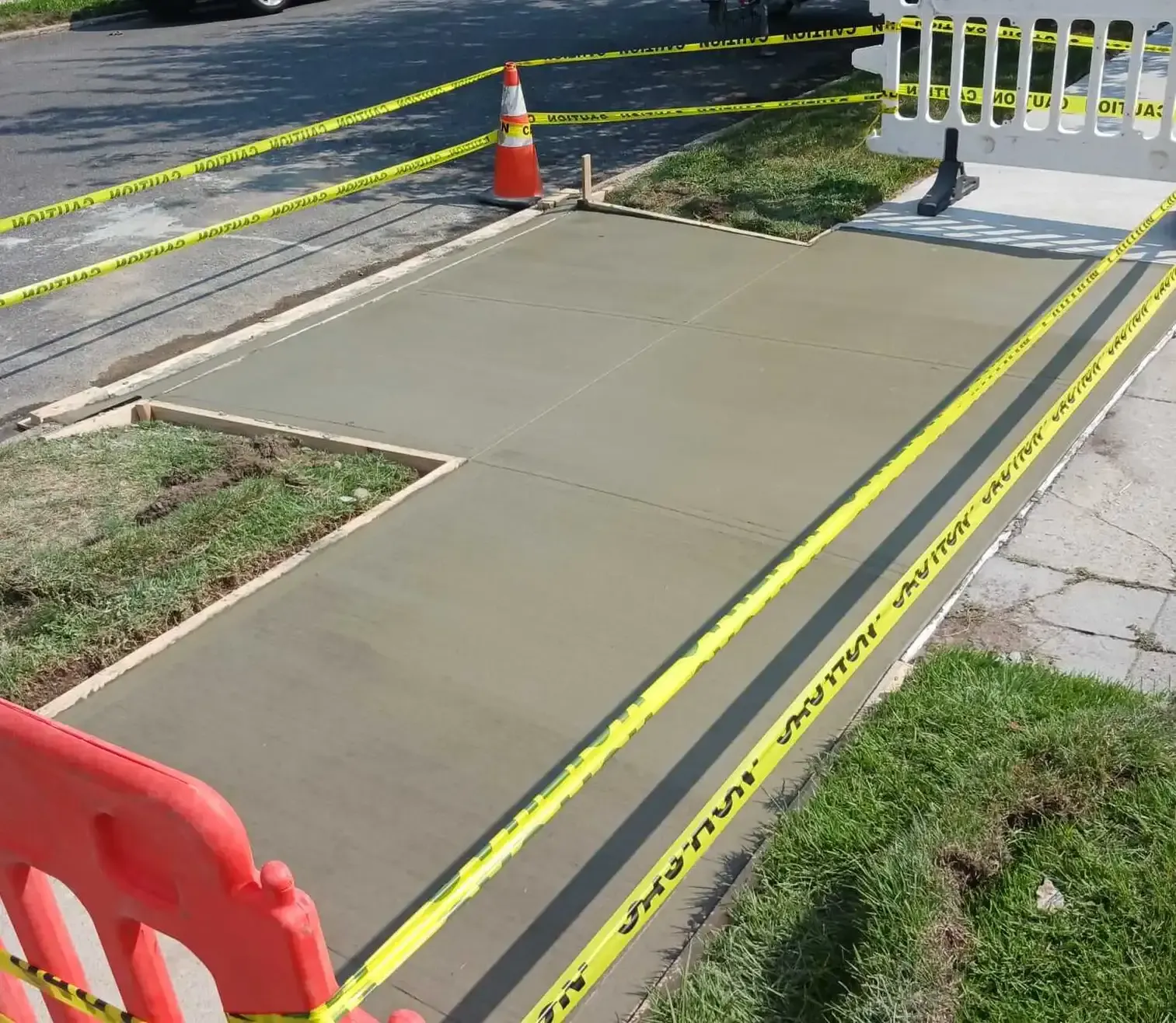
In this part of Manhattan, most concrete problems turn up at service areas and entrances: loading zones behind retail buildings, rear yard slabs, building entrance pads and sidewalk flags. The heavy loads from deliveries and nonstop foot traffic wear these surfaces out faster than residential concrete elsewhere.
The blocks between East 14th and East 17th Street are packed with loft buildings, offices and large stores. Few of them have yards, but many have small rear courts, shared service passages and street level pads. Those are the places where cracked concrete hides until someone trips or water finds its way indoors.
Deliveries are a big factor. A hand truck loaded with cases is a concentrated weight, and so is a pallet jack. A slab that was laid thin for pedestrians takes a beating when it is used by carts instead.
Should I Patch or Replace My Concrete?
Patch when damage is shallow and the slab is level and firm. Replace when cracks pass all the way through, when the slab has dropped or tilted, or when the surface keeps flaking off. We look at the base as well as the top, because a bad base defeats any patch.
| Condition | Likely answer | Reason |
|---|---|---|
| Thin surface cracks | Seal | The slab is sound underneath |
| Flaking, scaled top | Resurface or replace | Depends on how deep the damage runs |
| Sunken or tilted section | Replace | The base has failed |
| Wide cracks with offset | Replace | Sections are moving independently |
A tap test helps. A solid ring means sound concrete. A dull, hollow sound means a void below. We do this at the visit and explain what we hear.
Ready to Stop Patching the Same Slab?
We will tell you if replacement is truly the better value and put both options in writing.
What Does a Replacement Involve on a Tight Manhattan Lot?
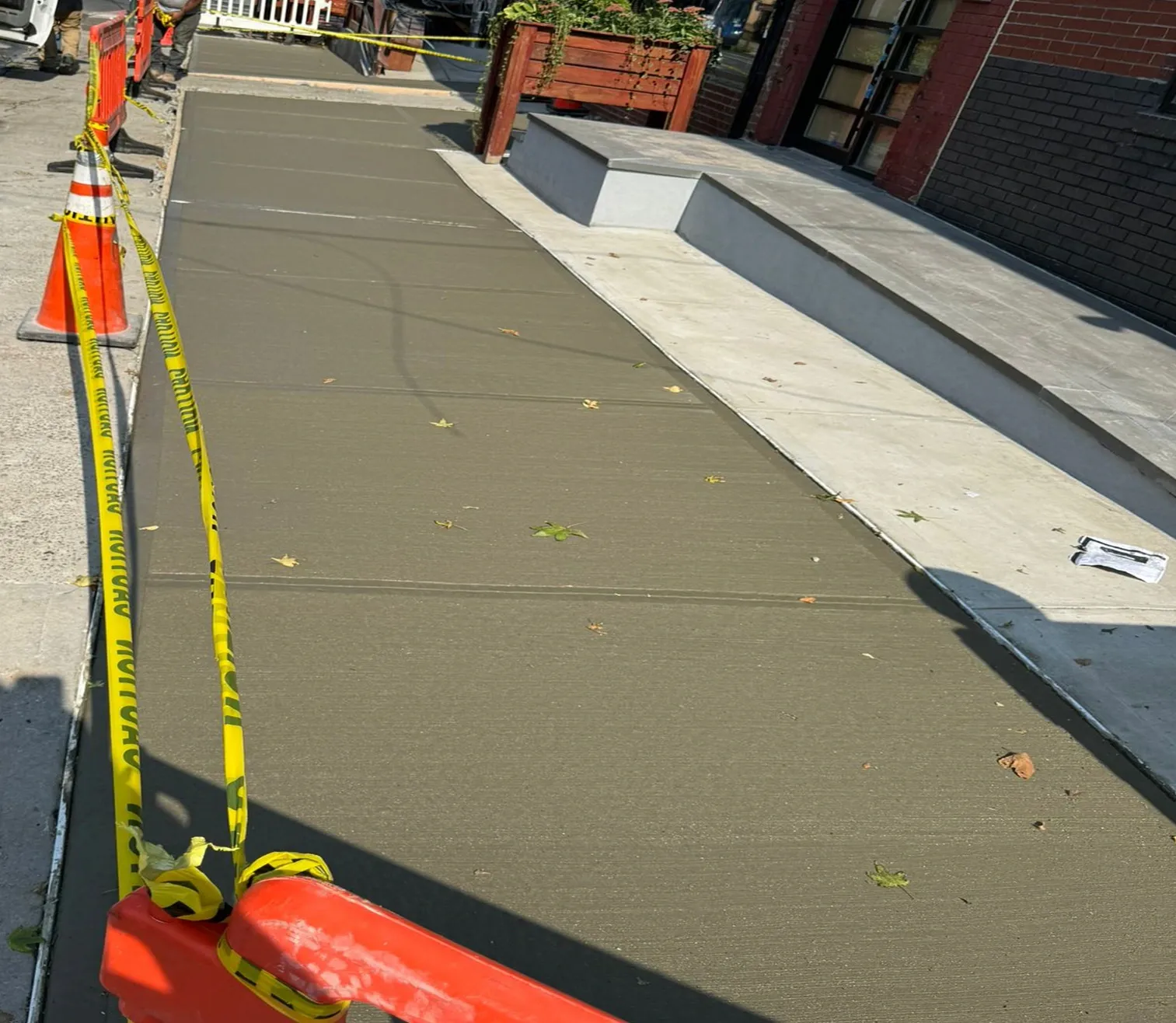
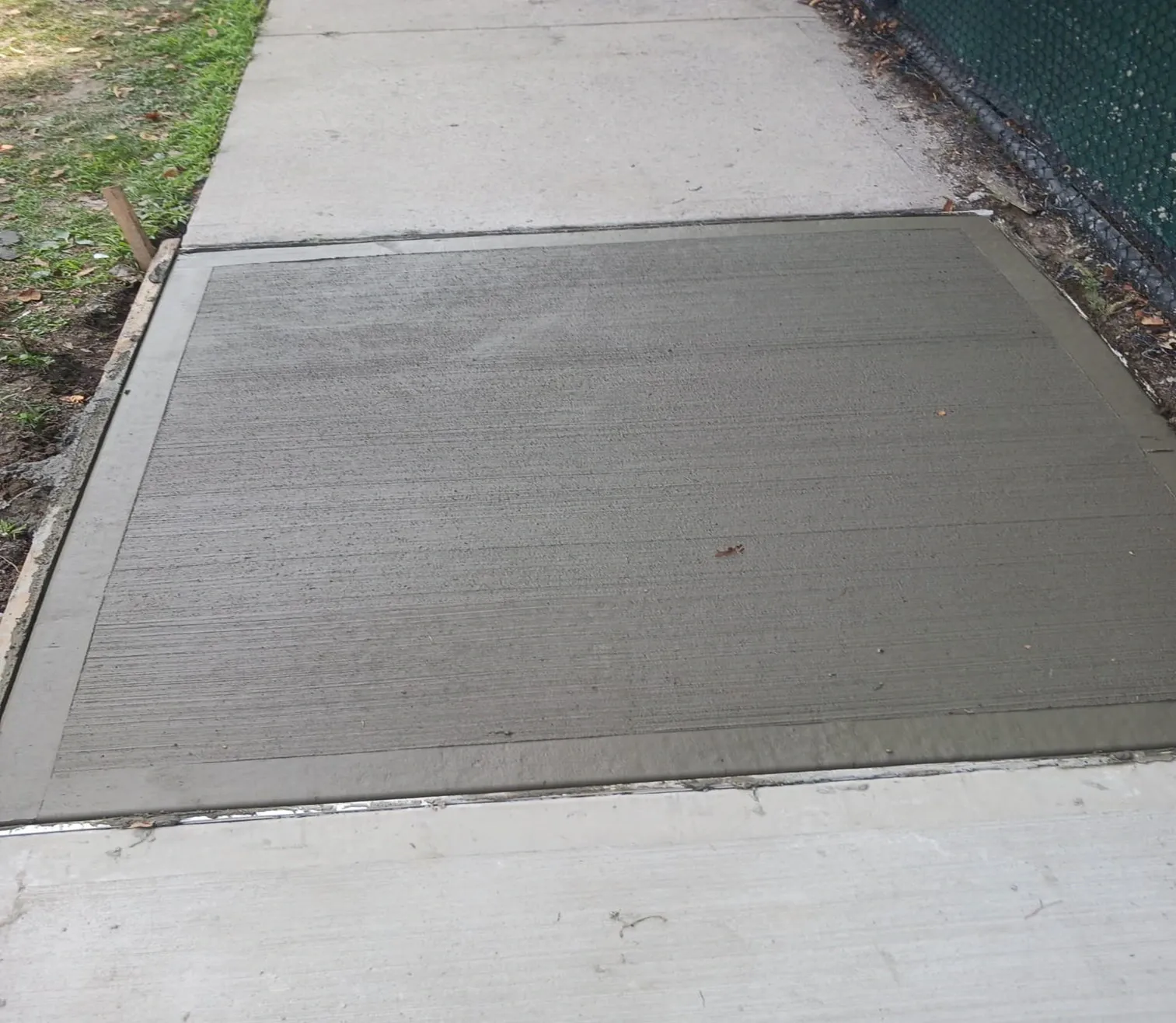
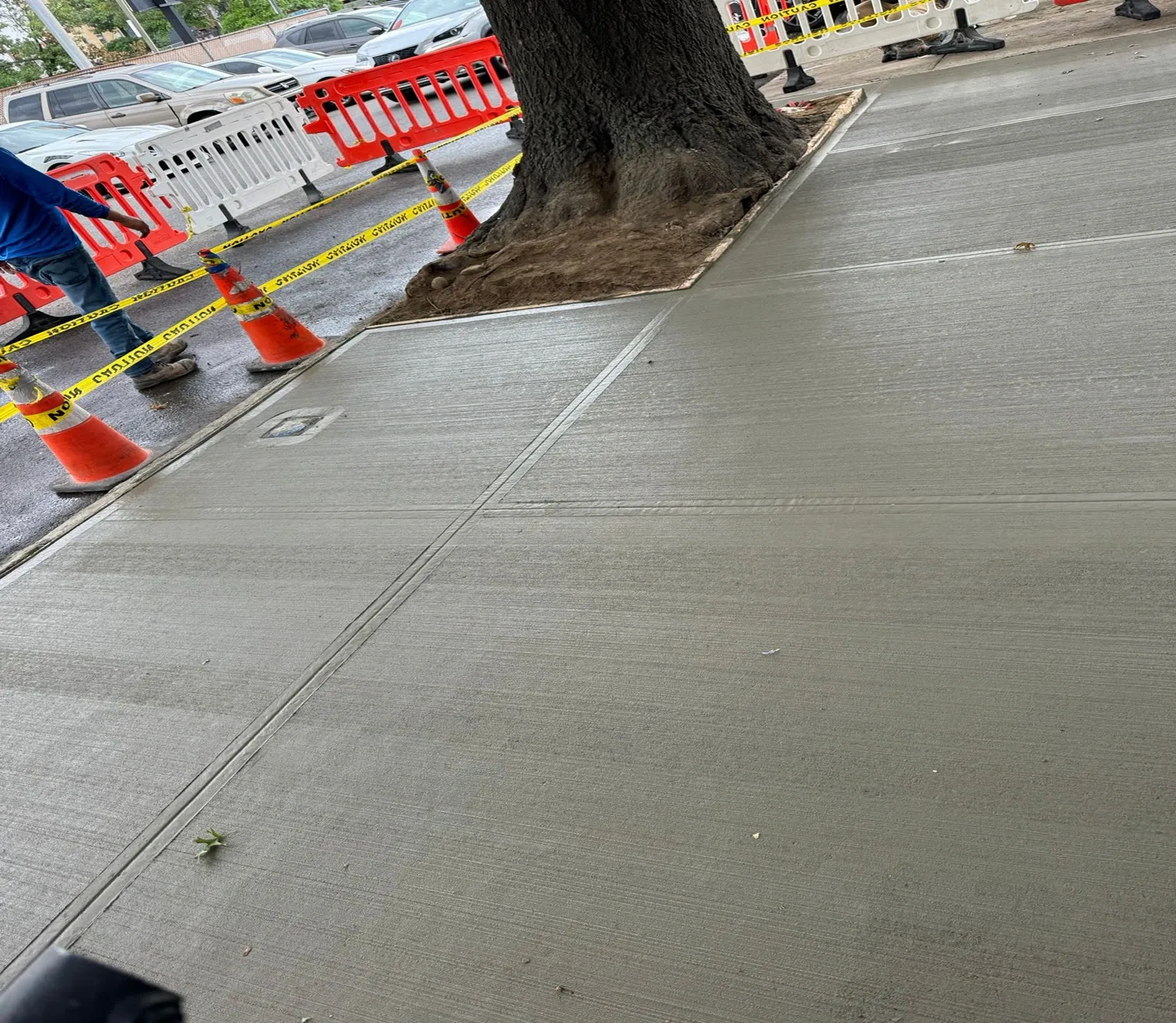
We saw cut the slab, break it out, haul the debris, rebuild a compacted base and pour new concrete with proper joints. In tight spots, small equipment and hand work replace large machines. Debris and concrete come in and out through the route we agree on with you in advance.
Access is usually the hard part. Many buildings here have narrow passages, loading doors and shared entrances. We plan around business hours, noise limits and deliveries, so the work does not shut a tenant down for a day.
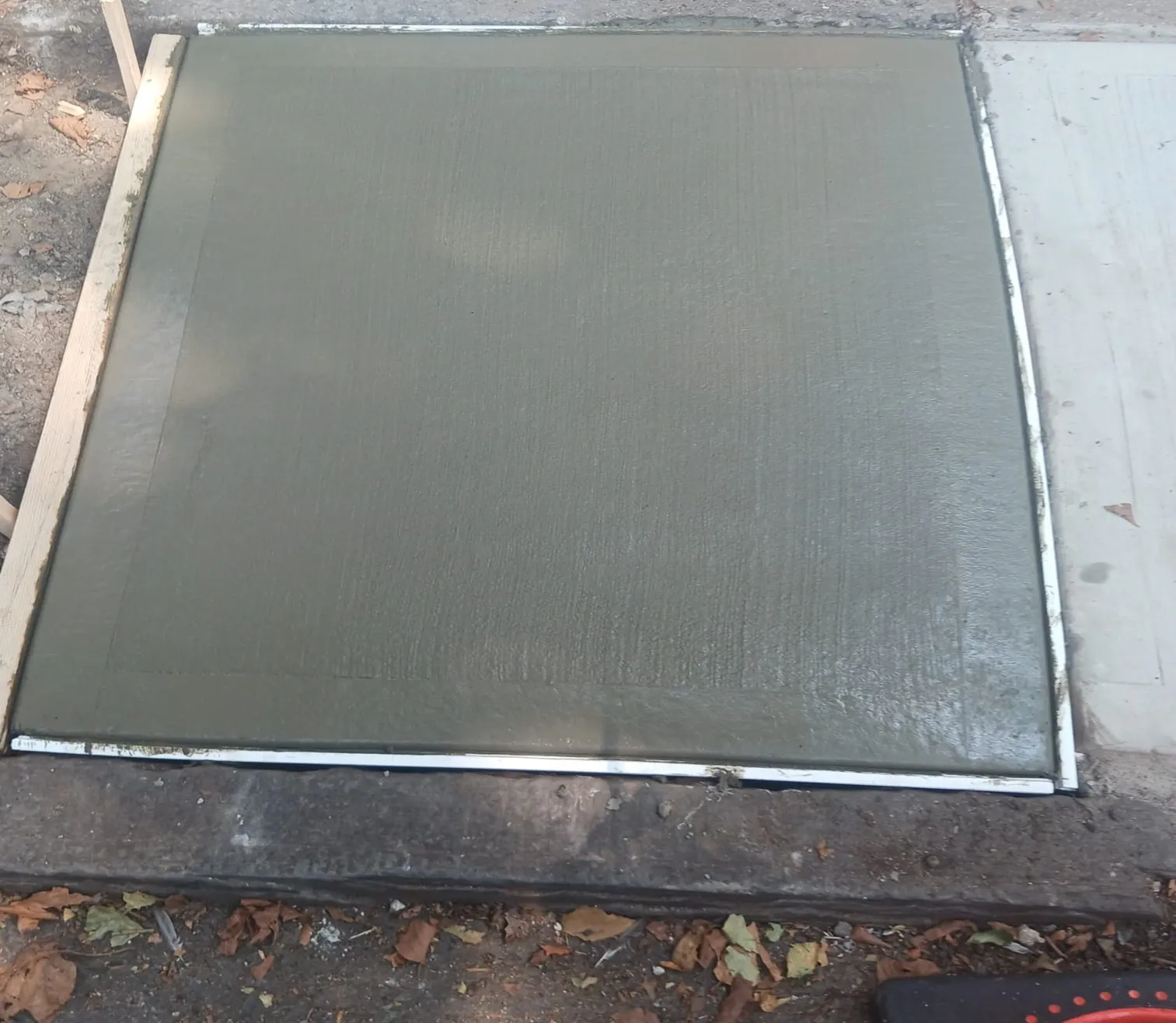
We finish the new surface with a broom texture and slope it toward a drain or the street. Slopes away from walls keep water out of cellars, which matters when the cellar below is a store room or an office.
What if there is a vault below the slab?
Some slabs and sidewalk flags sit over a vault. We locate it before cutting and confirm the layout with the building owner. If the structure below is in doubt, an engineer may need to weigh in first.
Which Permits and Approvals Come With Concrete Work Here?
Work in the public sidewalk generally needs a DOT permit, which we file. Concrete entirely on private property does not need that DOT permit, though structural slabs, retaining walls and curb cuts may need Department of Buildings approval. The city can confirm current requirements for your building.
Local Law 11 matters for taller buildings. If your building is above six stories, a facade inspection may turn up work at the base that overlaps with concrete repair. Coordinate the two so the sidewalk is not cut up twice.
Historic review is a question at the edges. The Ladies Mile Historic District begins north and west of the square, and nothing within the square itself is confirmed. If your building sits near that line, confirm with the Landmarks Preservation Commission before you change visible surfaces.
Sidewalk flags must be maintained by the owner under Admin Code 19-152. A broken flag can draw a notice, and our page on sidewalk violations explains what to expect.
Inspect
We test the slab, check the base and note drains, vaults and access limits.
Quote
You receive a written scope with removal, base and pour listed separately.
Break out and prepare
Old concrete is cut out, hauled away and the base is compacted.
Pour and cure
Fresh concrete goes in, gets its finish and is covered as it sets.
Nearby
Concrete Replacement Near Union Square
Our crews also pour concrete in these nearby neighborhoods.
FAQ
Union Square Concrete Questions
Yes. Loading slabs need thickness and a base suited to delivery loads, and we price them that way.
Often yes. We schedule noisy steps with you and keep an entrance reachable wherever the site allows.
Concrete needs time to gain strength. We tell you when foot traffic and wheeled loads are safe for your pour.
It depends on where the slab sits. Sidewalk concrete generally needs a DOT permit, and structural concrete may need a Buildings permit.
Call (718) 468-8803 and we will book a free visit.
Contact
Request a Union Square Concrete Quote
Tell us where the slab sits, what it is used for and how it has failed. Photos help.
- Call us(718) 468-8803
- HoursMon to Sat, 9:00 AM to 6:00 PM
- Free on site estimate with a written price
- Licensed and insured, 25+ years in business
- We handle DOT sidewalk permits
- Serving Manhattan, Brooklyn, Queens and the Bronx
Get Your Free Estimate
Takes about a minute. No cost and no obligation.