
Gravesend Driveway Contractor
Concrete Driveway Repair in Gravesend, Brooklyn
Cracked driveways, broken aprons and sunken garage approaches repaired on the semi detached and detached house blocks of Gravesend.
- Aprons and slabs built for vehicles
- Permit help for the curb cut area
- Written price after a free visit
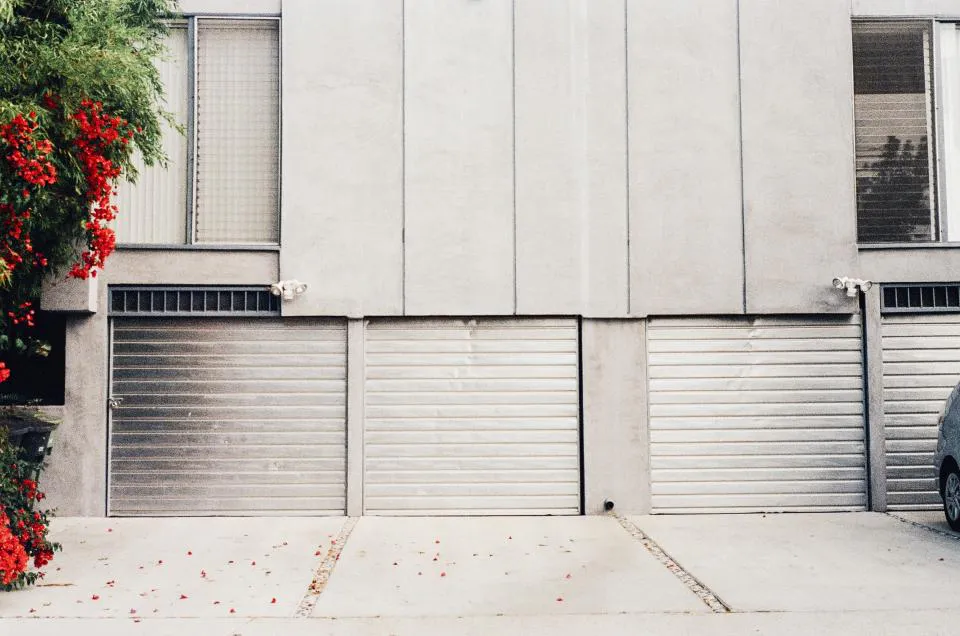
What Goes Wrong With Driveways in Gravesend?
Gravesend has more driveways than most of Brooklyn, and they see daily use. The usual problems are cracked panels, sunken aprons, broken edges at the curb and slabs that slope toward the garage or the house. Age, cars and water account for most of it.
The neighborhood has attached and semi detached two family brick houses, detached homes and apartment buildings. On the semi detached blocks, each pair of houses often shares a driveway strip or has two narrow ones side by side. Shared driveways take the weight of several cars.
Many driveways here were poured decades ago on thin base. Cars press down on the slab, water gets into hairline cracks, and freezing widens them. The apron at the curb usually breaks first.
- Cracked panels along the strip
- Sunken apron at the curb
- Broken edge next to the sidewalk
- Slab tilting toward the garage
- Surface flaking from age
- Shared driveway settling at the seam
On semi detached lots, the driveway between two houses often sits close to both foundations. Water running toward either wall is a problem we check for first.
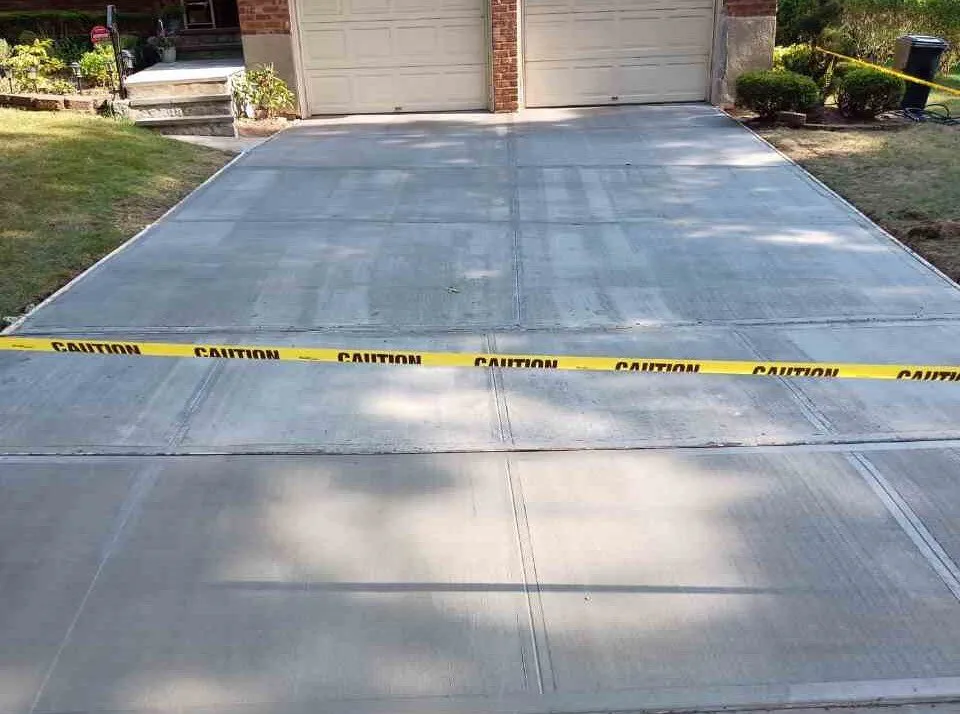
Driveway Cracking at the Curb?
Send a photo of the apron and the slab. We will tell you whether panels or the whole strip need replacing.
How We Repair It
How Do We Repair a Gravesend Driveway?
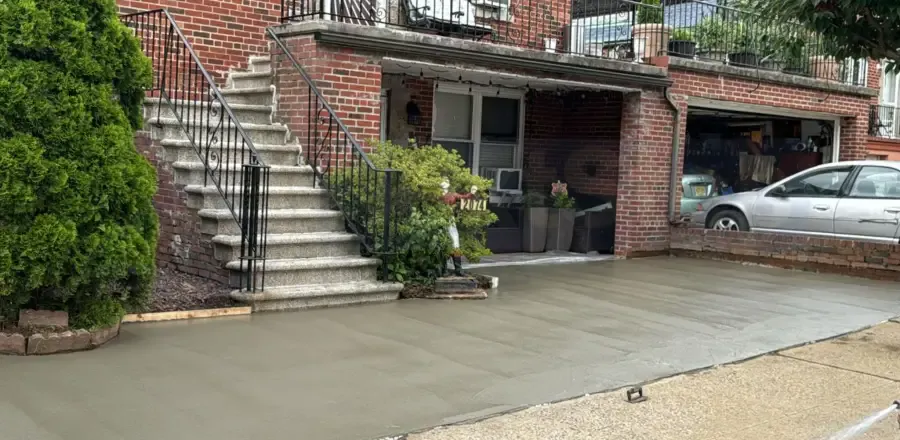
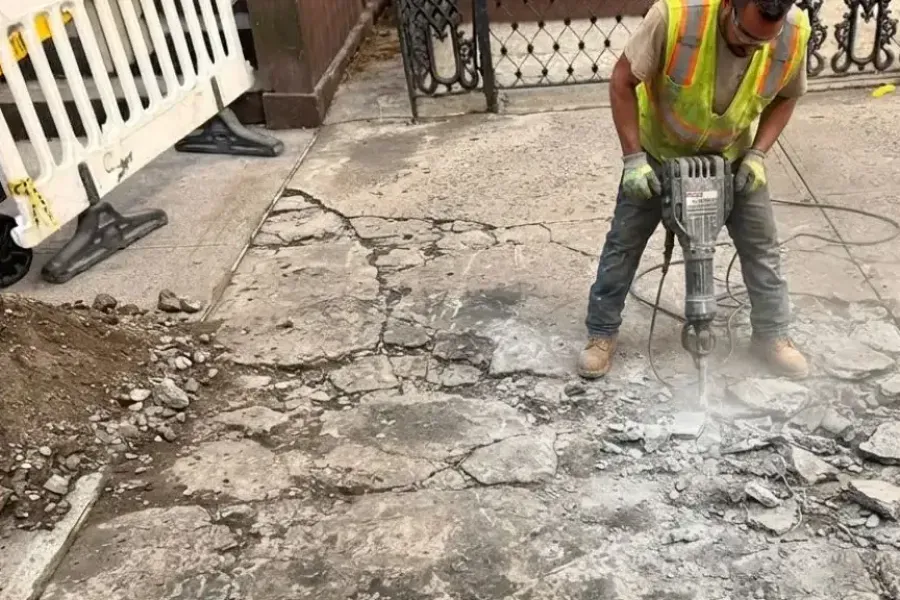
We decide between replacing broken panels and pouring the whole strip, remove the failed concrete, rebuild the base and pour concrete thick enough for vehicles with a slope that drains to the street. The apron is built heavier and tied to the sidewalk edge.
Panel repairs are quicker and cost less than a full replacement, and we choose them when the rest of the slab is sound. A driveway with wide cracks across every panel needs replacing.
During the work the car has to go somewhere. We agree on days in advance so you can park on the street and know when the driveway can carry a vehicle again. New concrete needs time to cure.
Where two houses share a strip, we talk with both owners about who pays for what before the work begins. The scope in the written estimate can be split by owner if that is what you agree.
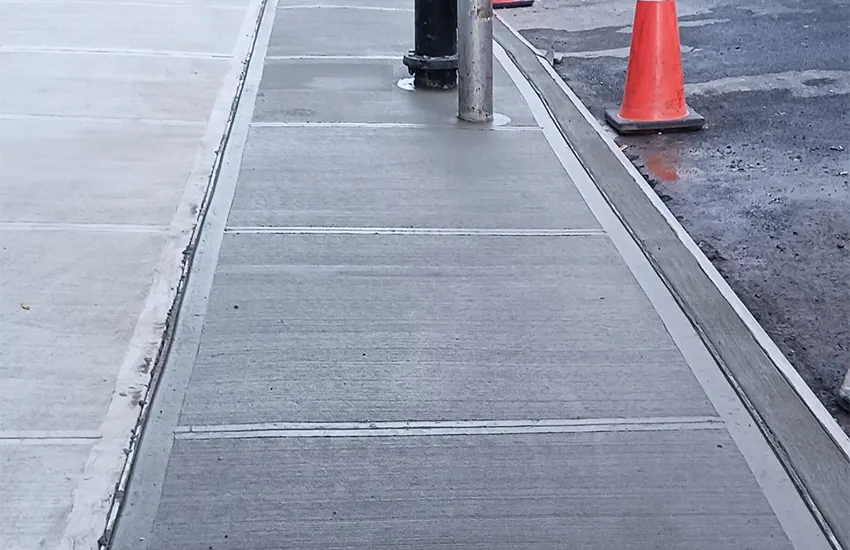
Does a Driveway Apron Need a Permit?
The apron crosses the public sidewalk, so that part generally needs a DOT sidewalk permit, which we file for the jobs we do. New curb cuts and changes to a driveway opening can also involve the Department of Buildings. Confirm current rules with the city.
The part of the driveway on your own lot does not need the DOT sidewalk permit. That is why we list the private strip and the apron separately in the price.
Do not widen a curb cut on your own. Owners often want a wider opening, and that is a city approval matter, not just a concrete job.
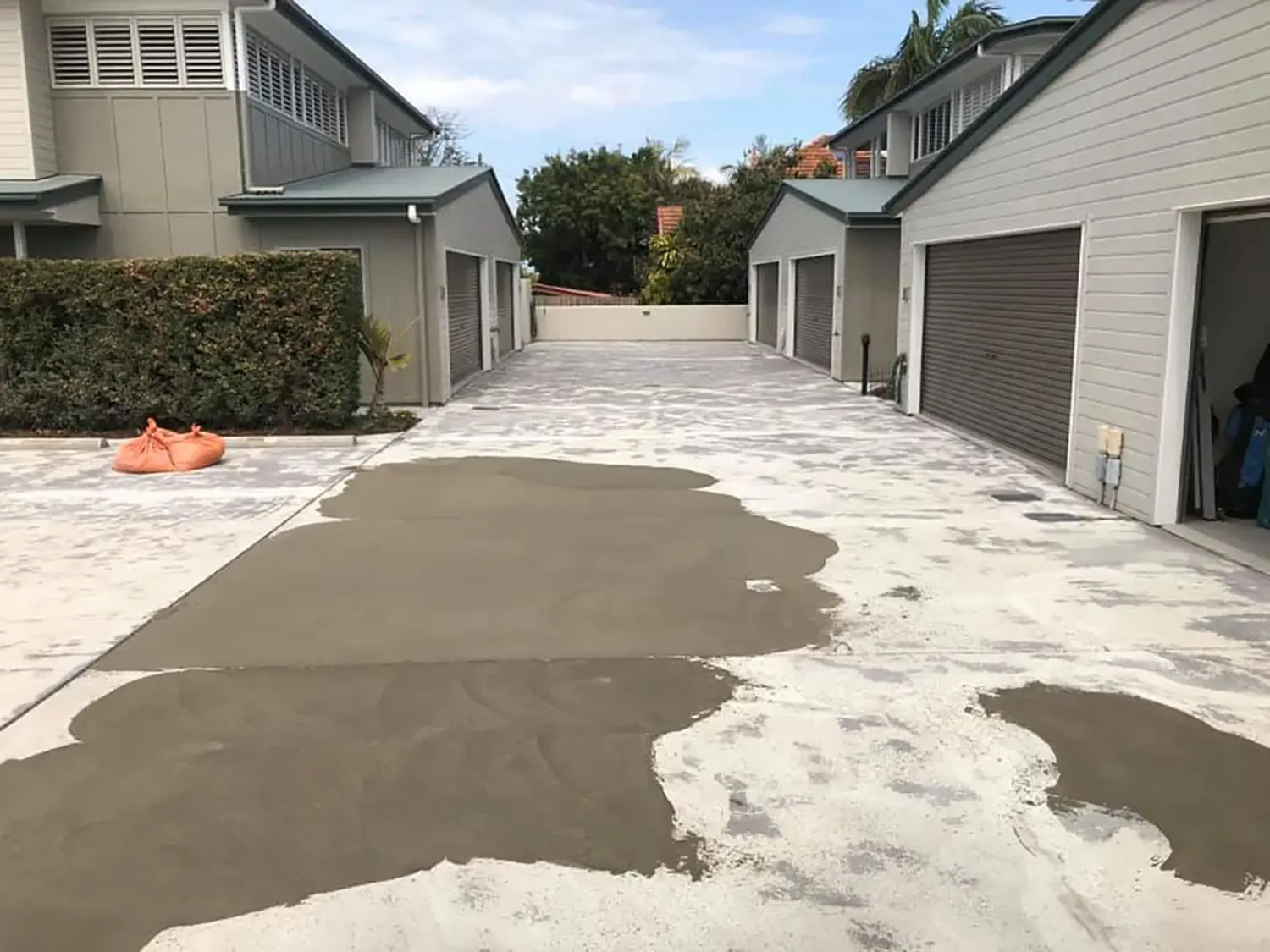
Why Does Water Direction Matter on a Driveway?
A driveway that slopes toward the house sends water into the wall and the basement. A slope toward the street carries it away. On narrow lots between two houses, the pitch is the most important detail of the whole repair.
Gravesend is mostly inland and drains well, though the southern edge near Coney Island Creek is low lying. Even so, a poor slope anywhere puts water against a foundation. We check the pitch during the visit and reset it when the slab is replaced.
If your basement has been damp, tell us. Sometimes the driveway is the reason, and sometimes it is not, and we would rather say which before you spend money.
When Should You Repair a Driveway Instead of Waiting?
Repair it when the apron edge breaks, panels move apart or water collects against the house. Damage spreads under tires, and a broken apron can appear on a DOT notice. A small repair now is cheaper than a full pour later.
A quick test is to look at the driveway after a hard rain. Puddles that stay for hours mean a low spot. A crack with one side higher than the other means the base has moved. Either is worth a photo and a call.
What Should Owners of Semi Detached Houses Check First?
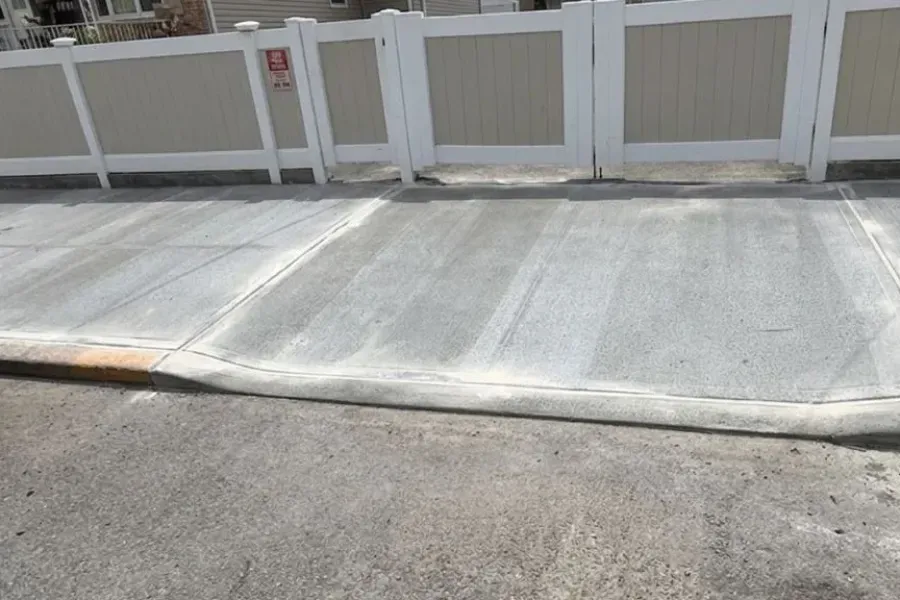
Check the seam where the driveway meets the neighboring lot, the slope next to each house wall and the apron at the curb. Those three places fail first on the narrow shared strips between semi detached houses, and each one is easy to see with a quick walk.
Many Gravesend houses are built in pairs, with a driveway on each side of the pair or a shared strip between two. The concrete beside a foundation wall often settles first, because water runs off the roof and the wall into it. A gap between the slab and the wall is a warning sign.
Before the visit, walk the driveway with a broom and look for cracks that run along the wall, edges that have lifted and areas where leaves and water sit. Photos from the street and from the back help us prepare.
Are There Other Driveway Types in Gravesend?
Yes. Besides the single strips on two family blocks, there are detached homes with longer drives, garages at the rear of lots and parking areas at apartment buildings. Each gets a different slab, and we tell you what suits your property.
Apartment buildings near Kings Highway and McDonald Avenue may have small lots or ramps to rear parking. Those slabs carry more cars and more turning, so they need thicker concrete and better drainage than a single family strip.
A garage at the back of a long side driveway means a long slab. We look at whether one or two joints will crack, and we place control joints so cracks follow them.
Sidewalk Notice Near Your Driveway?
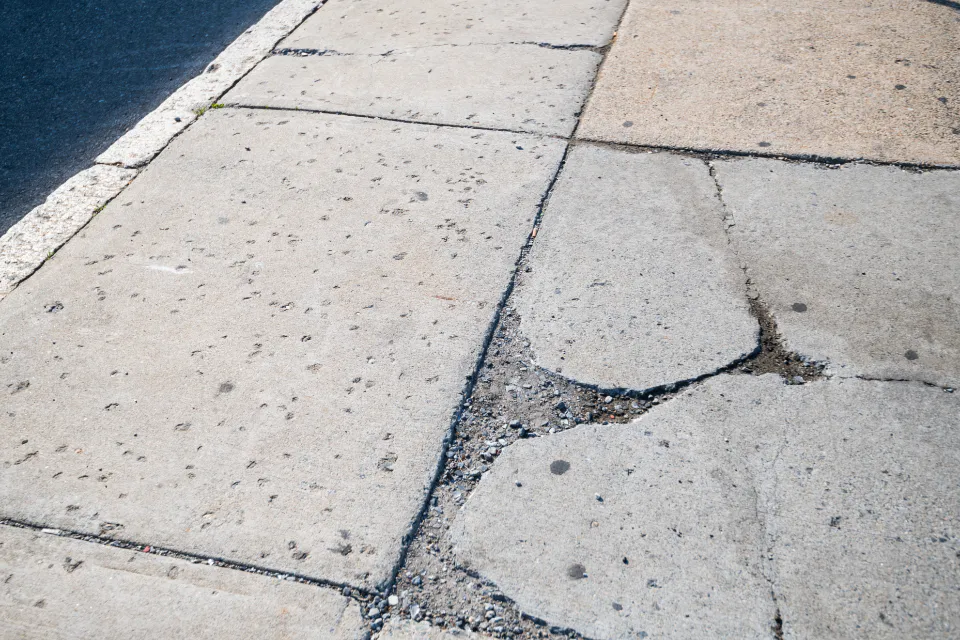
We repair the flags beside your apron too and keep the records for your dismissal request. Read our guide on clearing a DOT sidewalk violation.
Why Us
Why Gravesend Owners Call Us
Built for vehicles
Slabs and aprons are sized for the loads that use them, not just for looks.
Permit help included
We file the DOT sidewalk permit for the apron work we do.
Clear pricing
The private strip and the apron are priced separately so you can see each part.
Nearby
Driveway Repair Near Gravesend
We repair driveways in the neighborhoods around Gravesend too.
FAQ
Gravesend Driveway Questions
Yes. We measure the whole strip and can split the scope by owner if you agree on that. Both owners get the same written details.
Yes, when the rest of the driveway is sound. We cut back to a clean edge, rebuild the apron and tie it into the existing slab.
Panel repairs are quick, and full pours take longer because of curing. Jobs with the apron take one to two weeks in all, and the permit usually takes two to three business days.
That is part of the plan. We set the slope to move water toward the street and check it before we pour.
Yes. We visit, measure and give a written price at no cost. Call (718) 468-8803 to set a time.
The apron part generally needs a DOT sidewalk permit, and curb cut changes can involve the Department of Buildings. Confirm current rules with the city.
Free on site estimate
Repair Your Gravesend Driveway
A written price, a schedule you can plan around and a crew that handles the apron permit.
Contact
Request a Gravesend Driveway Quote
Tell us about the cracks or sunken spots and whether the driveway is shared. Photos of the apron and slope are helpful.
- Call us(718) 468-8803
- HoursMon to Sat, 9:00 AM to 6:00 PM
- Free on site estimate with a written price
- Licensed and insured, 25+ years in business
- We handle DOT sidewalk permits
- Serving Manhattan, Brooklyn, Queens and the Bronx
Get Your Free Estimate
Takes about a minute. No cost and no obligation.