
Park Slope Concrete Work
Concrete Replacement in Park Slope, Brooklyn
Cracked areaways, sunken patios and broken garden walks replaced on brownstone lots, with the base done right and water sent away from the house.
- Areaways, patios, walkways and slabs
- Permits handled where the job needs them
- Free visit and a written price
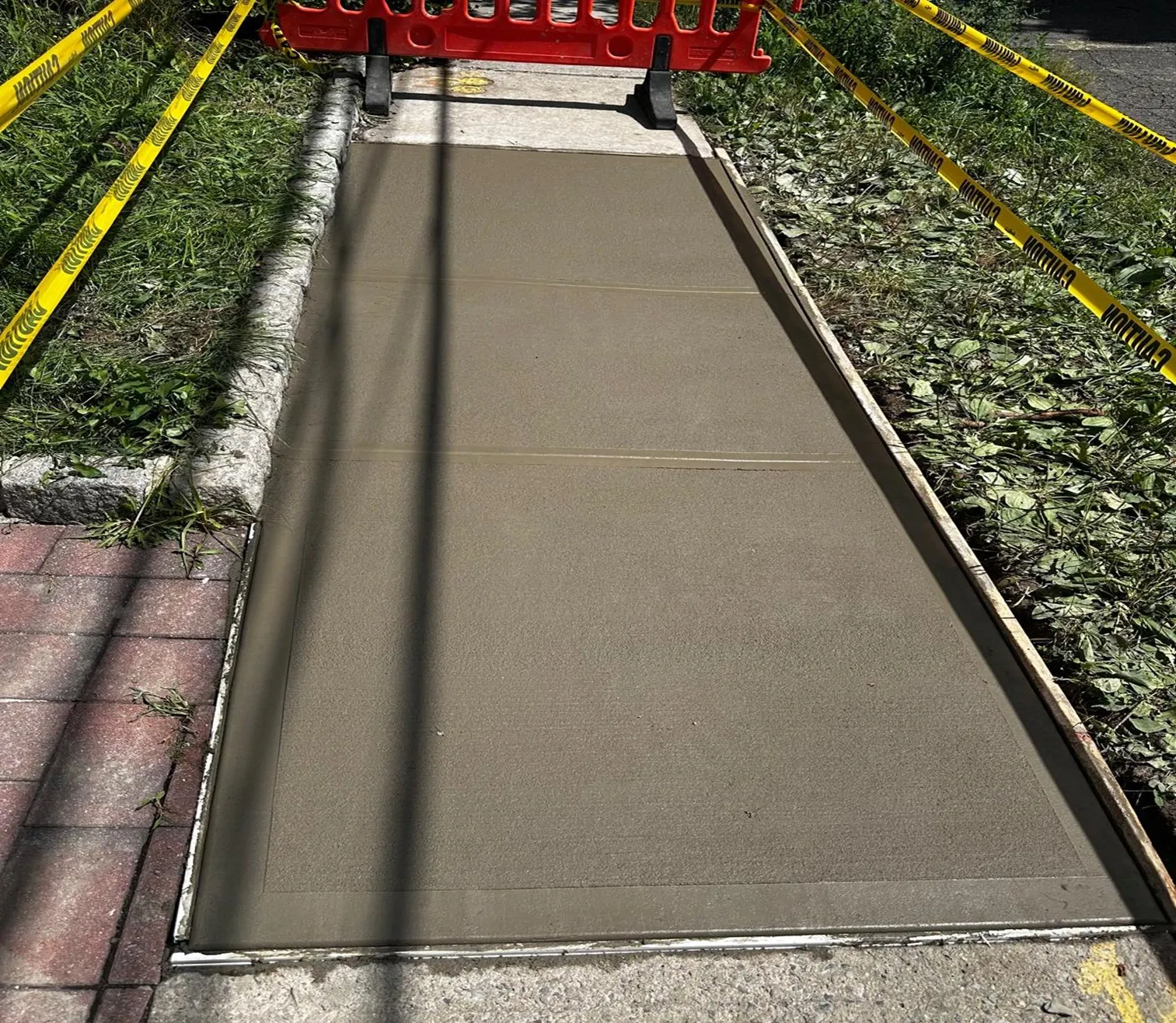
On the Ground
Which Park Slope Concrete Fails First?
On brownstone lots the areaway under the stoop and the rear patio usually go first. Both collect water, both sit against old masonry, and both were often poured on thin fill decades ago. Cracks open, slabs tilt toward the house and the surface starts to flake in winter.
Most Park Slope row houses are narrow and deep. Out front there is a small areaway between the stoop and the sidewalk. Out back there is a garden, a patio or a paved strip along the party wall. Every one of these pieces of concrete is small, and every one is hard to reach with equipment.
That access problem shapes the whole job. Concrete for a backyard often has to travel through the house or down a side passage. Demolition debris leaves the same way. Planning that route before the day of the pour keeps your floors and your neighbors happy.
Slabs that drain toward the foundation are the most serious. Pooled water at the base of a wall leads to damp basements, so replacement here is often as much about slope as about looks.
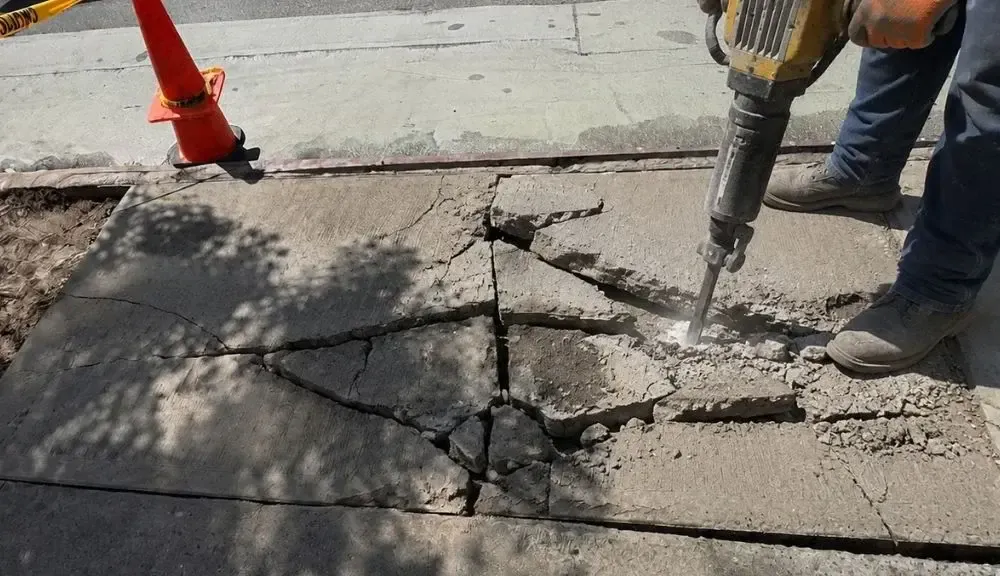
How Is Old Concrete Taken Out and Replaced?
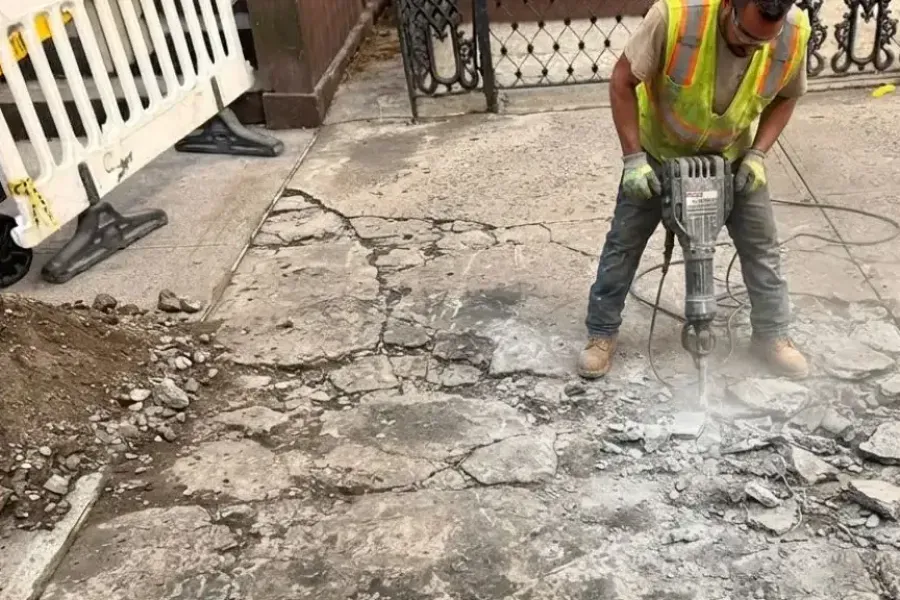
The old slab is cut into sections and broken out, the soil below is checked, and loose or soft material is removed. A compacted base goes in, forms set the new slope, and fresh concrete is poured and finished. The surface then cures before it takes foot traffic or furniture.
The base is where most failed concrete went wrong. When a slab cracks and sinks, the ground under it was usually soft, wet or full of old fill. Pouring new concrete over the same weak spot brings the same crack back within a few winters. We dig until we find firm ground and build up from there.
Where a slab sits next to a foundation wall, the new pour slopes away from the wall. Where it meets stoop steps or an areaway wall, the joint is set so water cannot run into it. If a drain in the area is clogged, we tell you before covering it.
Reinforcement and joints
Depending on the size and use, the slab may get reinforcement inside and control joints cut on a plan. The joints let the concrete crack in a straight line where it will not matter, instead of across the middle of your patio.
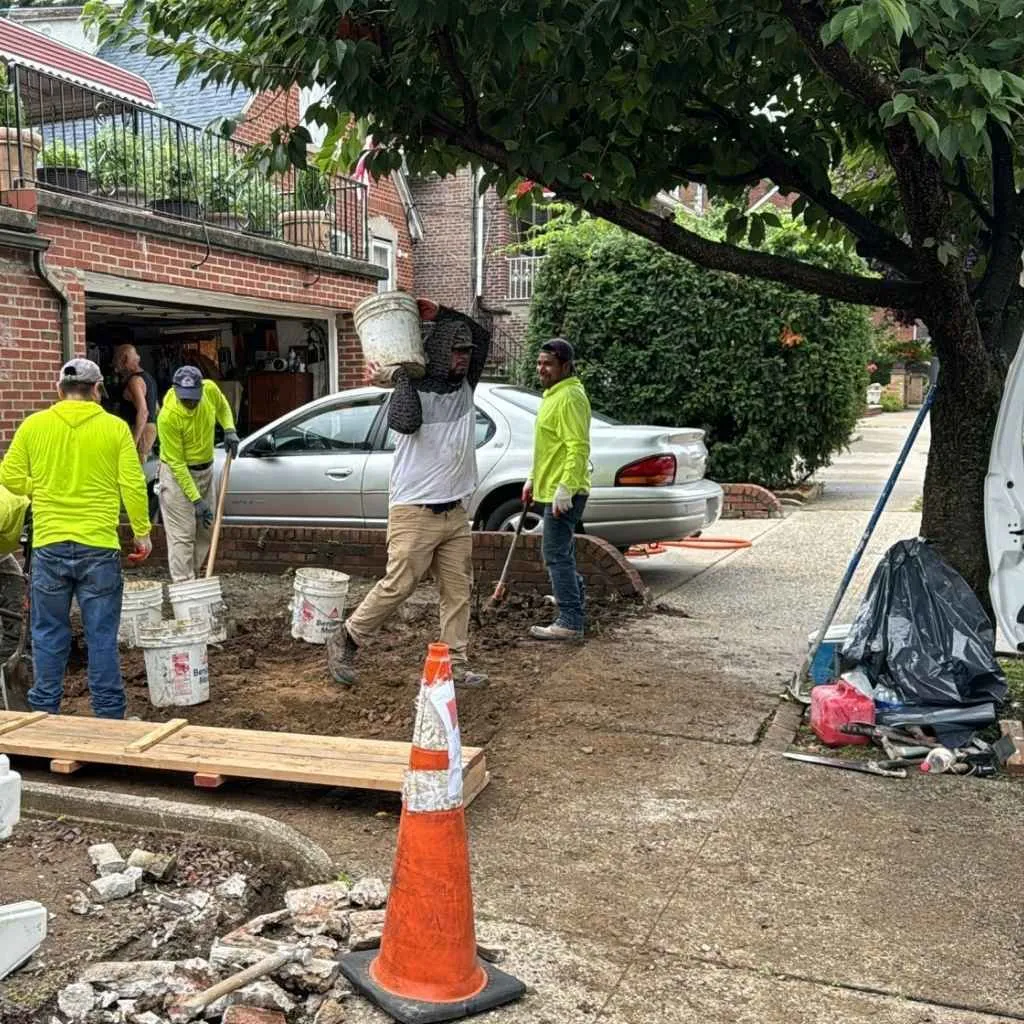
Do Park Slope Concrete Jobs Need a Permit?
It depends on where the concrete sits. Sidewalk work generally needs a DOT sidewalk permit, which we file. Work entirely on your private lot does not need that permit, but structural work, retaining walls and curb cuts can need Department of Buildings permits. Confirm the current rules with the city.
In the Park Slope Historic District, changes visible from the street can involve the Landmarks Preservation Commission. That can include areaway walls, front paving and changes near a stoop. A rear patio behind the house is a different matter from the front, but check before assuming.
We tell you at the visit which parts of your job look like private work and which touch the public sidewalk. If your frontage has both a broken areaway and a broken sidewalk, we can plan them together.
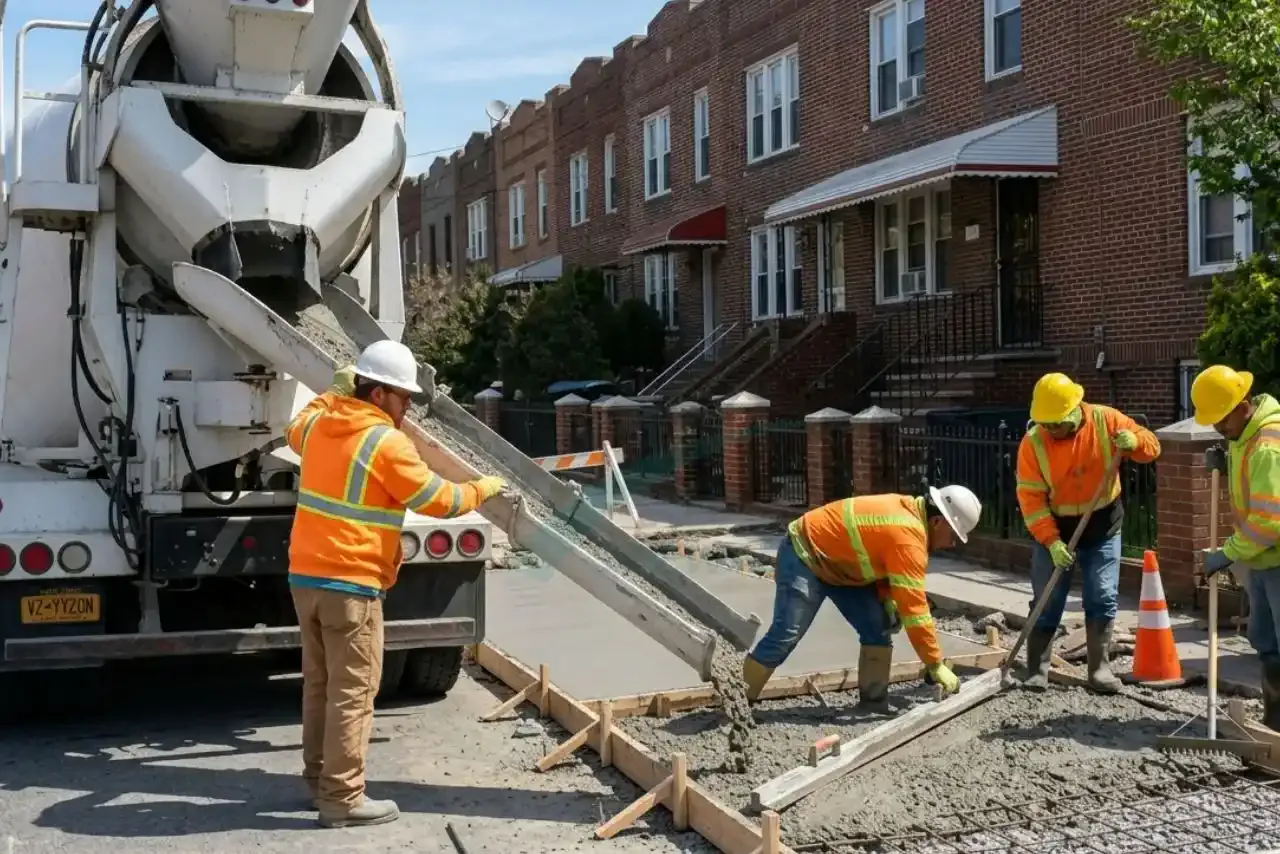
When Should You Replace Instead of Patch Concrete in Park Slope?
Patch a small, stable chip or a hairline crack that has not moved. Replace when a slab has sunk, tilted, split into pieces or holds water. A patch on a slab that is still moving will fail again, usually within a season, and you pay twice for the same problem.
Look at the crack width and check whether one side sits higher than the other. If your finger catches on the edge, the slab has shifted. Look for spots where water stays after rain. Those low areas mean the slope is wrong, and no patch fixes a slope.
On a brownstone lot, also look at where the concrete meets the house. A gap between slab and foundation wall lets water run straight down. Even a good slab needs that joint sealed and the surface pitched away from the wall.
We tell you plainly which parts of your yard or areaway can be saved. If a patch is enough, we say so at the visit instead of selling you a full pour.
Estimate
What Affects the Price of Concrete Replacement in Park Slope?
Price follows the area to be replaced, how much old concrete must be broken out and hauled, how deep the base work goes, and how hard it is to reach the spot. A small front areaway is a very different job from a full rear yard reached only through the house.
Area and thickness
More square footage and heavier use mean more concrete.
Demolition and hauling
Old slabs are heavy and have to leave the lot.
Base and drainage
Soft soil, fill or a wrong slope adds work below the surface.
Access through the house
Carrying materials by hand takes time and protection for floors.
Schedule
What Does the Work Look Like Day to Day?
Site visit
We measure the slab, look at the slope and plan how materials will reach the spot.
Written price
The scope, price and warranty terms come to you in writing.
Permits
For any part on the public sidewalk we file the DOT permit, usually two to three business days.
Demolition and base
Old concrete is broken out, the base is rebuilt and forms are set.
Pour and cure
New concrete is poured, finished and left to cure before use.
Does Your Frontage Include a Sidewalk Violation?
A broken areaway or walk often sits right next to a defective sidewalk flag, and we can plan both. Read our guide on DOT sidewalk violations explained.
Nearby
Concrete Replacement Near Park Slope
Similar work is available in the neighborhoods next door.
FAQ
Park Slope Concrete Questions
Yes. Areaway work is small but detailed. We break out the old slab, check the drain, rebuild the base and pour with a slope that sends water away from the wall. Approval may be needed in the historic district for changes visible from the street.
Small jobs are often done within a few days of starting, plus curing time. Jobs with a sidewalk permit follow the usual one to two weeks from start to finish.
Usually the soil under it settled, or water got below it and froze. Old fill in city lots is a common cause. A proper base and a correct slope prevent most repeat failures.
We protect what we can and tell you at the visit which plants or fixtures are in the path. Heavy demolition always disturbs the ground, so it helps to move pots and furniture beforehand.
Basement slabs and garage floors are part of concrete replacement. If your slab is wet, we look at the water problem first so the new floor does not fail the same way.
Yes. We visit, measure and give you a written price at no cost. Call (718) 468-8803 to set up a visit.
Contact
Request Your Park Slope Concrete Quote
Tell us what needs replacing and how we can reach it. Photos of the slab help.
- Call us(718) 468-8803
- HoursMon to Sat, 9:00 AM to 6:00 PM
- Free on site estimate with a written price
- Licensed and insured, 25+ years in business
- We handle DOT sidewalk permits
- Serving Manhattan, Brooklyn, Queens and the Bronx
Get Your Free Estimate
Takes about a minute. No cost and no obligation.